
Questions Answered - When Do You Put Things in Order?
The basic question is when do you clean up and tidy the workbench, sharpen your tools and keep order? Is is at different times in the day, at the beginning of the day or at the end of the day?
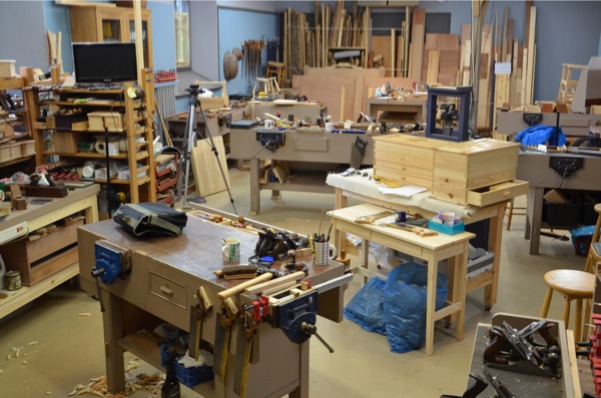
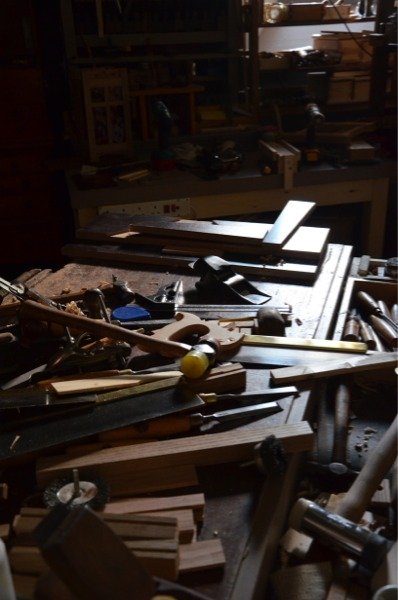
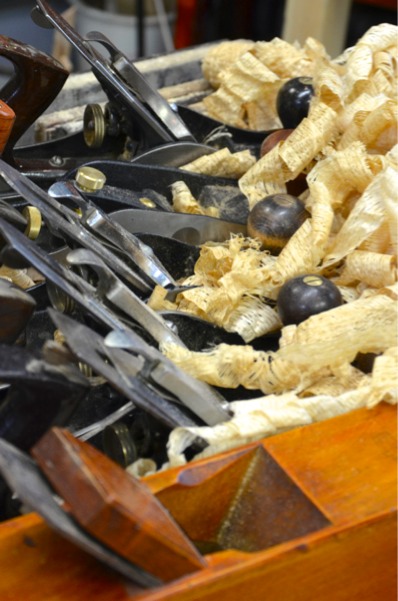
Every day tasks require order and laziness is no different than procrastination. That said, breaking into an intense section for the sake of orderliness can break the line of thought and consciousness some aspects of work take. More shortly.
In my general work I generally keep order throughout the day without exception. That means I put tools used but no longer need for immediate work away, sweep sawdust from my bench into a dustpan (never onto the floor) and into the bin from there. Orderliness is as much about keeping dust down and lungs clean as anything else. The work in hand will dictate some of the clean up. Planing surfaces and components of course reduces dust you would otherwise create if you use sanders to correct flawed surfaces left by the machine. Sweeping is probably more for me a case of shavings and saw dust and not sanding dust as we never use sanders in the workshop. I only ever sand outdoors if I am using a random orbit or belt sander. This clearly creates the demarcation line in the sand so to speak. No power dust inside the workshop.
Because shavings build up quickly, and remember that shavings remove only what you would remove with power sanders to get down to perfect surface, so dust quantity could likely parallel shavings in quantity but the quality of shavings and surface is far superior to what can be created in terms of levelling and such. I sweep the floor of shavings after sweeping the bench top usually and this happens throughout the day; I would say perhaps 4-5 times a day is normal for me. I also encourage students to to allow buildup on the floor and bench and make certain to tell them to sweep the bench into the dustpan and not onto the floor. After 50 years of woodworking I am quite fanatical about creating unnecessary dust, not creating more dust through sweeping and making sure it’s collected properly. Also, about once a month I use the vacuum to pick up any and all finings. This means floors, shelves, ledges, tills, sills, inside cupboards and drawers and inside the tools themselves. We don’t get very much dust because of this protocol.
Tools and tool care
There are different issues surrounding my tools and associated equipment. Hand tools don’t really create dust or finings, but more chunks and chips, parings, shavings and so on. Clutter can soon take over and whereas breaking into train of thought or a particular aspect of dedicated intent should not happen unless unsafe, there are usually natural breakpoints for tidying and ordering the tools and materials, equipment and so on. In my work area I have a moving trolly fitted out with clamps, a place for tools, screws and more. This has proven very useful because I can wheel it in and out as needed. I also have a moving table with a shelf underneath. this measures 38” high to match my bench and the 2’ x 4’ as a surface for deferent things i do. Because I have downsized my bench for a filming I often need more space for different reasons including extending my bench work surface (hence same height) gluing and clamping and assembly work, additional tool storage and so on. This unit has a lower shelf for more storage and I use this for unfinished work I can’t get to or a project we have in progress during different film shoots etc.
The tools are usually stored in the bench top well areas of whichever bench I use. All of my benches have wells and it makes little sense rot me to build a bench that has no well. I often hear people say that you can’t get to the tools you need when the bench has a project covering the well. This is rarely the case and if it does happen it is but a moments interruption to lift a board and retrieve a tool. Forward planning and thought resolves even this in most cases. The argument is not really a valid one. I also have a drawer and tills in the bench structure for storing certain tools. Here you can see what I mean. These tills are usually handy for long and narrow tools like files, chisels, screwdrivers and such. Spares i don;t keep in the bench well or tool chests and boxes.
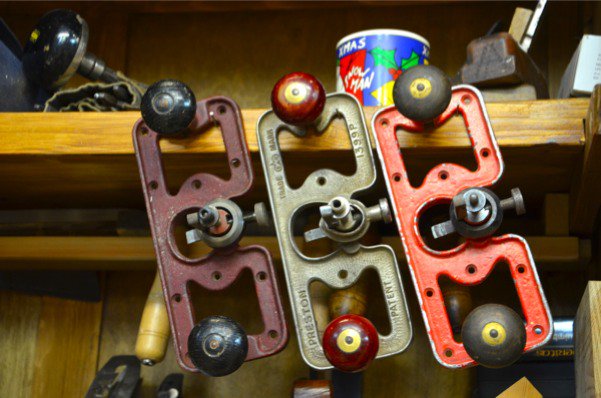
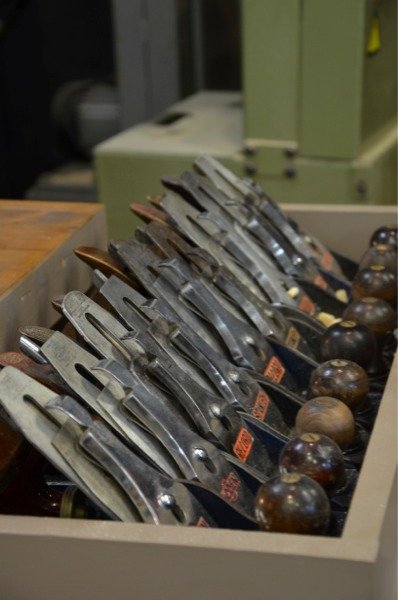
Around my bench area I have all of my personal tools. the ones I have accumulated over many years of working wood. 7’ tall and 4’ wide, the biggest one stows mostly planes in the top section and ancillary stuff below; everything from rags to screws to bungie cords and spare parts, hardware and more. This keeps the tools handy but out of the way and safe. This is a put-it-back-where-it-was cupboard even though parts may look disorderly. It is difficult to store tools like the Fine Woodworking poster of fame because it is so impractical. I like the sloped shelves and flat shelves and like to seat assembled plough planes and router planes fully assembled, which this indeed facilitates. As you can see, I have collected a good sized assortment of planes over my 50 years.
When I am working I tend to combine similar tasks in a measure. This measure means I plane all of my stock at once, make all of mortise and tenons at once, fit and trim at once and so on. this means i can put tools out and away on completion for the different phases. certain tools remain forever on the bench top or in the well. A full chisel set of bevelled edge chisels,two of each size, means i have enough not to break into my work if I need to. These are stowed in a chisel tray but left on the benchtop during use. I usually have two #4’s a #4 1/2 at the far end corner of the bench to my right. I am right handed. In the tray I have holes holding my gauges, screwdrivers and other tools including 3 hammer types. the well tends to fill up with shavings and dust but i live with that and clean out once a week or so.
Sharpening equipment
I built a narrow shelf that holds the whole tray of three diamond plates, another India stone and two strops - I have one for chromium oxide compound and one clear of compound. Sharpening should always be local to the work because part of being orderly is of course being sharp at all times. If the stones are too far away then you tend to postpone sharpening when it should be done.
I do have a habit of making sure tools are sharp when I put them away. it started as a practice in the early days of my becoming a woodworker and stayed with me. i think it’s a good habit.
Generally the last job of any day is putting the tools in order and stowing them where they should be. For continuity in filming, the tools often remain where they are when we are filming until the next film shoot. Outside of this period my tools are stowed safely and the bench and floor swept each end of day. i like a tidy shop and work better when I have order.
In the zone working
there are different levels of intensity when working and this rarely changes from the norm. When I am inlaying the tools I need remain there until the job is done. This has been days in past work, but mostly an hour or two. The tools and equipment remain on the bench until completed and this is mainly because the tools are set for the work. Remaining in the zone mentally and physically is economy of time. thought should never be interrupted for sweeping and cleaning unless untidiness is causing confusion as will be the case when too many shavings and tools hide the tools we need to do the job or indeed just get in the way. I work quickly to put up and get back into my work so that there is a maintaining continuity.
Comments ()