
Fall-front desk for restoring
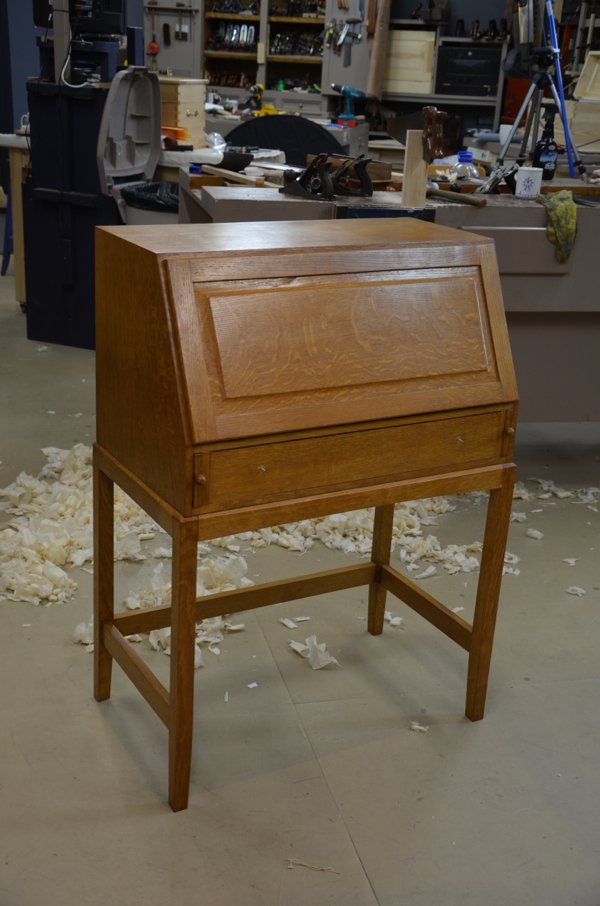
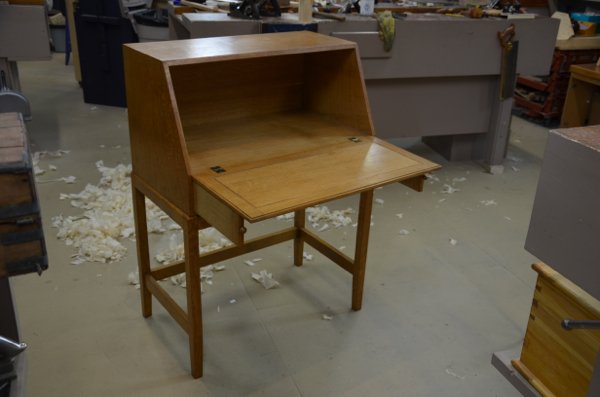
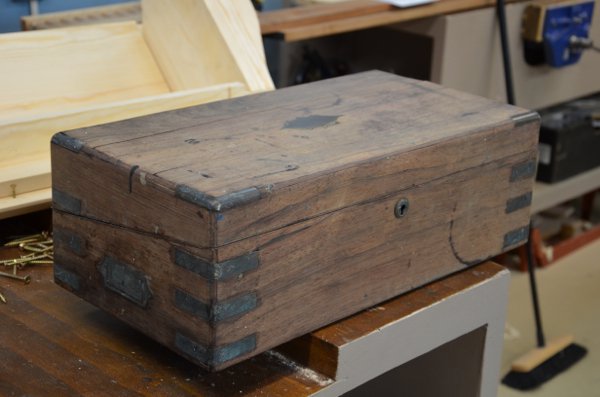
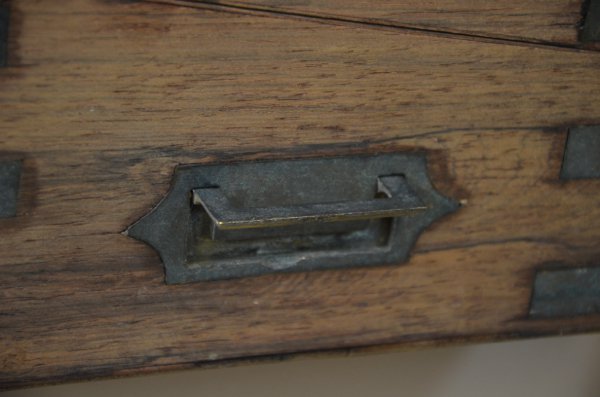
I walked through the carboot flea market and saw this oak cabinet for sale. The man I know over the years proceeded to tell me the history of how he came about it which I took with the usual pinch of salt because the desk needed no explanation as to how it came from London to be in this venue in North Wales. My first glances left me wondering if it was a good quality oak veneered plywood with sawn veneer facings but I soon considered it more likely to be solid oak all the way through. We talked turkey (that’s Texanese for money and such) and I sought of set it aside for thought as I had then found an old Regency writing slope that needed help. I looked at the writing slope more for the lovely brass hardware and for a £5 note it was well worth the money. Eventually we ended up at £30 for the desk and box combined and John and I carried them to the car.
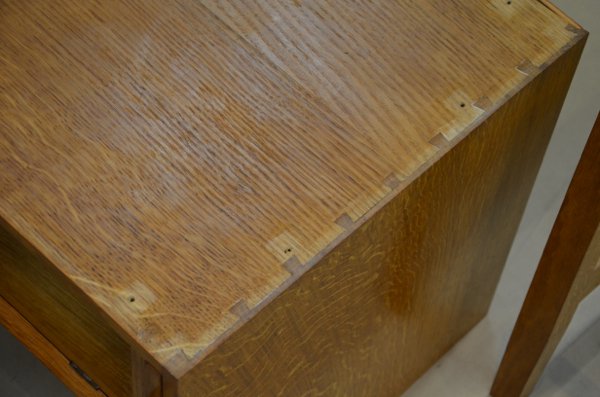
In the workshop the investigation began. The carrier frame was mortise and tenoned which I already knew at the carboot. One of the joints had opened up and the others were visibly moving under the weight of the top desk section. The thing that struck me about this piece was the knife marks in the layout of different parts. Crisp and pristinely cut shoulder lines left traces of the knife wall and though I suspect some of the joints were machine cut, through or common dovetails, half-lap and secret dovetails captured in near perfect mitres were not. This plane fall-front desk was a well executed work and were I to make it today it would cost me here with the UK prices of oak about £200 in quarter-sawn oak. The joiner on the desk itself was still solid and I am guessing the age of the piece to be around 50 years old. It’s a little utilitarian looking but in functionality perfectly sized. My wife will love it for her university work after I have pulled it apart and regaled everything.
Tell tale signs
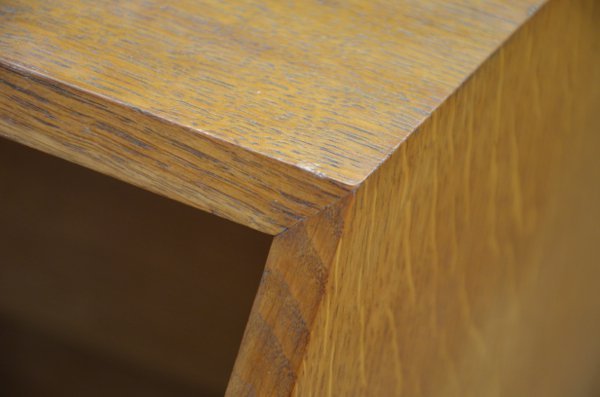
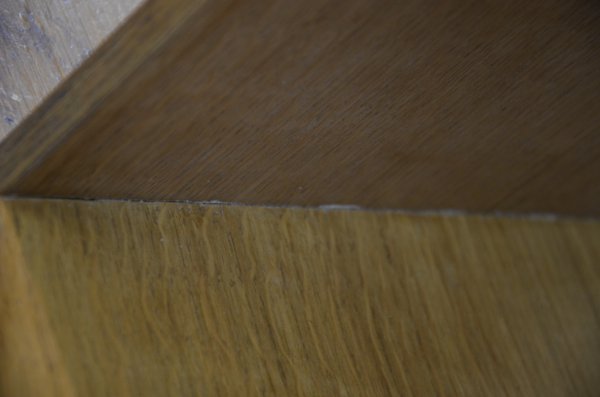
What were the telltale signs that told me so much before I bought this piece? Well, first off the mitres at the top corners. I could see no evidence of hardware, no signs of covers or plugs and the corners could not be flexed in any way at all. It spoke of a secret dovetail inside the mitre. Then, looking inside and out, I could see faint traces of knot on the outside and undulation on the inside. The drop leaf door/desk top was obviously solid oak with it’s raised panel and i could move the floating panel slightly and see the continuous grain in the tongue inside the frame.
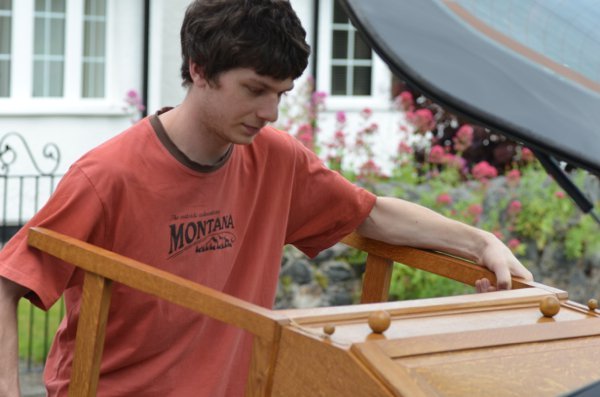
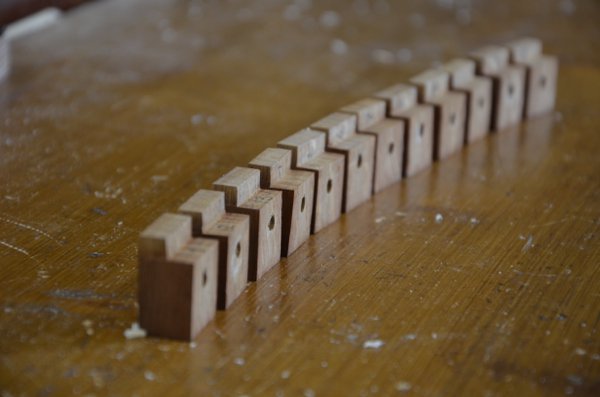
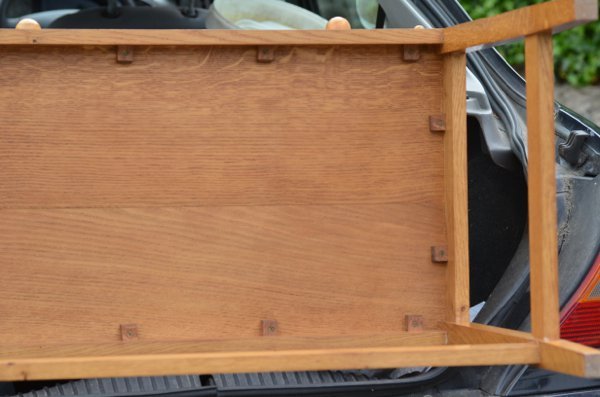
Turning the cabinet on its back into the car I saw the turn buttons clearly hand made and pocketed into the mortises. Very neat work. I wish the man had signed it somewhere but alas he had not. I was so glad to have rescued this desk from a student let landlord or landlady. Bangor is a university town and furniture gets swallowed up in lettings.
Dismantling the top from the framed stands revealed that each turnbutton had been numbered to the relevant hole for the first five buttons dan then the buttons alone were numbered after that I suppose because t was unnecessary to number further in the holes as at the beginning.
Once separated the half lap dovetails became perfectly obvious. They weren’t perfectly executed here but more than adequate.
This is the regency writing slope.
More to come.
Comments ()