
An Old Ward Chisel Sets the Standard Still
It’s an interesting consideration when each generation of new steel alloys supposedly corrects flaws in the older models that we never knew existed. For me it has always been a question I resolved quickly and effectively at the bench. Sharpen an edge tool and see if it takes a keen edge and then use it to see if it keeps its keen edge or dulls sooner than you would like. Of course, ideally, it’s best to have have something by which to set the standard, so you can gauge your findings. I owned a Ward chisel 48 years ago the steel of which excelled all others. Hard enough to keep a good keen edge yet not too hard to bring to acceptable levels of keenness. For me it seemed a perfect chisel. Other chisels seemed lesser chisels at the time. One day it disappeared and I’ve missed it until very recently. More on that later. Few chisels I had then matched the quality I became used to. I recently worked with some chisels made by a well established UK maker and tried to get used to them, but the edges of the various models fractured consistently enough to raise my doubts. This is not simply wearing down but fracturing, and at the same time a sort of crumpling-crumbling seemed to take place. I had owned another set made by the same company for some years and had found the same problem. Now when I simply pared with them they were fine, but as soon as I chopped into some longleaf pine with them they lost that critical edge completely. So, in a decade nothing seemed to have changed and so I sadly can’t recommend the chisels. Bit strange if you think that though this may take a major change in steel type or manufacturing process, the company has a long historic reputation it could thrive with all the more if it would work with its product. Perhaps it could be a world leader again, instead of relying on its former reputation, but no changes have been made since they asked how their chisels were doing. You see this company relies on the reputation the founders and makers of the company established. The tools were once excellent and competed with the best Sheffield had to offer. Not so any more I’m afraid.
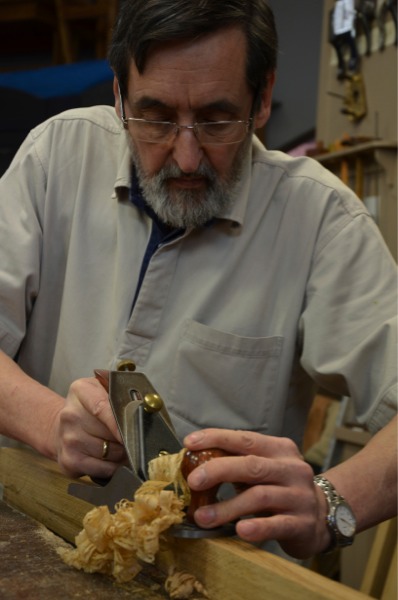
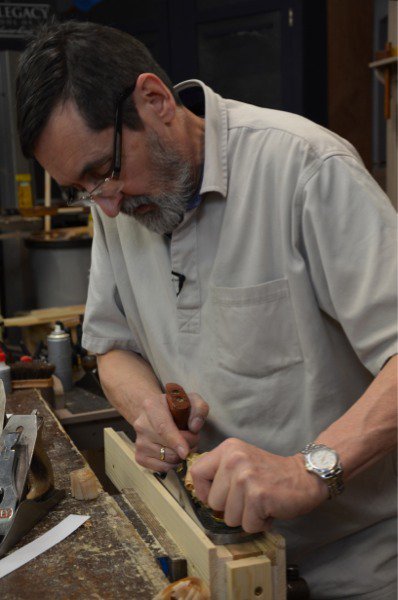
Here I am testing a conventional thin iron from a Stanley in a Veritas plane, to see how it works and it worked just fine.
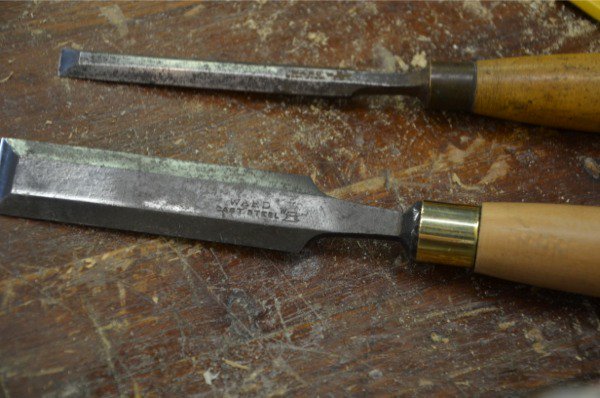
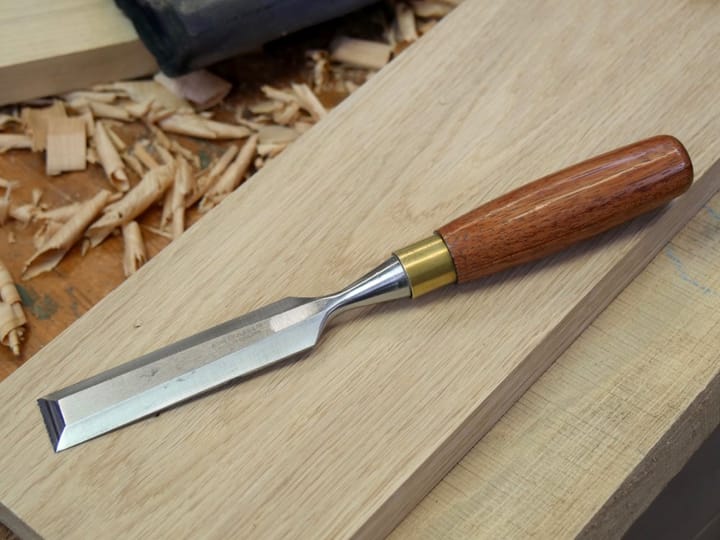
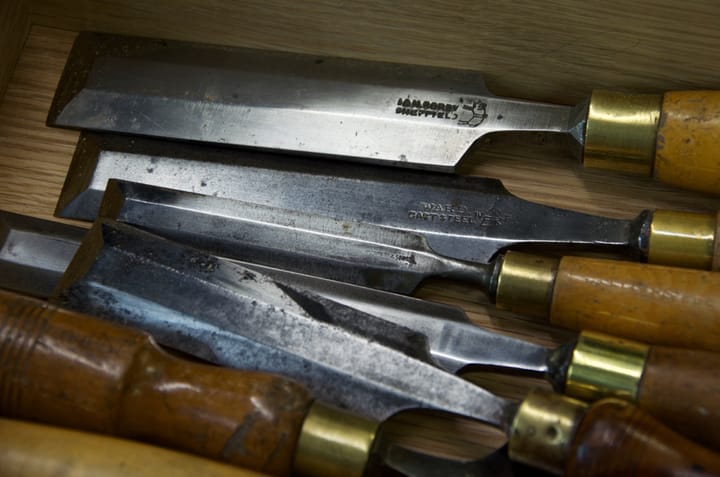
Here is a Ward chisel the steel of which is a perfect combination of hardness and strength
My question about A2 steel and edge fracture has led me to more questions. As I said above, it’s quite an interesting consideration when each generation of new steel alloys supposedly corrects flaws in older steel types these days and so I wonder how on earth craftsmen coped with having to sharpen their chisels or planes so frequently. Fact is they didn’t. And another thing, craftsmen I worked with never did mind either. Taking a short break twice a day to sharpen up was and still is a part of everyday life. I have used A2 steel since the first North American planemakers started using it. Its about ten years ago since I bought my first Veritas bevel down 4 1/2 and so too a Lie Nielsen Bed Rock 4 1/2. So my personal working with them is not really new or just passing. In my personal experience I feel it’s all too easy to believe that there is a larger difference between say one steel and another or a tool or the steel blade thickness or the mechanisms of the tool or even the technology of a tool when in reality most changes in my view have made only marginal difference if indeed any. In a generation where most people would generally struggle to sharpen any type of edge, the best thing to come up with is something that needs less sharpening or better still a disposable blade, but, as an example, I can plough out a groove as fast with a wedge stemmed wooden plough plane from the early 1800s as I can with any more advanced models that came after them. Actually, faster. So could you if someone showed you how and gave some sticks to practice on for 20 minutes.
One of my favourite hand planes is the Veritas small smoothing planes with a bevel up presentation of the bevel to the work. This one has an A2 steel cutting iron that works well for me.
There is a mentality to equipment and tools that each generation improves on a flawed predecessor. That may or may not be true as it depends very much on what you are looking for individually. I am not always convinced, but when it comes to someone telling me harder steels hold their edge longer several questions spring to mind as to whether that’s true and whether there might be more of a compromise even if it is true. Someone recently told me of a maker of tools dropping the more traditional carbon steel that sharpens well and gives good service to supply only harder steel types. That’s that company’s decision. He told me that now you must place a special order and expect a wait. This often leads to an eventual higher price and wait period on delivery. It’s only about 15 years ago when I read through a Spear and Jackson tool promotional circulating in the US. I was looking for saws for the school and needed 20 hand saws. I noticed that the descriptions in the catalogue had changed ever so slightly. To the unsuspecting you might not have noticed. The regular S&J handsaws had a statement that said, “Resharpenable”. Under the adjacent saw with the plastic handle and the black teeth the bold statement in highlights said, “Lasts five times longer than conventional saws.” I read the smaller print and under the ‘special saw’ that lasted longer it went on to say that the teeth were “Specially hardened using impulse hardening technology.” Of course what they were not technically saying was that they had developed the first throwaway saw. What they were not saying was that it was the sharpness that lasted longer and not the saw itself. In actuality the saws they were now making lasted a very minute fraction of the time the former company of Spear and Jackson were known to make. I have S&J saws still in use at my school and in my personal tools that are as old as the first day the company began back in the mid 1800’s. Today’s S&J saws are made in Asia and not Sheffield. They may be OK, but they are not cheap and really should be half the price they are because of cheaper production costs. Anyway, I use that to illustrate how these con-glomerates still thrive on the backs of others.
In concluding my thoughts, I have noticed how harder steel are becoming more and more accepted despite the fact that many old steels did take and hold a good edge that was greatly accepted in all spheres of hand work around the globe. Why not go with the flow and accept the better stuff technology offers? Well, I buy chisels, beautiful chisels, that work incredibly well for sometimes as little as a £1 or so a piece. I just bought 46 chisels on eBay made by Stanley, Marples and others for £55 plus £6 delivery. These were firmer chisels mostly, with some registered mortise chisels and some boxwood B/E chisels. Not one of these edges will be a bad edge I can pretty much guarantee it. They will get passed on to others who I know need a set of low cost tools to get going with. For every 8 paying students attending our school we give 2 additional places for free to those that can’t really afford it.
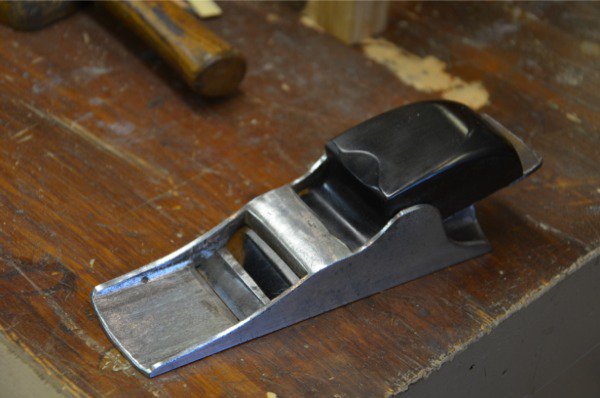
This little chariot plane has a Ward cutting iron in it and I have yet to put it through a thorough test for hardness and durability.
I was happy to see people participate in the question on A2 steel. I quite like the steel but haven’t noticed enough improvement to switch. In fact, I am looking at thinner irons and high carbon tool steels for a couple of good, very good, reasons. My tools must take and hold a good edge and they must be easily resharpenable without the need for any mechanical method. This is sustainable for me and it makes good sense. Oh, and by the way I found a 1” Ward chisel I really love recently and use it all the time. In several days of use it needed sharpening twice working in pine and oak. It sharpens very well on diamond plates and takes and holds a good edge. It made me happy to think this tool might have come back around.
Comments ()