
The Low-Angle, Bevel-Up Plane - It's Almost Restored...
…and it works so well.
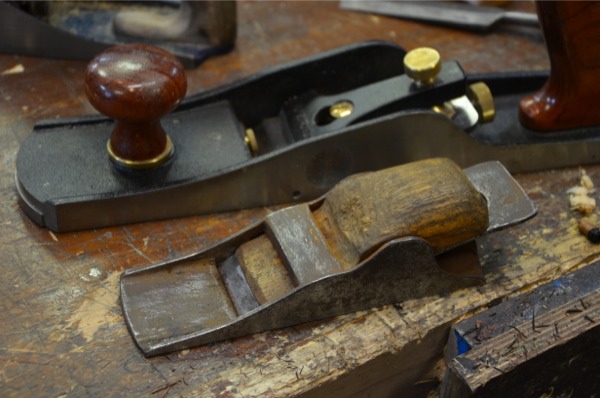
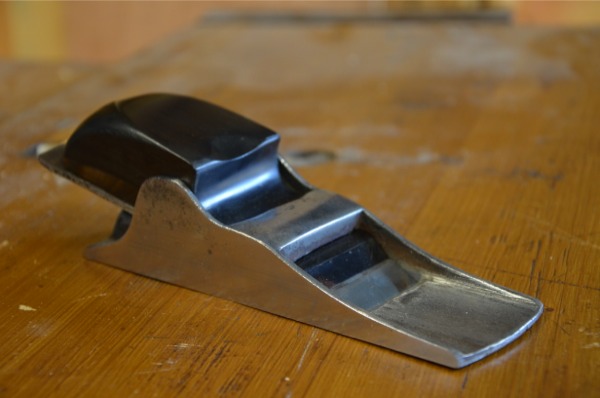
The angle of the tapered iron lies on the bed at 12-degrees with the bevel uppermost and a crude and well-beaten wedge locks the iron to the body . I didn’t buy it because it was cheap (a £1 is now $1.62). I bought it because it was lost. I didn’t need it because I was short of a low-angle bevel-up plane, I needed it because it was abandoned and forlorn. I didn’t buy it because it was useful either. I bought it because it was useless and expired. The plane is the simplest of all. Simplicity often has deep meaning. It can mean pure, honest, truth and trustworthy. The plane looked as though I could trust it to work well. Whoever made the plane also used it and used it well. The casting has roughness to it from the coarse casting sand and file marks from the coarse and uneven file teeth. It’s not fancy or well engineered by anyone’s imagination, but its Ward iron matches the sharpness of the best and the steel is good and hard. All Ward irons were good and hard.
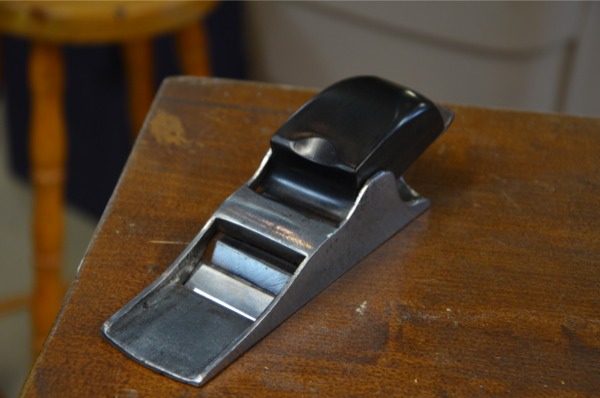
The ebony was from an old carving in ebony. African I think. That was lost and abandoned and useless too. Upcycling takes what others might abandon and brings life to work back into them. In so much as I saw spiritless things lying alone, I also felt hope that with my hands I could make life come from them once again. John poured himself into the steel for me as I worked to cut and shape the ebony to replace the fractured and spelched oak. Beneath the iron was the mouth adjustment. A single shim of an old tool catalog – about a playing card thick (0.25mm generally). When the plane came together I pressed it to the wood on the shooting board for the first time in most likely 50 years. There are many things about this plane that tell me of the man who made it. Perhaps later we can look at those things.

Comments ()