
Woodworkers in Real Woodworking
Hello paul!
I'm a beginner woodworker from Israel, that recently discovered the joy of hand tool work.
I want to thank you for all the knowledge you provide for all woodworking out there, and for myself in particular.
I'm following you on YT and i really enjoy your videos!
I am amazed with your reading and understanding wood.
I specially liked the sharpening videos you made, and it was very helpful to me, with getting my tool to perform well. (no'4 Stanley plane, no'5 record plane and a bunch of chisels).
I still have issues with well setting my planes, in term of frog position/mouth opening and cap iron setting.
Can you please explain that issue a bit deeply in a blog or video?
I hope you will keep on spreading your amazing knowledge for many many more years to come!
Best Regards.
O E
Israel
Hi Paul,
I like your clips. Each time I am watching them I laugh, because you have your own simple way to attack the problem. .....
In simplicity genius; like In vino veritas.
We, in Sweden, should also have such a person like you! We are like orphans here. Nobody can give us advise how to do it.
For instance: Many of us have bought a very expensive backsaw, but nobody can sharpen it. We have no courage to do that by us selves. Yes, we have read about how to do that, but we do not dare to. For instance:
I bought for some years a very expensive ripsaw in UK and it is not possible to use it.
I just wonder: Is it because I´m stupid or ...or why?
Have a good reminder of the day!
Jiri
In Sweden
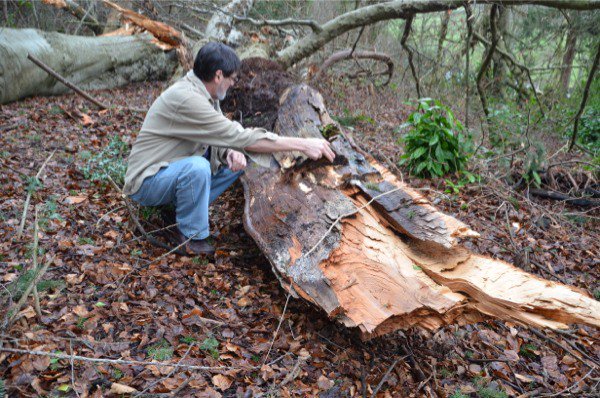
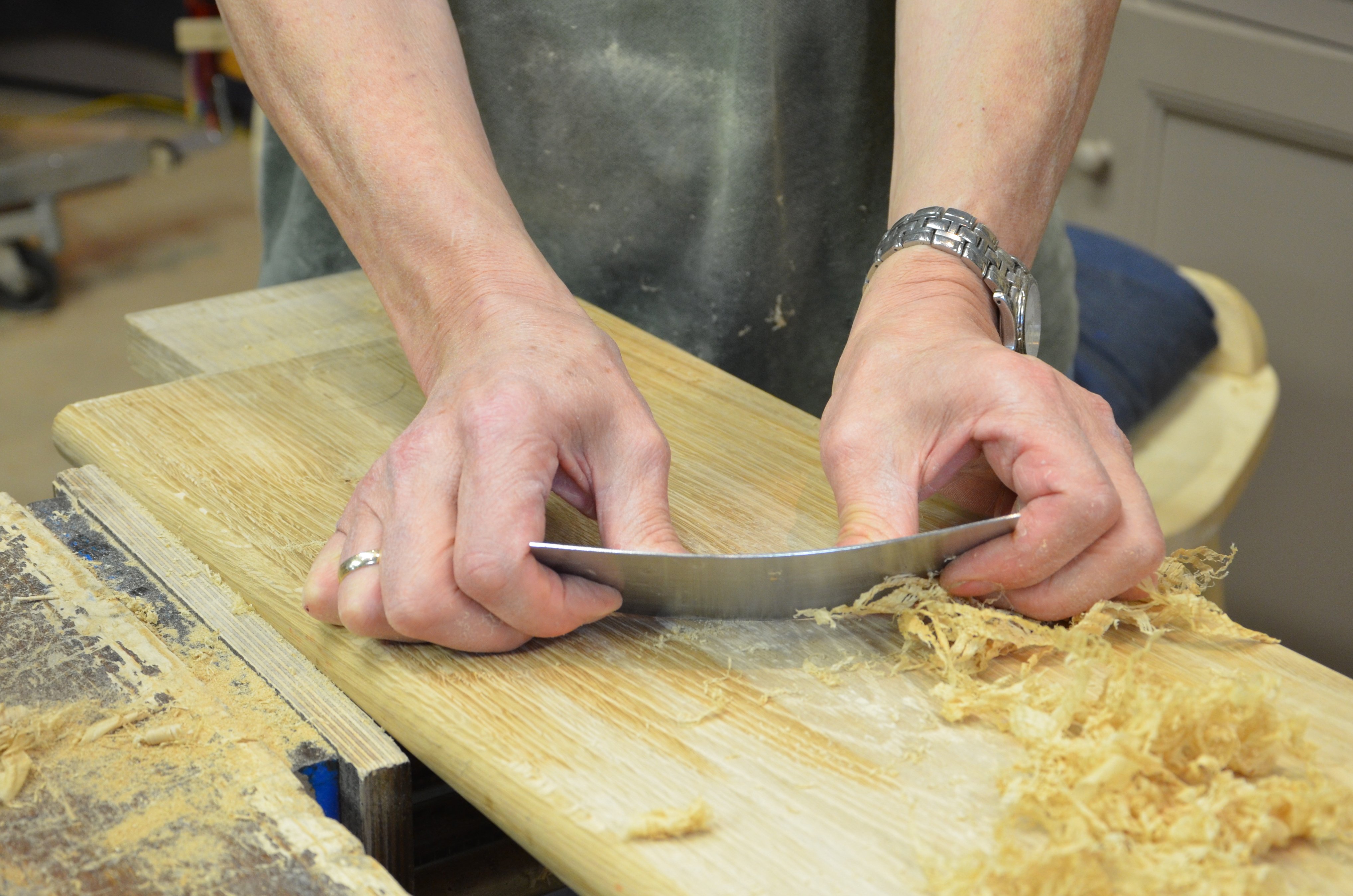
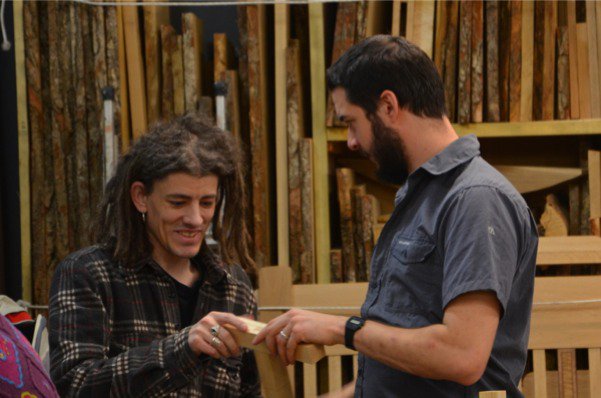
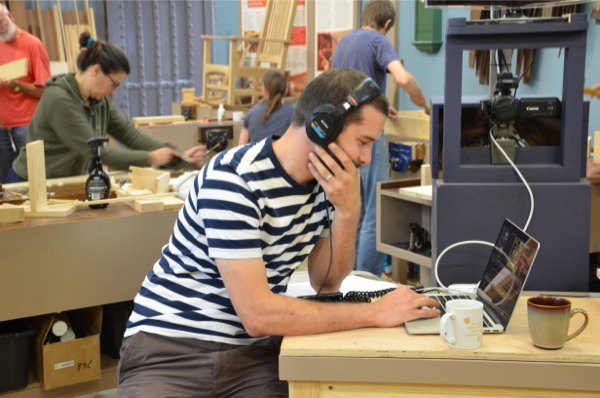
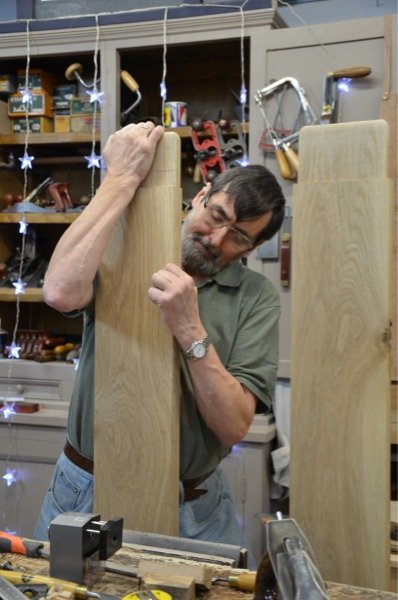
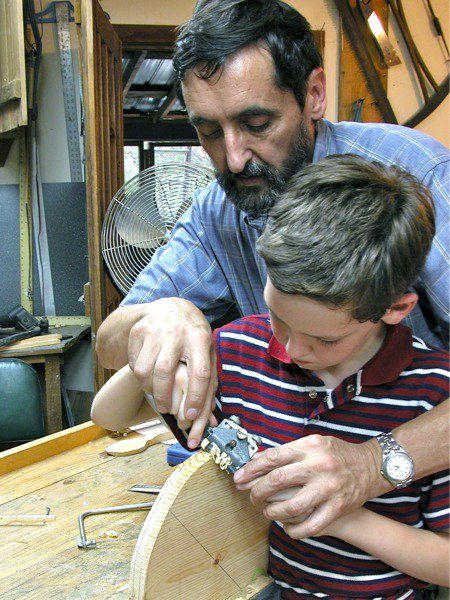
I picked all of the images below to show that woodworking is not an exclusive craft and that anyone anywhere can do it with very few tools and little equipment.

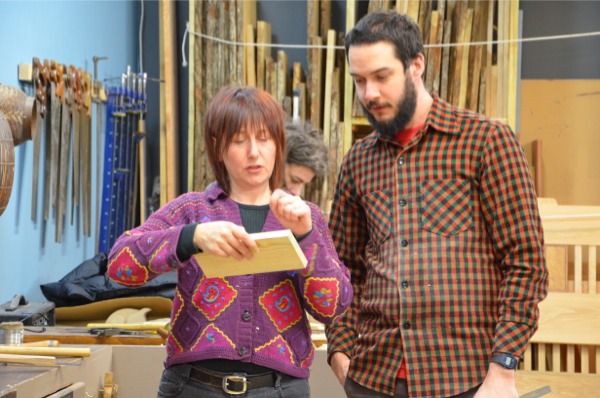
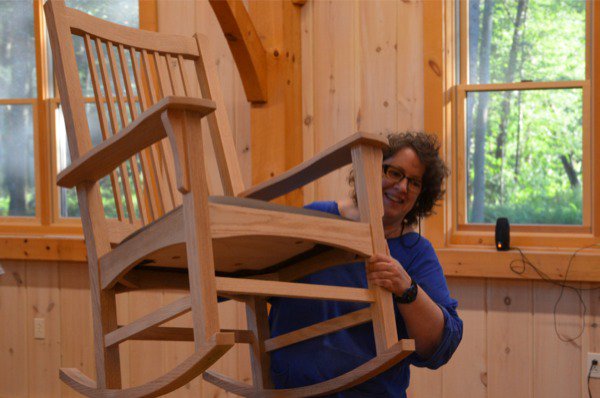
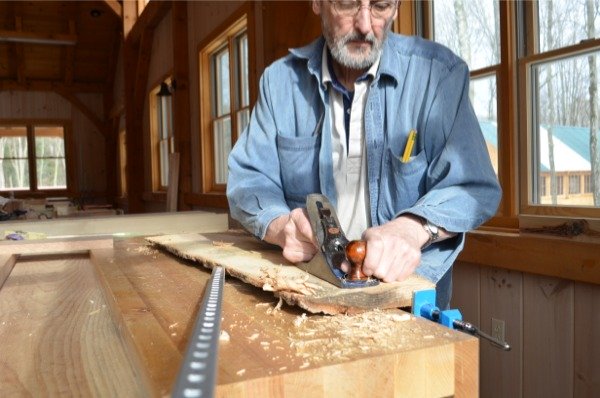
I received this email from Sweden. It's not unusual that people feel inadequate to the task and that always pulls something out of me no matter where they are, who they are, what age they are or anything else. This is why we do what we do and sponsor so much to make certain things work for others. I received the other email from Israel and then another from New Zealand. Actually, I received emails from a dozen or more countries from around the world in the last couple of days that I understand highlight a severe educational flaw on each continent and in each sphere of education. Basic lessons in woodworking and metalworking, not so basic as today's offering though, have either disappeared or are about to disappear or will disappear in the next ten years. What people associate as woodworking in schools in the UK is not really woodworking any more but part of a programming system to make young people conform to a political and educational system that seems more destined to worsen the dilemma than improve it. I ask myself a simple question from time to time and that is why do we in any way feel that politicians, usually or mostly non-skilled emotional motivators, make so many of the decisions surrounding working people’s lives. It seems to me and many others that they sold out local jobs by political and educational decisions to globalise economies and leave young people isolated in spheres of unemployability through various shortfalls in their education. It all shows the need for what we do to reestablish woodworking and metalworking in the formative years of life and that those teaching not be just teachers but skilled in hand work and even business themselves. The break between academic and non academic seems more complete now than ever. and many like me was abandoned by my teachers when i made the decision at 13 that I wanted nothing more than to be a woodworker. Teachers in more general subjects often have no interest in students less inclined to academic subjects and so became detached and even impatient. I was left to work out my future and no one really offered any help. I wanted to be a woodworker not a construction worker. Go to any careers advisor in school and say, “I want to become a woodworker.” and they automatically think carpenter and construction. It’s a turn off in the mind of the advisor unless they think you are thick or, as in my case, declared ineducable. Then they might deem that woodworking was site carpentry rather than furniture making or building boats and so the best or only course for your life was building construction. Hey, they say, we all need plumbers and carpenters to build our nice homes, yet not everyone is supposed to be a plumber or a carpenter. My concern comes in the emails I get. Engineers and lawyers, plumbers and joiners find their lives untasked, unchallenged and often lacking because they don’t work with their hands in the way almost all people once did. Well, again, going off the emails, that’s changing day by day and week by week and year by year. Since Christmas and the turn of the year I have received hundreds of emails thanking me and the team for changing the face of woodworking. I believe that what we are doing is indeed changing the way people now consider what real woodworking is and that's important to the future face of woodworking. Getting to the core of real woodworking (and genuine hand craft of almost any kind) is to repossess an intrinsic value we seldom see the importance of in today's culture. I think that our state of wellbeing exponentially increases when we work with our hands and our brains to make things we construct for different uses around our homes and places of work. Henry Ford did more to demoralise the hearts of workers when he developed his mass-manufacturing production lines to produce cheap cars. How much more are people demoralised today than then when we see skilled work relegated to robot manufacture and programmed CNC machines.No matter which way the machine slices it, a CNC carved sign using a router does mean that you didn’t make it. When a gouge and ‘V’ tool shapes the letters, carves the shapes, and your hands guided the tools and decided how much force to use, you did. I tried to imagine how we would feel if we set up the computer to carve the work with a guided machine compared to doing what someone like Mary May does here. Mary teaches all levels of carving and just to get a feel for it go to her YouTube channel and take a first impression of how she teaches. I am a carver too. I quickly found that my woodworking skills were transferrable to other areas as I progressed my own training on my own in my workshop over the decades following my apprenticeship. Of all the things I have done throughout my working life, the thing that has made me happiest has been work working with my hands using hand tools.
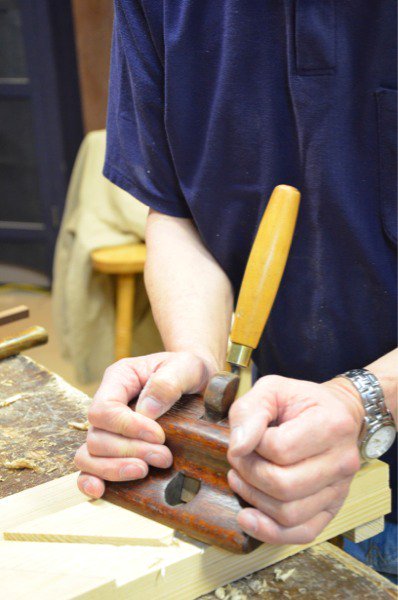
I have found that the D&T (design and technology) teachers really love what they started out to do and they also love the kids they work with. Most of the ones I meet on courses here seem frustrated teaching to curriculum that seems so short sighted and inappropriate. I don’t know if that is a general malaise, I do know that most if not all feel inadequately skilled to actually teach even the most basic craft levels. I wish we could all unite to reintroduce woodworking into schools and more so beyond schools and have only teachers teach with developed skill to teach the classes. I met a student recently, I think it was last years sometime, who went to grammar school in the 60‘s here in the UK and who came to us to refresh his skills from when he was 14 years old. He brought with him a small but neat fall-front writing desk he'd made over a period of a year. Remember he was 14 years old. It had such nicely executed half-lap dovetails to the drawer, not perfect but hand cut, breadboard-end fall front desk top and mortise and tenon joinery to the main frame with plywood panelling. I too made projects that had these complexities from my woodworking classes in school and also made live mousetraps, cast alluminium into sculpted art work I made in art classes. This doesn’t mean I cannot program computers and use InDesign or Photoshop now that I am in my mid 60's. It doesn’t mean I can’t calculate my materials and indeed write books. Most of my formal education stopped at 15-years old and I started to learn and be trained for life at that age. Now I am due to retire but I can’t. Why? Well, to be honest, there is too much to do to equip the next generation to discover woodworking by hand is a true art form they can own for themselves. That they too can find real value in working out their future without becoming a mass-manufacturer feeding a machine of any kind for the remainder of their lives. I have now proven this to others through my own work, my worklife, those that work with me and of course you who are out there proving that it’s worth the struggle and it’s worth doing it.
Comments ()