
Margins in Cuts for Hand Work
I wonder about margins
In a culture of minimal margins where factored buffers are minimised and businesses work ever closer to the edge, I find people more estranged to factoring margins for error and improvement. In bench work, by that I mean hand work working wood and not machine work, we generally factor in a margin that facilitates final finessing to initial cuts using chisels, spokeshaves and planes that further refine cuts from such hand tools as saws, draw knives, knives, axes and other such tools. The margin is a trim line. A narrow margin and that thin, pare-able excess that allows the perfecting of various types of ‘rough’, close-to cuts essential to our hand work. Though we do indeed want that margin for adjustment here at the joiner’s workbench, leaving too much extra to trim off can often become leverage against us later on. The important thing is the length of fibre we leave in place for trim.
Cutting to the line is something I do all the time regardless of the work. Gauge lines mean maximum and minimum all in one to me. When I mark a gauge line I cut to it with the saw. When I cut a dovetail with a saw I never trim it after the saw cut. I take it from the sawn surfaces and I always use the sawn dovetail as the final template regardless of the wood type. In other words, it’s from these sawn surfaces that I delineate the cutlines for the tail recess in the adjacent piece, which again is sawn and rarely if ever trimmed further to fit. Correcting flawed sawing and excess material takes time that I don't have without someone pay for it. my customers want my cuts to be accurate and expedient. It's always been so.
It’s not unusual for those new to woodworking to leave extra stock on to trim later without realizing that it often takes more skill to trim than it does to get it right from the initial saw cut. We live in a culture where risk is always minimized and skill is of course dumbed down to minimize the need for the more highly skilled work necessary in hand work. That is generally one of the main reasons for which we use machines of various kinds. We can’t afford to waste time correcting flawed work and yet there is a flaw in this in that we then fail to develop skill that could become so intuitive we rely on it. Obviously it takes no skill to use a chopsaw to cut a piece of wood square in both directions. Routed dovetails too need basic set up skills to dial in depths and widths so that the machine substitutes for skill. I can say these things because they are true and I receive no sponsorships from any company worldwide and what I write is not coerced by advertisers anywhere. When we cut wood with a handsaw or tenon saw we tend to want that little extra margin that can be pared down to fit. Yes, I can do this and I can do it accurately, but if this skill is not yet developed, then it must come by rote practice. To use a chopsaw would only substitute for developed skill. No matter how many times you use a chopsaw, you will not develop the ability to perfect a hand sawn cut by using one. Sawing by hand must be developed, and using the chopsaw only postpones that skill development. I think it is important to see this. That does not mean you shouldn’t use a chopsaw. Simply that to develop hand skills you must practice the work using only your hands. This reality is what must take place to become a masterful craftsman and woman. A chopsaw never trains you in skilled performance with hand tools. It was developed as part of an industrial process to replace the need for skill. That does not mean that there are not skilled woodworkers relying on machines for part of their daily work, but that real craft training is a process of development in a range of ways ranging from sight gauging distances, to muscle development that allows for certain tolerances depending on the materials and tools being used. All woods have very different tolerances we call characteristics so we know that oak and walnut work differently when we when use hand tools we have much deeper insight into what these differences are. I think that machines cut wood very accurately, but make no allowance for material compression, flex, density, expansion and contraction and so on.
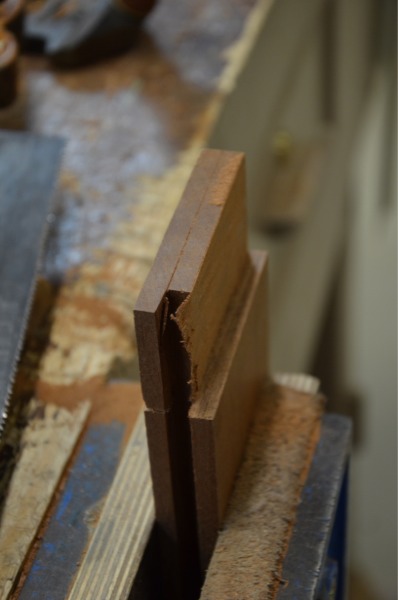
Margins vary with different woods when you saw them. Some woods pare easily and some really resist with remarkable tenacity. Chop some softwoods and the whole surface surrounding the chisel edge compresses and then tears. Sawing right to the line means that certain springback in the fibres means the fibres stick up above the knifewall you created. I cut right to the line knowing that this will take place. I then pare surface fibres with a surgically sharp chisel.; an edge I cannot give to a saw tooth edge.
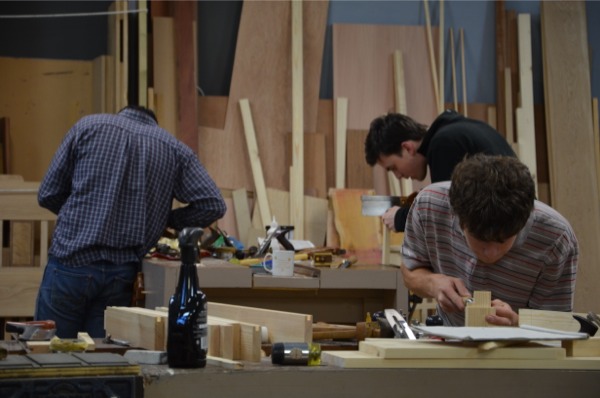
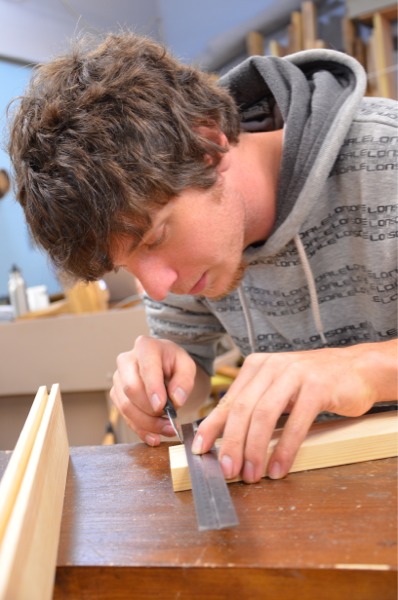
Margins are determined by experience and working with Matt and John this week has been to help them move closer to the edge without losing the margin, the exact margin, for effective cutting. Leave too much excess in the tail recess after using say a coping saw to remove the waste will leave craters inside the dovetail and pin recesses. “No one sees them!” That’s of course right, but you do and I do.
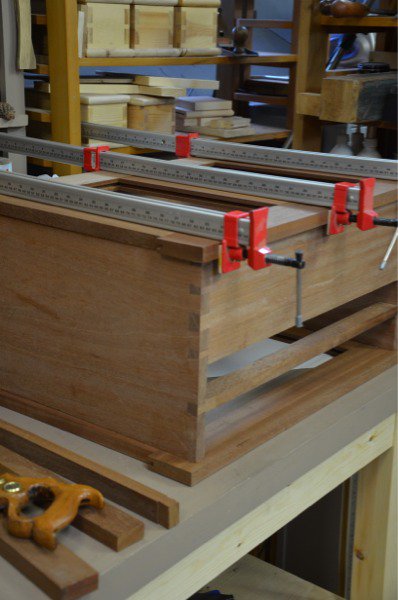
I am making yet another tool chest alongside matt and John, but mine is another mahogany one. The margins are very tight and with no margin for error at all, but this one is for a special craftsman who needs one badly.
I say all of the above to say strive for working masterfully.. Soon it will be yours and you won't regret it. I chopped mortise and tenons most of the day using my own hands and all of my tenons fit perfectly into their relative mortise holes. I cut my last on at around 4.30pm and felt totally rewarded for my work..
Comments ()