
Woodlands, Wildness & Red Squirrels
I am sure I understand what wood is all the more because I have spent three decades looking inside the wildness of its growth every time there is an opportunity for new discovery. Beyond this, I treasure the feel I get of being internally and externally restored from the weariness and that tired feeling I had when I walked away from the tyres and jangling keys and pockets filled with cellphones and stuff. Just gazing at the wrenched fibres inside the bark of this tree shows me more and more how little we know and that no one can really interpret or fully reconcile how one tree differs from another. I have read Bruce Hoadley’s book from cover to cover many many times since it first came out. I only have a handful of reference books of the thousand or so I have read that really make things work for me; perhaps a few more. You can look inside Understanding Wood here; but you should also get yourself a copy. It’s not too expensive and it is on my recommended reading list. Start at the intro and work through it page by page. You won’t regret it because you will learn so much.
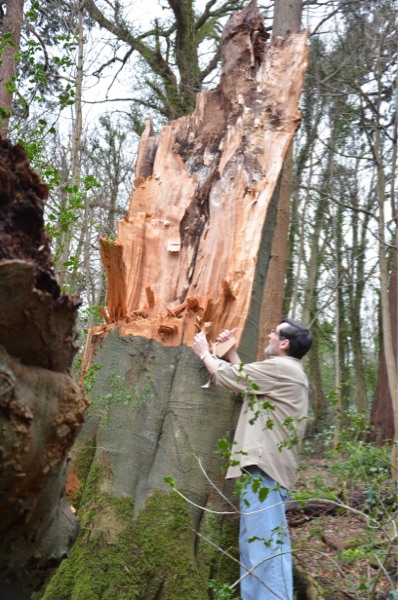
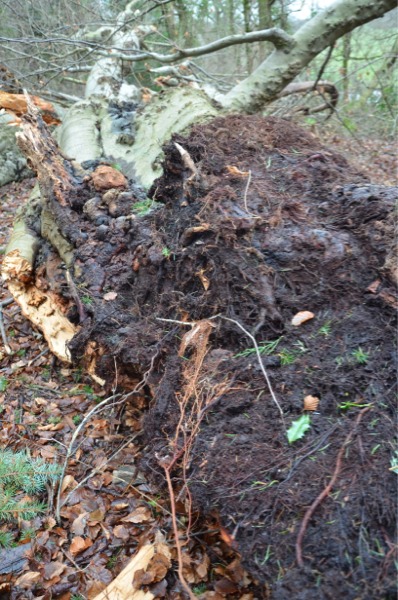
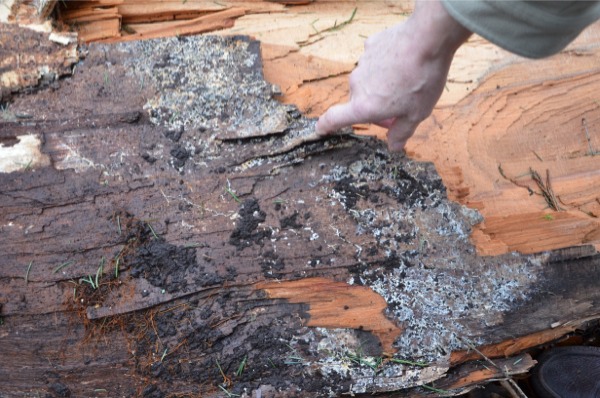
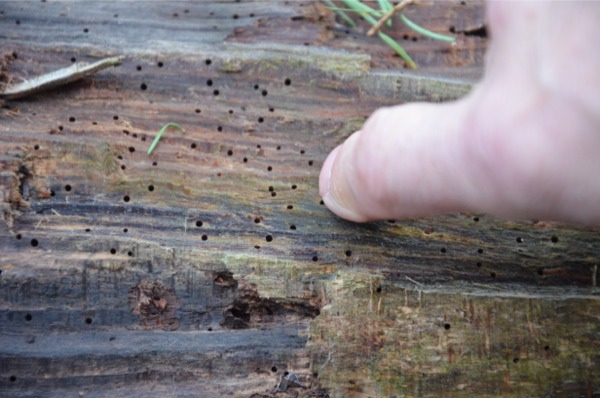
One thing that has been ever evident through the years has been the direct correlation between disintegration through rot and the power of wind, water and I am sure, other elements beyond our knowledge. Wind and water work together to first enter the tree at the point where divided stems fill with water and wind driven particles that compost in that crotch. A weak point develops and slowly rots into the wood inside. Beetles and worms do their work too. here you can see the initial rot in fully rotted entry. Following that came the newer area as the rots [permeates the fibres. Insects enter freely now and so too the bacteria and other parasitic workers. This is where good management can intercede in localized forestry and woodland management. If the rot is discovered early enough, limbs can be removed and the stem bolstered by limbing and sealing.
Notice at the top of the remaining stem where the rot had started and weakness gradually established its hold...
...and then here on the start of one of the forks where the weakness was. Good wood nearer to the lens and gradient levels of rot up toward the farthest point5 feet further on
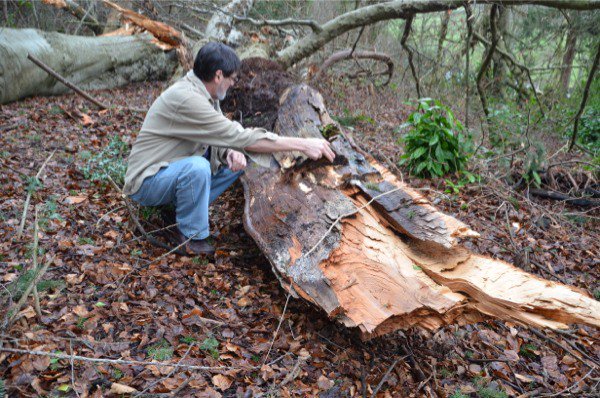
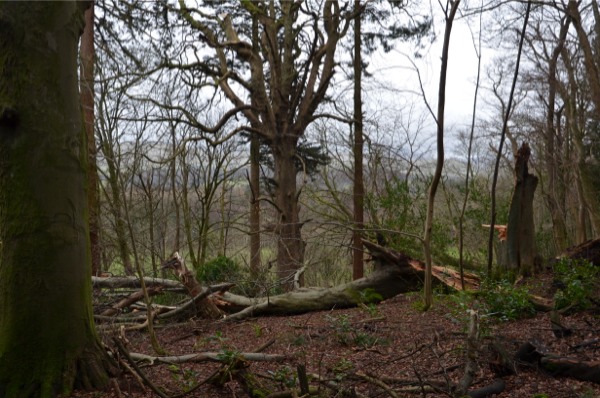
The point when wind intervenes by freakish storms simply exposes the weakness and drops the limbs or indeed the whole tree. The life of this tree is over. Unlike trees where the root continues and fresh branches sprout from the cambium, Hazel, for instance, recovery is impossible now. The beech tree snapped in two parts on two separate occasions, actually three. One forked off section snapped off two years ago and will soon be fully returned to the soil. Two sections dropped in the last two weeks of high winds.
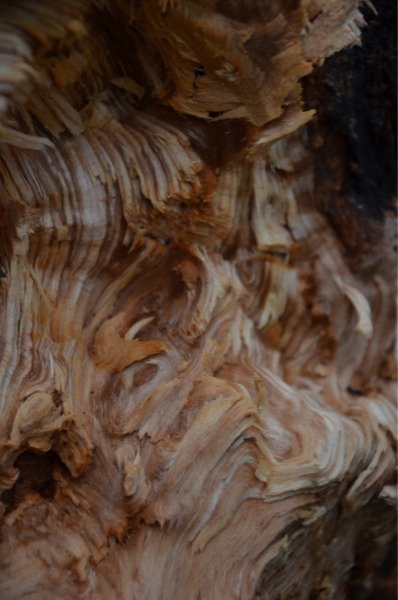
I like the concept of seeing into unsawn wood because I see better the internal structure in its many diverse and complex layers. It is impossible to peel the tree and the many years of growth; say like an onion. I wish that it could be disengaged so, to unlock the history lessons we could learn from inside the layers. Dendrochronological science has progressed so much through the decades, but, even so, I actually like the thought that we can make pieces of furniture from a tree, a boat, a longbow, a car frame and chassis, but we cannot make the tree. It’s sort of humbling really.
As the wood lies like a sprawling corpse I met a friend, Craig, who catches the grey squirrels, removes them from the region and has worked for fifteen years to reestablish the indigenous red squirrels that were ousted by the introduced American greys.
Today we have no reds in the National Trust woodlands at Penrhyn Castle, but soon we will see them return as they cross the two bridges from the Island of Anglesey where Craig and his supporters have worked so hard to help the red squirrels reestablish them with viable new life. No greys are on the Island now. You can read more about the work on their website and follow the progress as we go here.
Comments ()