
Questions Answered – Flush-to-Face or Protruding Vises
Question:
Hello, Mr. Sellers,
Thanks for all you do. I’ve been following your videos on YT, and they are a breath of fresh air, especially for a beginner like me.
I have two questions about the workbench you built in the videos. First, do you find there is much difference between attaching the front vice flush with the apron (in effect making the apron the rear jaw of the vice) and attaching it such that the whole thing protrudes beyond the bench’s skirt? The only thing I can think of is that making the vice flush with the apron would allow one to clamp a board lengthwise against the apron (with something to hold the other end of the board) in order to joint its edges.
Second, do you use dog-holes on your benches? Do you think they are necessary?
Thank you again for your generosity.
J G
Answer:
This is a good question and I am asked it regularly enough to think it of interest to others too. I thought it might help others by answering on my blog, I think hand tool enthusiasts could look at the reasoning behind what has helped me over the decades.
I didn’t invent this. This was how joiners and furniture makers installed their vises and as far as I can see this has been the way everywhere I looked. When I went to the US I saw people doing it the way you describe and tried it for myself. Within two hours I changed back to the traditional way I knew and the main reason was that I could better install my workpiece in the vise without trapping my hand or installing with my hand on the front. My first experience with vise use and installation began 50 years ago in my native England. Since then, because one of my sons had a business building workbenches, I have installed more vises than I care to remember.
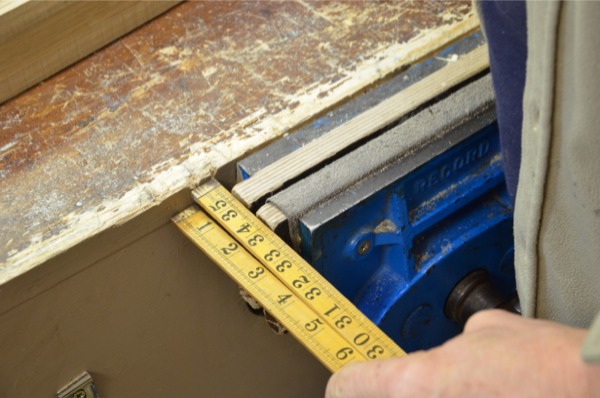
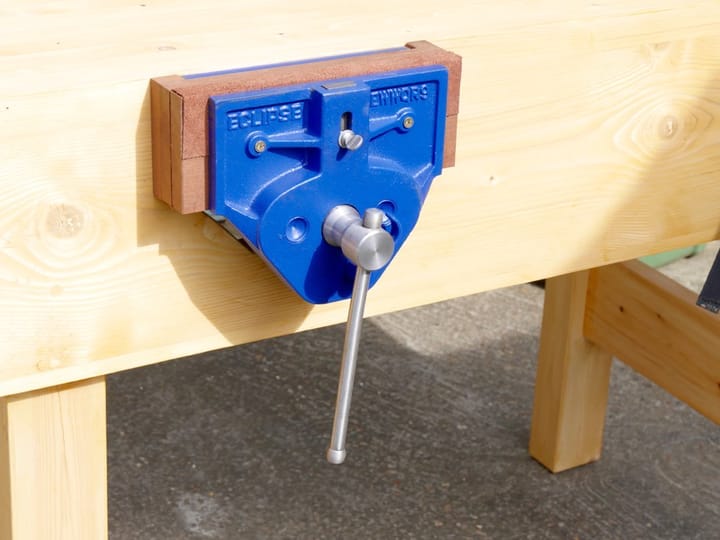
Situating the vise face flush to a continuous apron seems to make sense and in fact most everyone these days does it. Usually they do it because they never tried leaving the vise forward by about 1 1/2″ including the wooden drawer liner and then use the vise for about a month or so to get used to it. If they did, i doubt that they would go back to a flush vice. perhaps they would.
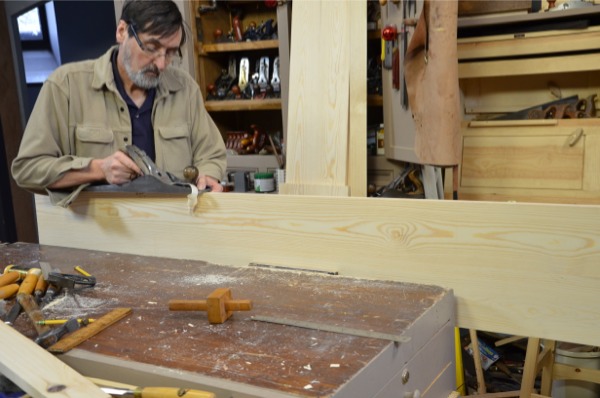
For the few times that I might consider the face-flush vise installation to be an advantage in clamping the other end to the bench, I would feel it definitely not worth it for me and my work. Placing boards of anything less than say 6′ works fine by centring the piece over the jaw and simply planing from that position. Most quick-release vises grip like a bulldog and will not turn loose of properly torqued. When boards are indeed long, there may well be a need to support one end as you say. Especially is this the case with narrower stock such as 1 x 3. If it is the case that one end needs supporting for some reason, I offer to options as alternatives. You can simply place a 1 1/2″ spacer between the apron and the workpiece and clamp away happily to end of the apron on the bottom side of the board. The other way is if you have an end vise. This is another great method I like for most types long board supporting. I have never seen anyone else use it but it is very quick and effective and the material feels rock solid. I have stacked some images to see it work for different situations and material aspects.
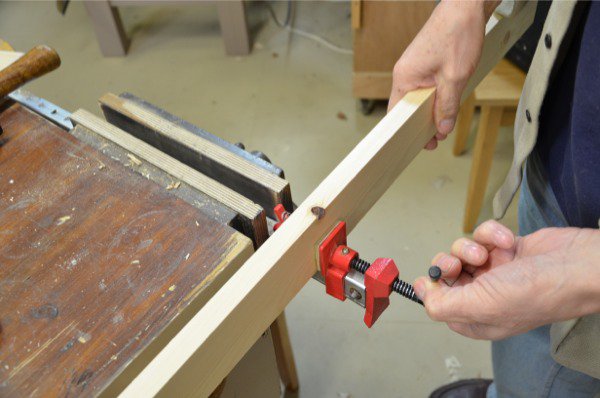
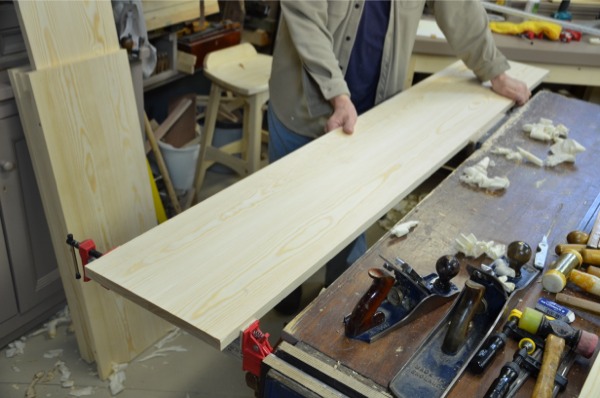
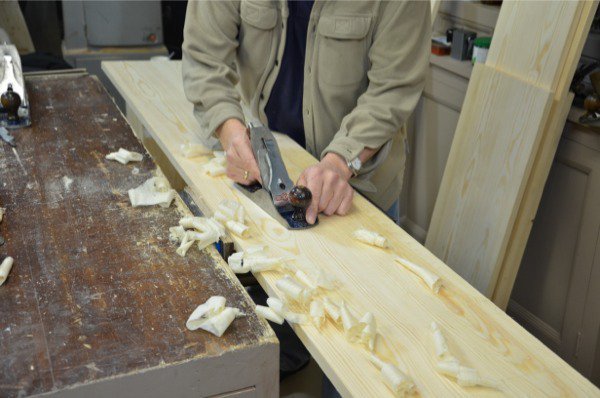
Were I too adopt the flush method, I would lose what I consider to be a positive and simple advantage over flush-facing. With the space offered by protruding back jaws, I can use both an overhand and underhand grip yet still have the same holding ability flush-face jaws have with my hand facing into the face of the jaw too. This is very convenient in the day to day of my work.
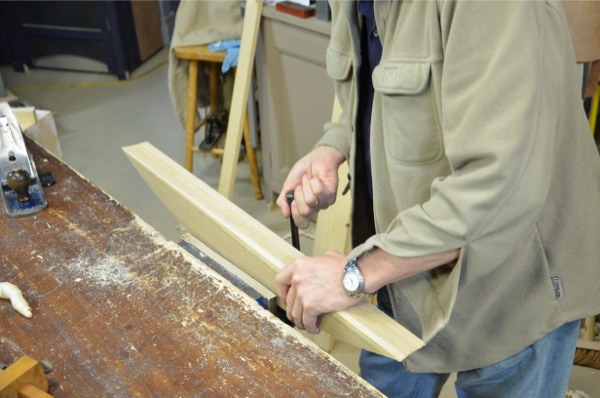
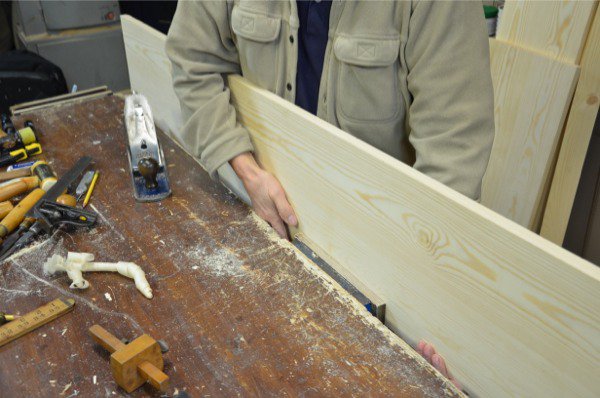
I can’t hold my wood with a very comfortable and strong overhand grip and cinch the vise shut without gripping my hand between the wood and the apron or bench top. In reality, the half dozen times I have wood long enough to warrant clamping to the bench top is of such little significance compared to the hundred and more twists and turns of dozens of smaller pieces (up to 4′) I do throughout each day. This gives me such freedom in my work. It’s fast, efficient and highly effective. I think many people use face flush vises because of the type of vise they install. Many front vises have no second back jaw and rely on the bench top or the apron as the second jaw. If they did want a second, protruding jaw, they could add a 1 1/2″ piece of wood and try it by double taping one to the bench front. If they like it they can make it permanent and lose nothing if the like their flush face.
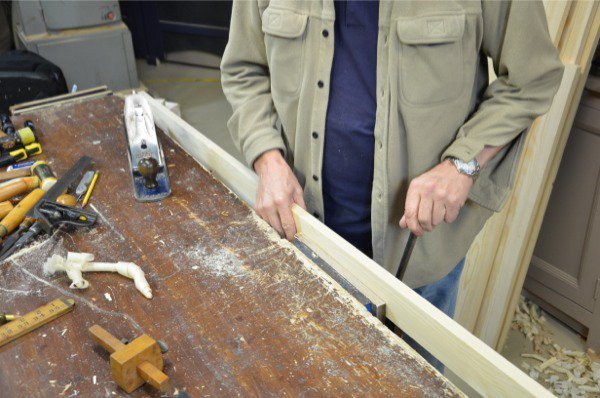
This is my best shot at convincing people to at least try it. I find flush faces very, very awkward when I am forced to work on them. If I use a bench when I am away from home I simply double-tape an extra jaw.
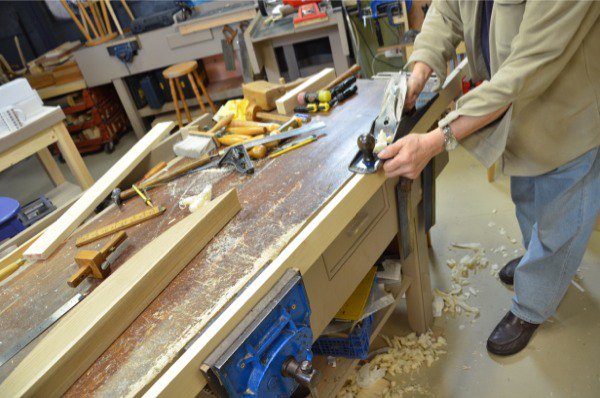
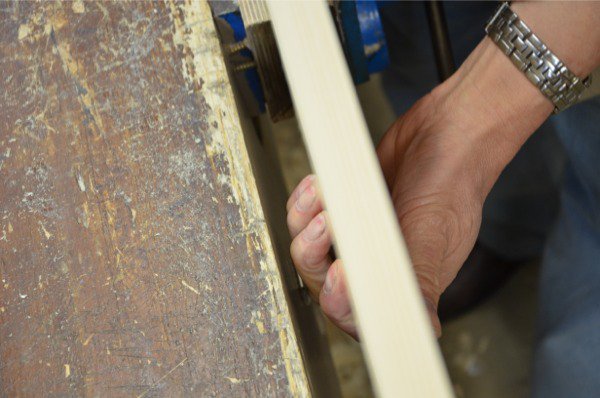
Here is the underhand hold that allows for finger clearance when holding a board during installation along the bottom edge.
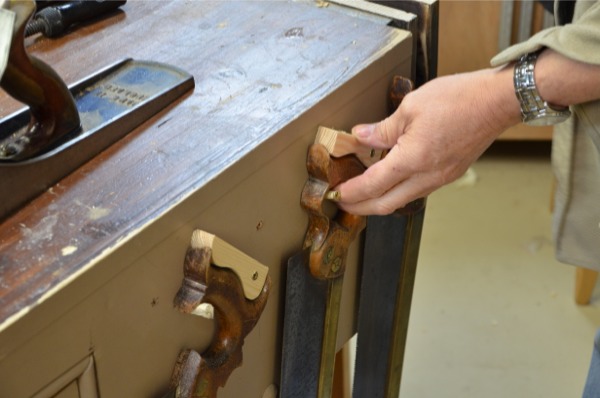
Oh, I also I like to hang my saws close to hand. This is very convenient to pick up the saws by the handle, and a safe place for stowing the saws. The 1 1/2″ gap allows for the saw handles when i am clamping longer pieces in the vise.
With regards to dog holes.
I think that they can be handy to have. I just don’t like them too much. I use a clamp in the vise and can handle almost everything.
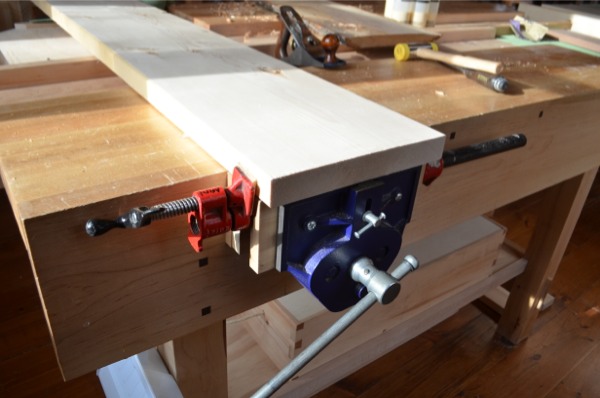
I have several benches in my workshop and I do have a dogging system on one of them, but again, I so rarely use them I wonder why I have them. I think it was peer pressure that made me do it. Every one I met had dogs and couldn’t seem to live without them. I don’t know if you have seen my clamp in the vise method but it works for everything I can do with dogs and then much more. When I passed 60 a few years ago I learned one thing, it is a true saying that “you can’t teach an old dog new tricks.”
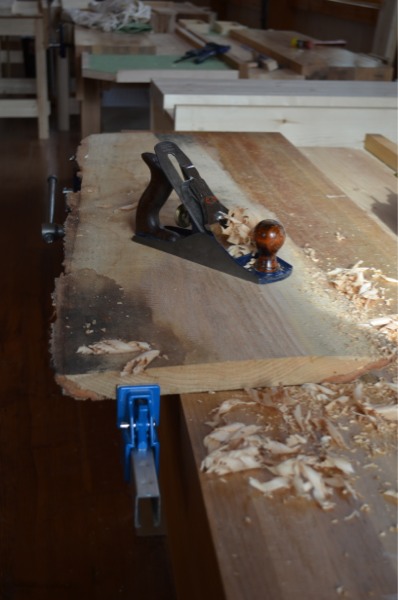
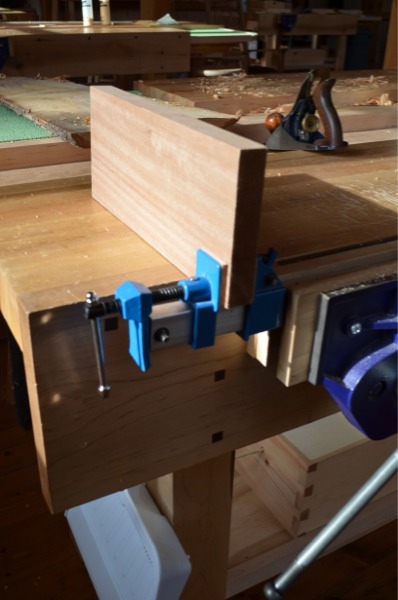
As you can see, clamps in vises work very well for most work and in fact will do much more than dogs. Here, a long clamp in the vise rigidly holds the board while it rests well supported on the bench.
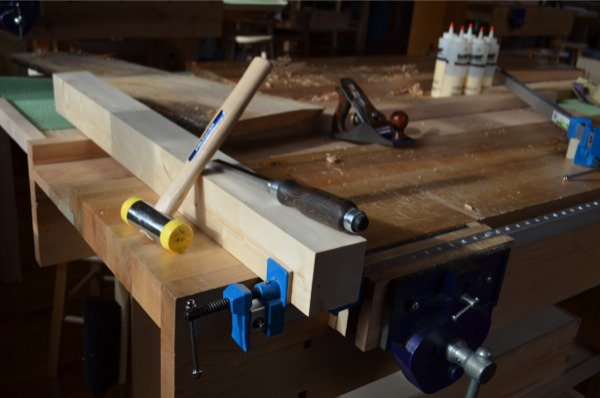
For a good hold on stock that needs shaping, the clamp-in-the-vise works effectively and allows stock rotation as needed. I use this for shaping with planes, rasps, spokeshaves and scrapers. We use this method all the time at the school and have found no equal in many cases.
Here are some more images to show the optional ways the method can be adapted to.
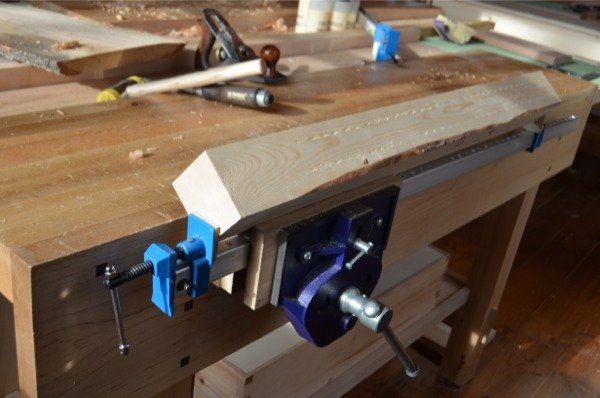
If you are near North Wales you can stop in and try the school benches.
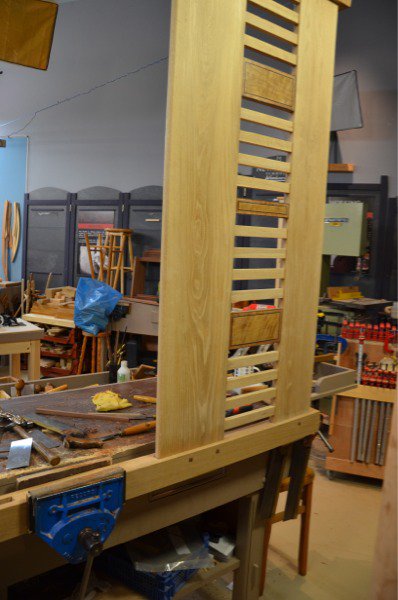
As you can see in the very top image, the vise is holding a massive overhanging weight of around 200-lbs not accounting for leverage with no additional apron clamping.
Comments ()