
Spoons of Purpose and Character Done
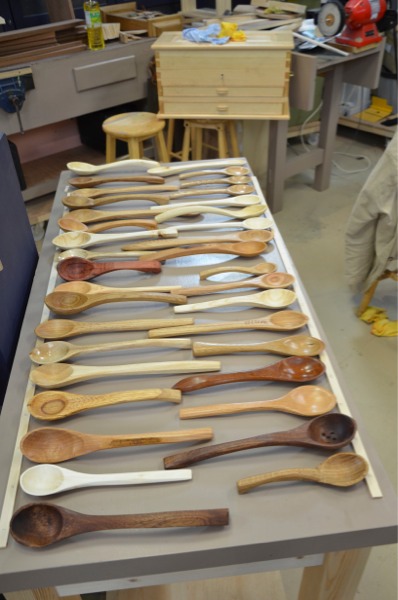
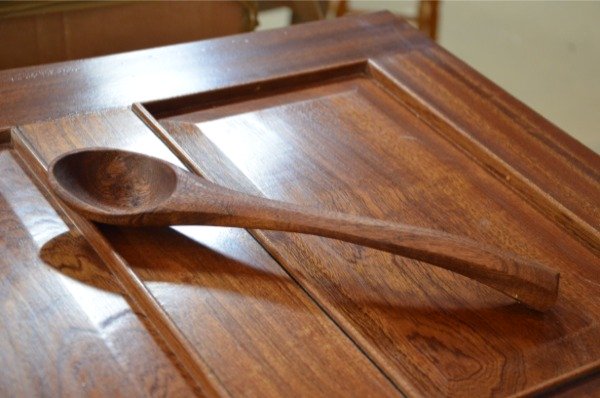
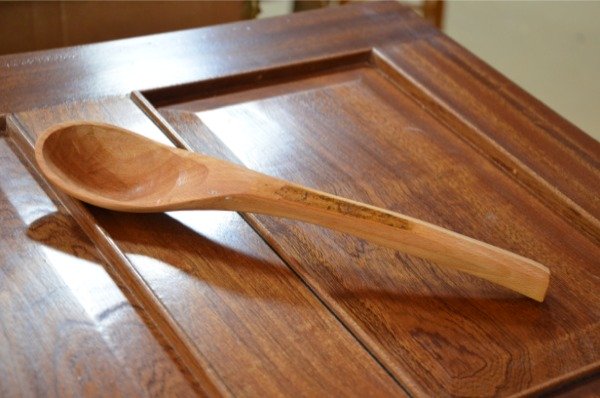
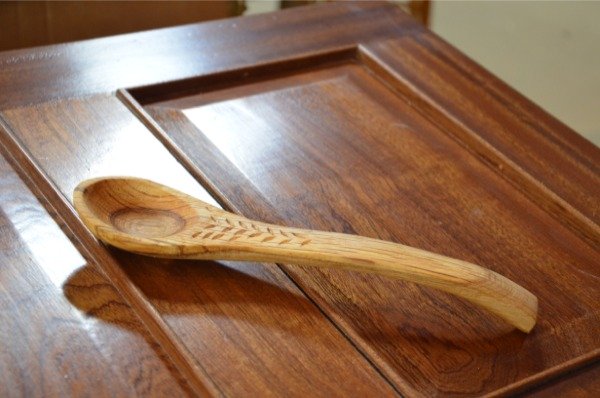
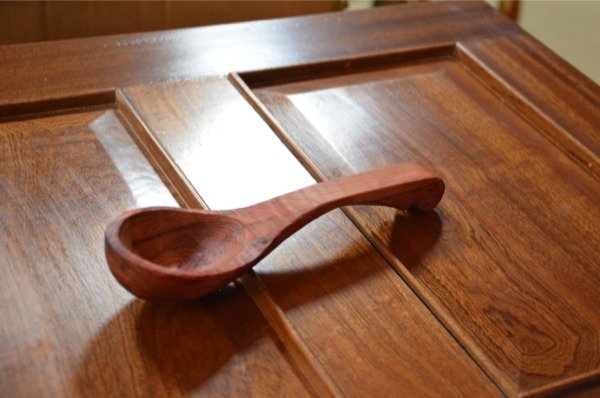
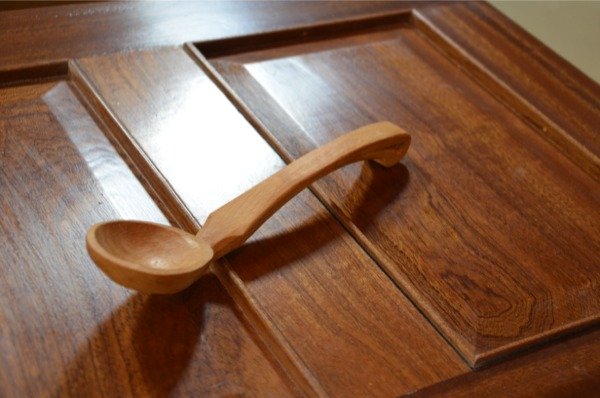
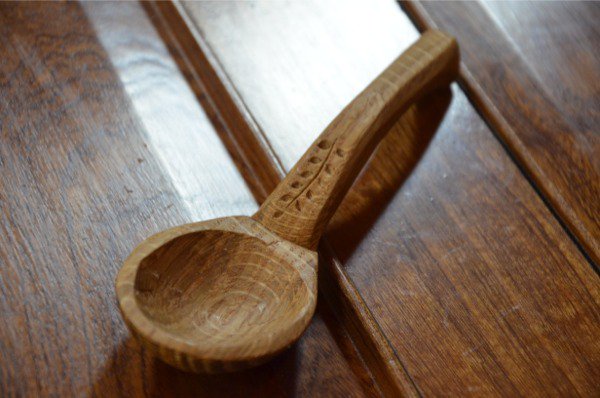
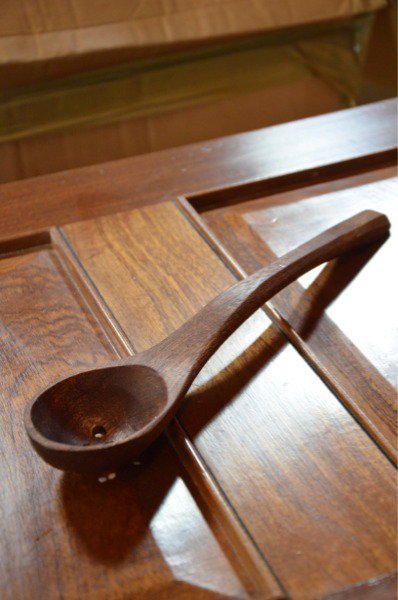
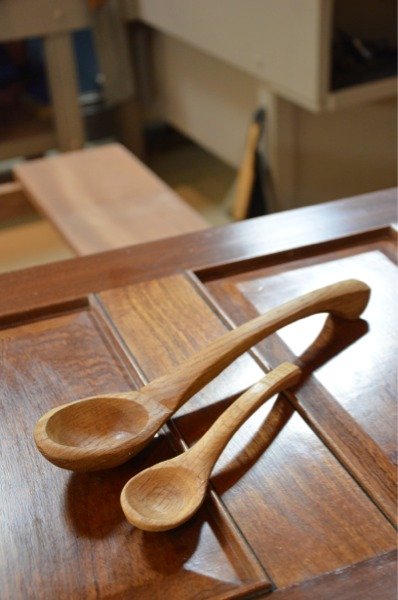
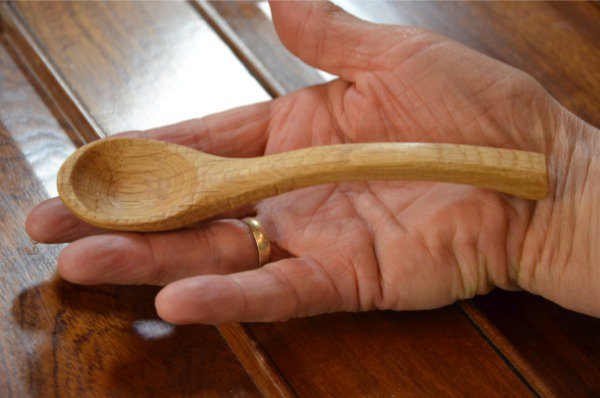
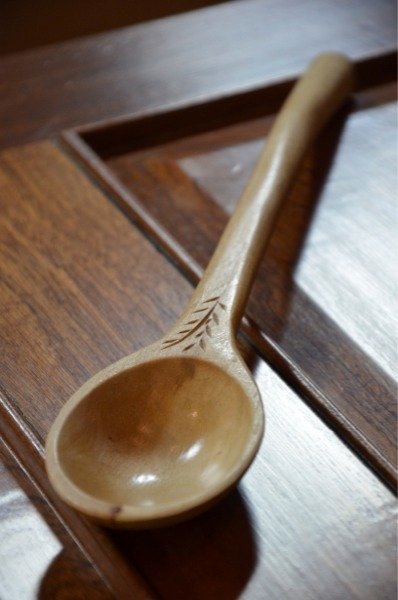
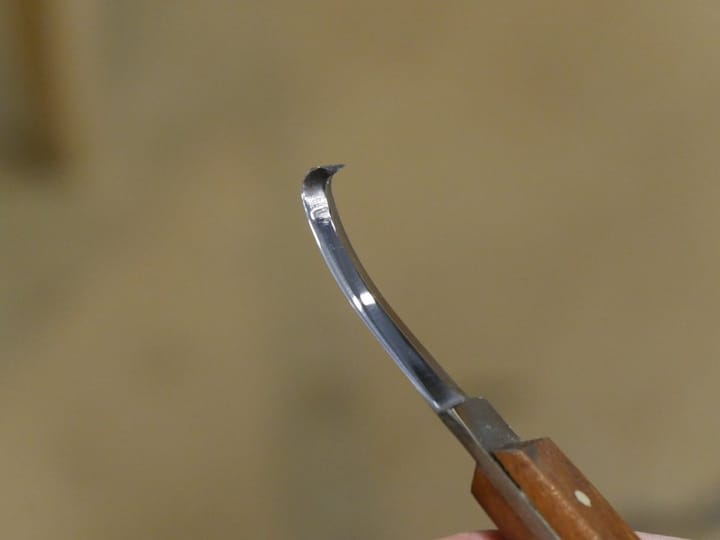
It's hard to say what it's like to make small collections like this. I have determined that using the gouge to carve a spoon is quicker and easier in general than using say a small spoon scorp or knives. Especially is this so in dry rather than green wood, which most of my spoons were made from. Carving the bowls is the quickest part surprisingly and especially so if you have as a good a gouge as I had. I admit I have blasted on a bit about the Hirsch gouge but I haven't used one like it before. I am not saying other gouges are not equal to this one I am using, I just haven't found one that keeps an edge like this one did. I sharpened up three times in cutting 35 spoons and three scalloped chair seats.
As I carved out the bowls using my 'eye' method to increase the depth, I was ever conscious of the different woods I was using and the variable aspects of the characteristics that define them in their particular species. Woods known as hard were the easiest to make whereas soft woods I found more difficult to refine and finish out. I think all of the woods carry idiosyncrasies and of course there are plain woods like aspen and birch and then there are woods like oak and beech that have bright smiles in the form of ray flecks we call medullary rays or medullaries.
For the main part, carving some parts of a spoon is not much different to peeling a potato. I think that that's the difference between knives and gouges. The gouge does not seem that way, but the spokeshave seems to me like a heavy potato peeler. So between the knives and a spokeshave you have more a potato peeling session.
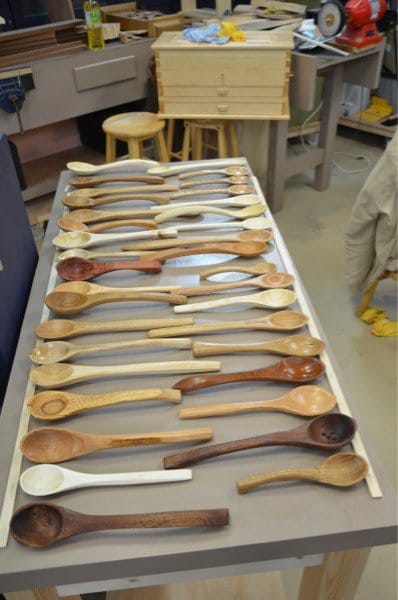
Here are the spoons I carved out this past week or so. I actually made more than 35, just in case I changed my mind on one or two. Sometimes, when I am making something as simple as a spoon, people question why I do it. Well, my answer is always the same, spoons and spoon making are the first aspect of woodworking through which I brought my boys into a world we know as woodworking and I think it is the best way of showing people just what grain really is. To carve, you must know grain very differently than the superficial and external level people know grain as. Here we are digging in much deeper into realms most people sadly never know. It's here that they learned about the multidimensional depth of grain and the need to 'read' grain as and before you actual follow through each cut.
Where I live is a country regionally known for a long history of making love spoons. My tour of St Fagan's museum last year revealed the oldest known love spoon, one made in the late 1600's. A love spoon was and perhas in some cases still made and given to a beloved as a token of a man's love for his betrothed and was hand carved with knives and chisels into the most ornate of shapes and sizes. Of course it need not be gender specific any more. It wasn't only Wales that held to the tradition, Germany and Scandinavian countries shared the same tradition. The spoons originated as practical and useable spoons, but they became more ornate and more decorative through the centuries. Today, they are produced mostly by commercial CNC routers and look just like that. No feeling in the racks of gift shops I mean. They are tourist items and mostly all stained the same and seem somehow now to be so characterless.
When my boys made their first hand carved wooden spoons they were for learning and then, subsequent to that training gave it to their mum. You see, making something is lifeless if it is not intended for someone. Giving a gift from wood, making it, shaping it and thinking of its function as it takes form, seems to me to be meaningful.
Here is a video on YouTube on how they are all made. Interesting for some of you to see, but going to the woods and through the wood pile in my shop deepens the interest I have in making anything from a lump of wood. This second video is how some of them started in the woods. I hope they inspire you.
Comments ()