
A Perfect Christmas Gift Set - Last Minute Suggestion
On tools for Christmas Presents
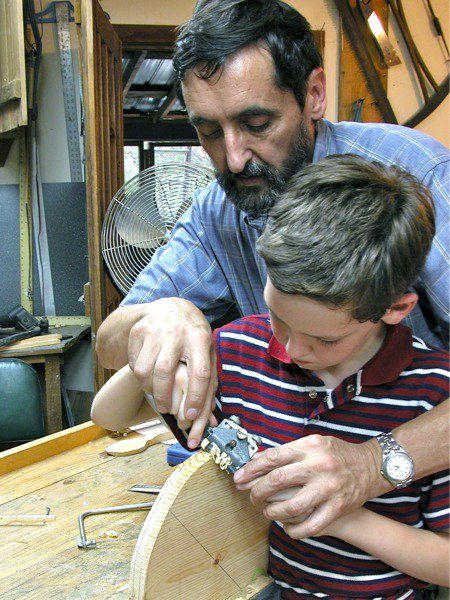
Wood is an inexpensive commodity even though we do complain about the prices we pay. It’s cheap in this one way; from a short board of wood and with three tools like those in this blog, you can make several projects ranging from cutting boards to spatulas and walking sticks to spurtles. The techniques are about the same throughout but the projects will keep you busy and entertained as you and they, those you give the gifts to, train their hands to work using them.

When my boys were small, as young as three-, but mostly five-year olds, they came in my woodshop to work alongside me. It was a wonderful 20 year period for me and for them when they came in every day to make something from wood. I taught hundreds of other children throughout the same period through the very same process and delivered a system of training for children that really works well.

My Granddaughter and one of my Grandsons in the shop with me last year
There is now nothing I would change in these basic but important steps and so today I want to suggest a basic starter kit not for necessarily just for children but for any woodworker starting out in hand tool woodworking. The tools will last for a lifetime of use no matter the age of the recipient and I will combine this with a step by step how-to series on my blog to get them started. Mastering the skills they too will last the same lifetime of use.
Here is the first kit as a Christmas gift set to get others you know started out in the traditions of hand tool woodworking We also plan a video on tool techniques you can show on how to use the tools between now and Christmas; to go with the gift as our contribution to the present:
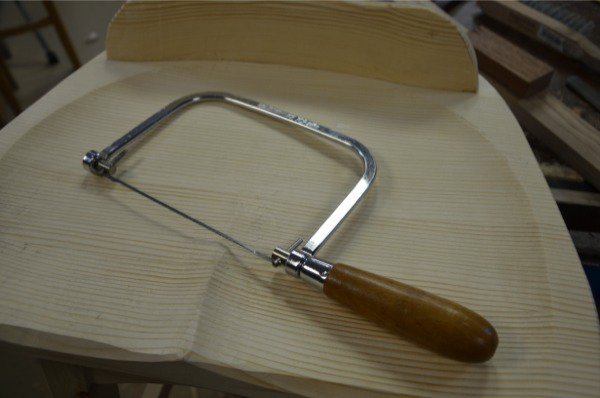
A coping saw
It's hard to imagine but you can spend £100 on a coping saw, so forget that for now, you might want to consider that another time. A good coping saw can be had for around £10-15 via eBay, new or old.
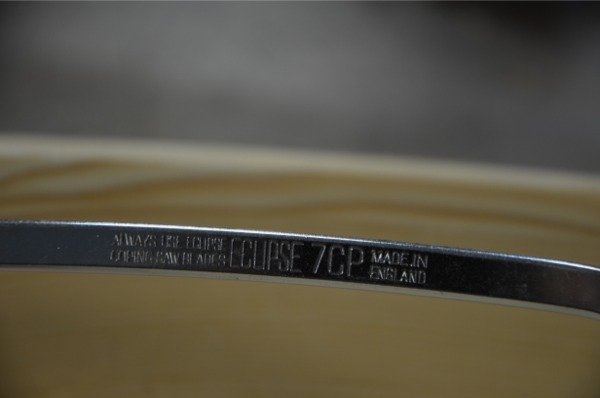
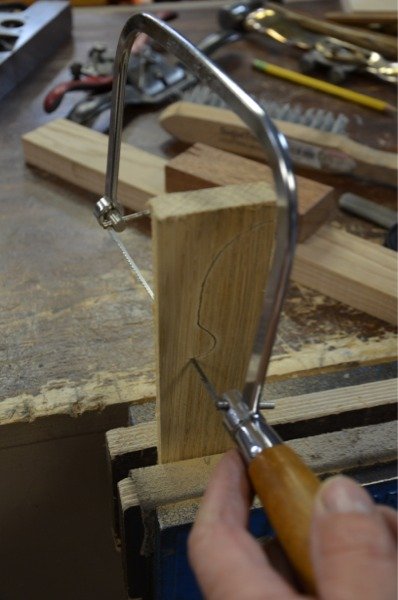
We use the coping saw mostly for shaping. Because of the narrow blade you can turn sharp corners but mostly we use it for curved work in wood 1" thick or less. Because the blade is thin and narrow, this saw type cuts through wood effectively and removes the waste from the wanted very quickly. I am going to suggest you look for an Eclipse. These have been around for decades and they are about the best there is. There are other makers too, but these are ones I have used forever.
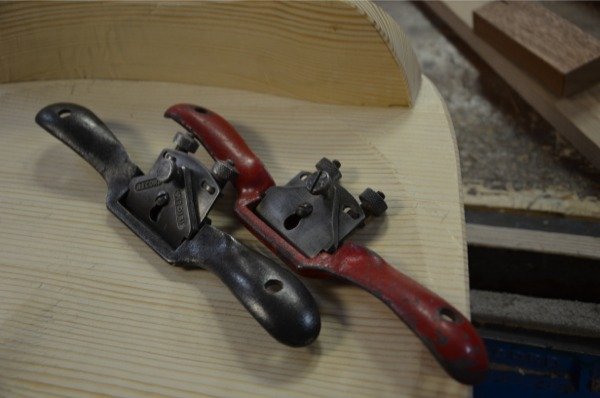
Spokeshave
I suggest a model known as a #151. You will probably not need one with a curved bottom at this stage so buy only a flat bottomed #151 spokeshave.
These tools are available new at a relatively low price, usually new or old will cost under £20 or $20 US. The best makers were the older Stanley and Record makes and these can be bought on eBay. They are virtually indestructible and even 50-year old models will still be good and solid. The spokeshave is really a side-handled plane and we use it to make the walking canes and staffs we made in our woodworkingmasterclasses.com a month or so ago. Currently we are using it for shaping the legs and arches of the workbench stool and so I think it is an invaluable tool for daily woodworking. In this case, to get someone started, it will be used to make some items I have designed to develop skill.
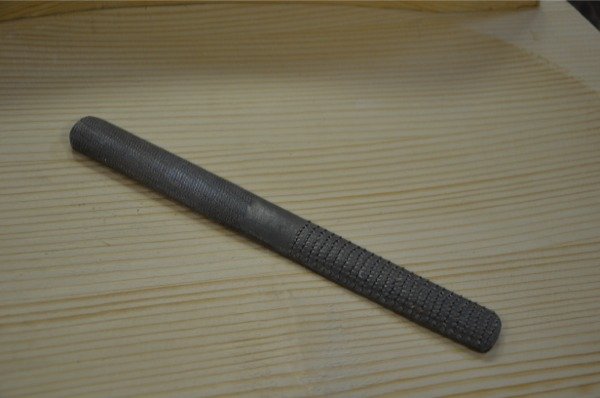
Four-in-hand rasp
I keep coming back to this tool because it is so versatile and it's also safe for young hands. The four in hand doesn't necessarily explain what it is but this tool has four file-type surfaces in one simple piece of steel. It has a flat file, a round file, a coarser flat rasp and a coarser round rasp. By flipping the tool end for end or reversing the tool in the hand you access any one of the surfaces to present to the wood as needed.
The tool is inexpensive and it works well. At around £10 or $10 you have a method for refining work where either the spokeshave won't reach or work.
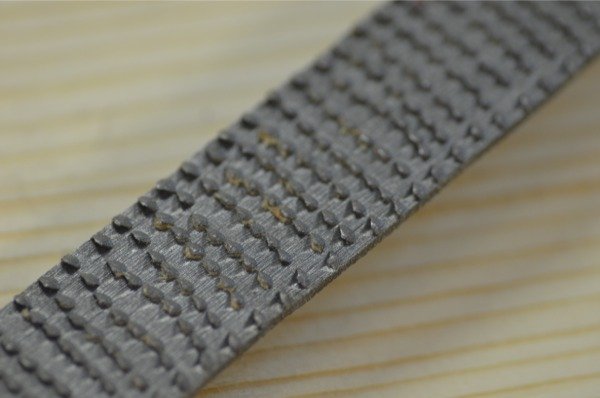
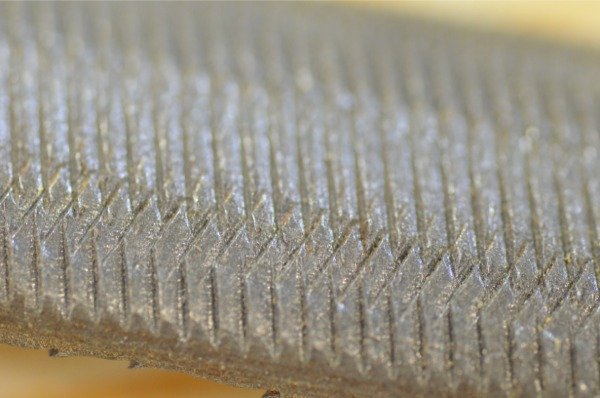
The four-in-hand is a filing/rasping tool used to file or abrade away surfaces of wood to shapes you want to create. The coarse surfaces at either end are to remove stock quickly to both convex and flat surfaces. The file is different. This aspect of the tool, again at both ends of the file and on opposite faces to the rasp, smooths out the rougher marks left by the rasp-shaped areas. Generally, these finished surfaces are further refined by sanding, usually going straight to 250-grit sandpaper.
Yes, we use the tool for general shaping, but we also use it in awkward areas that cannot be accessed for shaping with the spokeshave. Though the ridges that cut the wood are angular and come to a cutting edge, these edges are not sharpened to a knife edge and so the tool is both safe highly controllable. Of course young children should always be well supervised but children also need stimulating to explore options as early as possible. Safety is your issue and mine. Take care of them and they will thrive safely.
On wood and stuff
You should add into this equation some chunks of suitably sized wood to get going with. Clear,straight-grained pine will be best for a starter pack. Perhaps 1" thick stock;. 1" x 2 1/2" by 10-12 long. Two would be good. And then a piece of square stock 6-8" wide by 10-12" long. This will make a cutting board. You can make a pine granddad- or-nana stick from some pine too. Watch this space.
Comments ()