
Questions on chisels - Japanese, Western?
Hi Paul,
I have been doing a lot of reading recently and trying to find tools. I have been looking for chisels and recently stumbled across Japanese chisels and was curious as to what you thought on those vs western chisels?
Thanks for any help
Adam
Answer:
Well, much of what we woodworking apprentices did back in the 60's relied on who taught us and what those teachers used. That hasn't changed. We all tend to play follow the leader when it comes to methods, techniques and tools and of course cultural differences and styles that once wonderfully defined a people enriched our lives as we discovered Taiwanese woodworking differed from Belgian joinery and that the Swedes used methods and woods unknown to South American craftsmen. That has very much changed. I like to watch Japanese woodworkers perform their creative tasks in ways that I could never work wood and so too, according to my emails, they like to watch me make joints using methods they would never use. When you use something that works you tend to stay with that and not try out other things because it seems, well, I suppose, unnecessary. Fact is, it's interesting to try different methods and techniques and of course tools too.
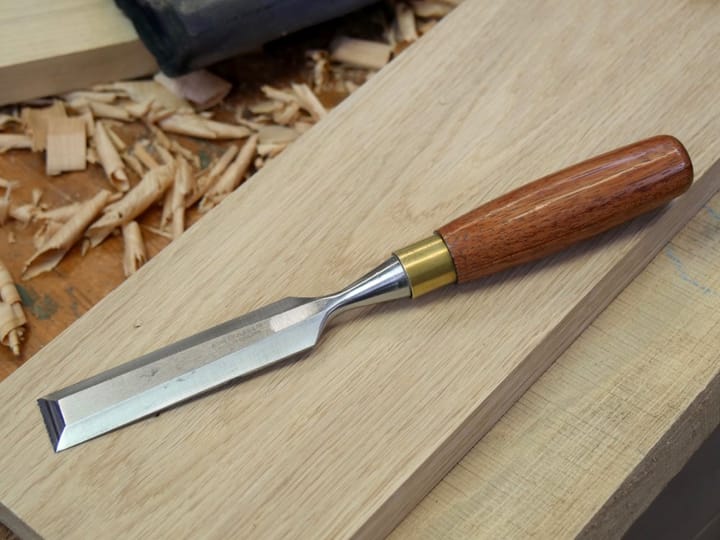
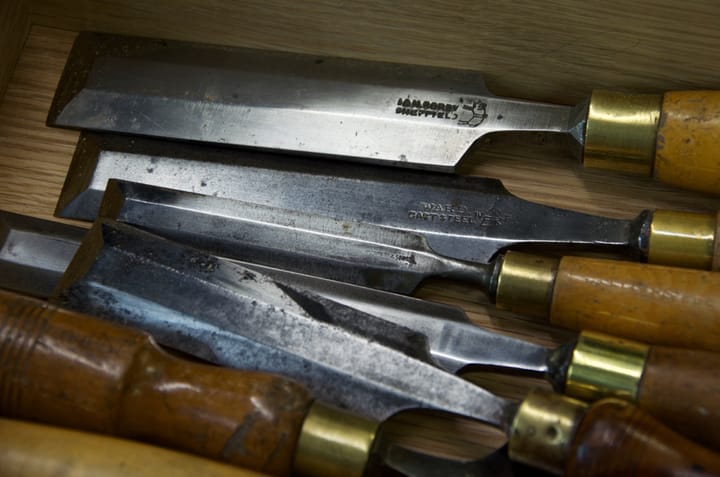
The short answer is that I wouldn't generally recommend Japanese methods or tools for woodworking mostly because it's not me. I'm a western woodworker because that's what i was exposed to long term in my formative years. Japanese tools and techniques came into the Western world about 30 years ago and took a firm foothold. Western methods work equally well, in my mind anyway. I personally pushing saws and planes for a variety of what seem to me good reasons and I am sure the Japanese woodworker would feel the same as I do about methods they were raised with and use. My body, my arms and my hands are used to Western chisels. They feel balanced to me, whereas the Japanese chisels don't give me the same sense of wellbeing I get from Western chisels. Unfortunately, for the main part, I cannot recommend most Western chisels supplying the Big Box stores because the maker/engineers from the main suppliers somehow deemed that Western chisel needed ergo designs with rubberised inserts and steel caps held in polypropylene handles so that carpenters could use steel hammers on them. This is a bit like when I read (and I just read on a forum) that woodworkers should build a certain type of bench so that they could "beat the snot out of it." Who needs a Western chisel they can beat the snot out of. The wooden marples bevel-edged chisels I am using now were made in the 1940's and 50's. One of them has a slight split, but it's probably been split for fifty years. That could have occurred because of drying and not mallet or chisel hammer blows.
Conclusion
It is hard to say try both and decide for yourself because there will be merits to using both that cannot be discovered in a few minutes of use at a bench. I am sure that those conventionally made ones in either camp are wonderful tools. It takes time, a few weeks, to determine which tool becomes a favourite to reach for each time. It is unfortunate that many copies of Japanese tools have come up with a look alike but, for instance, have been massaged just enough to deceive us. Hard-point teeth on Japanese-style saws have distorted what was a wonderful Japanese tradition to ensure that these saws became non-sharpenable and disposable. Don't be side-tracked by Western makers and suppliers. They tell us that hard point teeth last five times longer than conventional teeth. They don't tell us that they cannot be resharpened and you must throw them away.
My personal view is that you buy Western chisels and then consider Japanese chisels to compliment later and reshape a new future. You don't need to spend a lot. Not knowing where you are in the world, here are some considerations:
In the UK:
At the lower end, consider buying a set made under the Faithful brand. This company enters the market with cheaper tools and they don't have the best reputation in general. Here is a set typically sold on eBay for about £32 for six chisels in the set. They are also available individually. These are good chisels and have good edge retention. The handles will not split and I have used them for several years. In my tests they work as well or better than more expensive brands but may marginally lack some of the more detailed refinements.
If you want another well tried and tested maker, try the Narex cabinet makers set of six for anywhere between £60-70 per set or £10 each depending on size. These are good chisels and they are widely available. Try a set from Workshop Heaven here. Ashley Iles on the other end of the spectrum make one of the finest chisels and these will cost you five times more than say the Faithful set but they are genuine tools made in Britain by one of the best makers. They are well defined and refined chisels, again, try Workshop Heaven here.
In the US
Well, you have many choices there, but you won't find the Faithful set. Go to Highland Woodworking for a wide range and good prices on the Narex range and who also sell those made by Lie Nielsen and the Stanley Sweetheart range as alternative considerations. Also go to Tools for Working Wood and find the Ashley Iles range there if you fancy a good British maker. Don't forget Lee Valley & Veritas for a positive supplier with unparalleled customer service. It seems to me that the best offering in the US is the Narex cabinet makers set. I have been very pleased with the Narex chisels and use them in the US school. They are excellent lifetime chisels.
Comments ()