
Shaping your axes for carving
Shaping axes and scrapers for spoon making and carving
Shaping an axe to carve with is necessary because they really don't come fit for purpose usually. Today we do the axe. Later the scraper. Here you see two axe types. One is large the other small. The one below is an old and well-used axe used for may aspects of working wood. I have used this type of axe in carpentry and joinery for almost 50 years. It's used for shaping stake points, scribing skirting boards to uneven floors, cutting wedges for plugs in brickwork, removing excess wood to fit frames in buildings to name but a few tasks. On the other hand the woodsman will trim branches and when you get your chainsaw stuck you will be very glad to have one of these with you too. I have shaped chair and table legs for years using an axe and I have also cut tenons with them too. The Bahco axe is a new-to-me axe reshaped for carving. I have reshaped several recently to refine them for the research and work I am involved in. Mostly that work is to help you so that what I offer is current and doable.
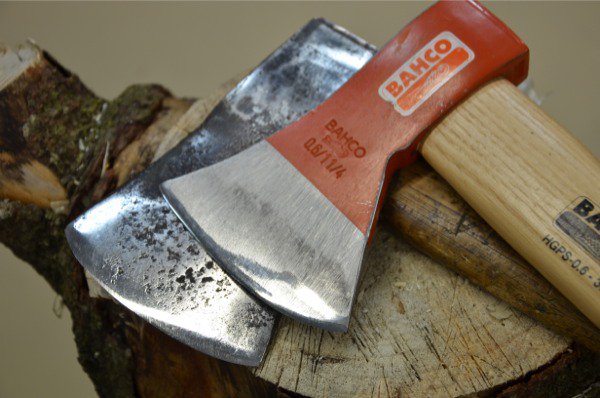
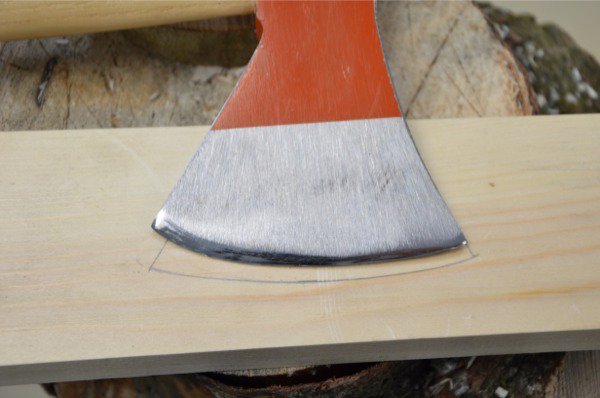
This picture shows the original shape before I reshaped the heel of the cutting edge to get the edge I wanted for my work.
Reshaping the axe is best done with an electric grinding wheel for speed and for ease if you have one. Grinding this way can burn the steel, which then softens it, but regular plunging in cold water every few seconds and as quickly as possible after the grind will quench and harden if needed. Do this as soon as you see a dark line appear along the grind and you can prevent heat build up immediately. You can also file and shape it with a 10 or 12” flat file, but if the shape needs a lot taking off it can be tedious. Shaping is usually a one-shot deal if you get it right first time. Subsequent sharpening can be done with a flat file and honing stones.
In the picture you can see the original drawn shape compared to the reshaped axe. By first grinding to shape you establish the profile you need.
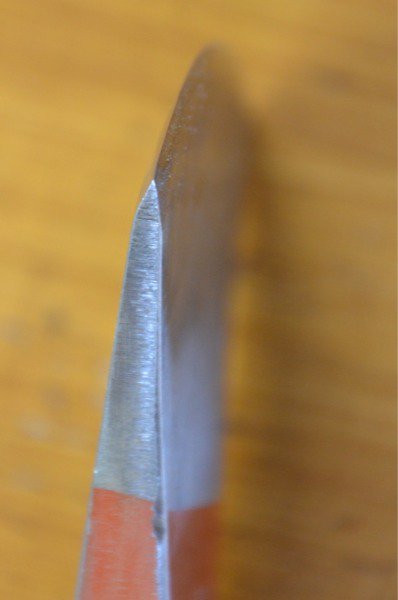
Here is the profile of the two bevels on the heel of the axe. They traverses the full width of the curve evenly and equally.
Subsequent grinding on the bevel either side reduces both bevels to then form the cutting edge I make a shorter, steeper bevel on the side of the axe closest to my user hand and a long shallow bevel on the opposite side. This gives me the ability to direct a shallower cut on the face of the wood I am working. After I have reshaped the profile and reground the bevels I use diamond plates to hone the bevels into cambers. This gives me a sharp and strong cutting edge to chop with.
Comments ()