
Magazine Reviews and the Great Divide
We woodworkers have great expectations when it comes to our work, whether it's part of our full-time occupation or weekends in the garage workshop. Most often we indeed turn to and rely on woodworking magazines for inspiration, education, news surrounding woodworking and woodworkers and of course new products reviewed by experienced users of equipment, tools and machines. Of all the magazines out there, the benchmark of quality in content, photography and graphics was set long ago with the American owned magazine known internationally as Fine Woodworking. This magazine now has many decades of fine work under its belt and a wealth of archives to glean from via their interactive online extensions. Quite honestly, if you want to know about just about any subject to do with woodworking, you will find the answers by Googling via their website.
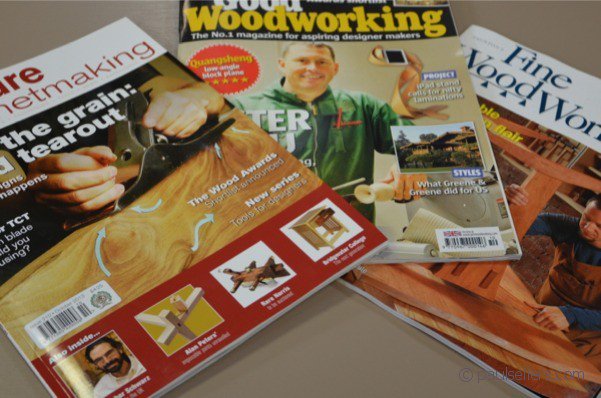
This week I picked out three magazines from the racks at WH Smiths and thumbing the pages I immediately saw the difference between the UK offering in two of them and what the US counterpart brought to the world of woodworking. The difference was remarkable. There is no doubt that yet again in this month’s mag pick of the month I favoured Fine Woodworking and I think with good reason. Here are just a few of my professional observations:
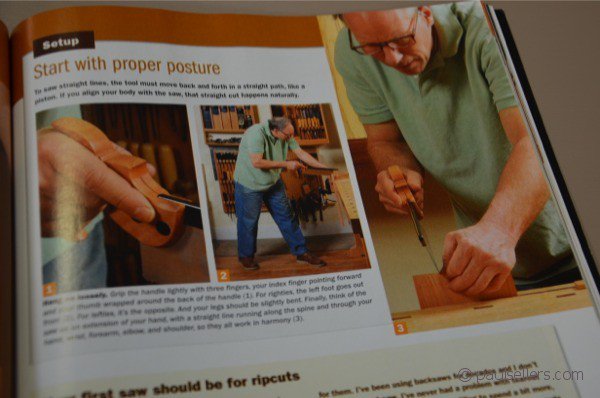
Fine Woodworking's pages
The number of advertisement pages were 50% less than that of the UK mags
The photography throughout was of the highest professional standards
Almost every photographic image had hand and body shots of the author at work
The standard use of high-end graphics throughout each and every article
They took great care not to merely pose shots but engage the reader with the project and the craftsperson
The articles are always, always inspiring, insightful, educational and inspirational
The line up of contributors go to great lengths to comply to and maintain the high standards of FW and The Taunton Press in general
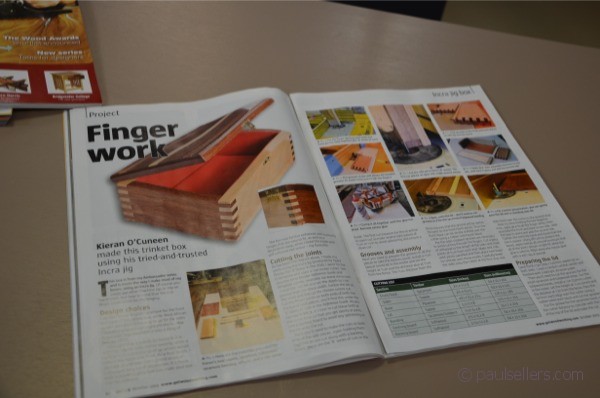
For some reason, two magazines from the UK, went in entirely the opposite direction to the above altogether. Here is an image of the Good Woodworking offering. This was typical of the whole content and contrasts markedly with what I might expect from a well-established magazine. As I looked at the four key articles in Good Woodworking this month, of the 18 pages filled with 85 photographs, only seven images contained very brief glimpses of people or hand shots and these were indeed of the very lowest standard. This was the exact opposite of the FW magazine with only seven of 85 counted images in sequence being without human presence. Another point I saw was that the UK Good Woodworking articles contained almost no graphics at all; only two poorly executed graphics in one of the four articles. Amazingly, three of the four articles had no people or hand shots in them at all. Now I hasten to add that this is not so much the fault of the contributors but the magazine itself. If someone takes the trouble to write the article, the magazine is made aware of the project or news and can indeed follow up with good photographs or graphics that compensate to bring clarity to the reader. Other articles by editorial staff offered about the same passive and lax content. A good gauge of quality is when the advertisements and equipment reviews become more interesting than the key article content. If and when this happens, there is not much to hold any reader’s attention. Good Woodworking is not the only failed offering. I thumbed the pages of Furniture and Cabinet Maker only to find that they too had similar hand-less, body-less articles that often left you guessing. I don't know if anyone else questions why this is happening in a time when people are ‘going local’ again. I paid £14 ($21 USD) for the three magazines. That translates into articles and adverts of one kind or another in about equal proportion. I am sure there is a lot of pressure surrounding these magazines and the economies we live in. I cannot know the whole of it, but editing and quality content must go beyond advertising otherwise what we could be seeing in Britain may well mark the end of British woodworking magazines and that would be a sad day because, though American magazines are for the main part highly aspirational, their content is obviously geared towards it’s domestic audience and availabilities in terms of product and materials - news, reviews and so on, are also very American-oriented. I think that there is a place for both. What we really need is the challenge of new breath. I don’t think that it’s too late to turn the tide here. Just that it will take much greater effort to address the need and not allow complacency to set in.
Comments ()