
Starting Out On Your Own - Opening Five Questions
I think in many ways the most important step is answering questions that help identify what you want or at least what you think you want, what is needed to make it happen. This then helps to identify what you have and more importantly what you don’t have be that finance. equipment, skill, knowledge and so on.
Becoming a woodworker does not at all mean you have to become a professional. Becoming a professional has most often meant that those that actually loved their craft in the beginning became a slave to it in the end and ended up hating the monster they themselves created. Keeping control is important. Outgrowing control is a nightmare because all too often you find yourself unable to regain the control you had in the beginning. Another aspect I once found myself in was owning an LLC I didn’t want to own and ending up feeding the frenzied governmental departments at County, State and National levels with taxes, accountability and unnecessary filing of paperwork that forces you to employ someone to do it for you. Keeping what you do as simple as possible is key to your self satisfaction and fulfillment.
OK, it’s time give you the first five questions. Answer them with absolute honesty because deceiving yourself and others only leads to self deception and the deception of others you care for and who care for you. Write or type out your answers and make only the changes that bring clarity through your answers.
Question 1:
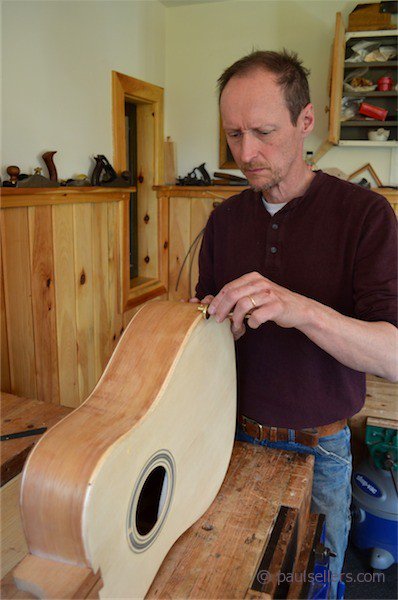
What kind of woodworker do you want to become? In other words what trade or area of woodworking would you feel the most drawn to - furniture maker, carpenter, joiner, boat builder, instrument maker and so on?
Question 2:
Do you want to be full-time or part-time, weekender? I assume that you don’t want to be employed because this series is about ‘Starting Out on Your Own’.
Question 3:
What is your present financial position? Turning the existing faucet off doesn’t mean turning on the other will bring the same amount of what you need. We will get into more detail on this shortly. This is for you to answer so you know what your needs will be.
Question 4:
What skill sets do you already have? Scale them on a scale of 1-10, 10 being the highest level of competence. These skills should include anything and everything you feel might be of value to your start-up business and include at the very minimumIT skills to machine skills. Separate out the categories you feel could or would be key areas to your business such as:
General business management
Office duties including accountancy and bookkeeping, stock purchasing, costing, sales and marketing, people skills, organizational skills.
IT work
Machine skills
Hand skills
Finishing skills
To better determine exactly where you are it is helpful to use a the same method of scaling using the 1-10 scale with 10 being best. i.e:
Tablesaw - 6
Planer - 3
bandsaw - 7
This will help you see your strengths and weaknesses and determine what you need to develop increased skill levels.
Question 5:
Do you have direct support from those close to you and especially your spouse? This is not an I-think-so answer but one you have seriously talked through to the point that you know he or she is with you and at what level.
Comments ()