
Spoon making - Laying out for the first cuts
You may or may not reach a point where you can free-hand a spoon shape straight from the tool. This is not difficult if you can, if you can’t, it can be extremely difficult. It makes little different to the spoon maker in his own home workshop. At shows it often becomes a place to show off your dexterity and wow an audience. It can be entertaining when it’s done well and you see it for what it is, which is no more than a well-practiced but small aspect of wood craft. It takes skill, unlike machine work.
Today I want to start with a pattern. People, children, women, men, like patterns. It gives them security and especially is this so when they first start. Patterns are always scaleable but rarely can you use the same pattern to draw around for a larger or smaller spoon shape. You must make patterns to sizes you want and this starts with a folded sheet of paper or card stock. Almost anything will do. Initially you want to find out if this is a one off task to make just one spoon or whether you will continue making spoons to incorporate them into your worklife as a craftsman or woman. It’s unfortunate if you make just one and do little more of this type of work. That will most likely mean you will never become a master of the skill. Becoming a master demands rote practice to become efficient, proficient and economic. This level of coherence meets the demand to produce quality work at a speed that we can feel demands something of us without feeling the drivenness we see in factorial mass manufacturing. I think this is often key to heightened fulfillment in that we develop skill and dexterity in our work, train our bodies and minds by self discipline and create from our whole being something that didn’t exist. It’s also important to see that if we work for skill, to master the strokes we use so that we predict the outcome minute fractions of a second before they come from the tool’s edge, we become controlled in our work and so control what, how, when and where we make.
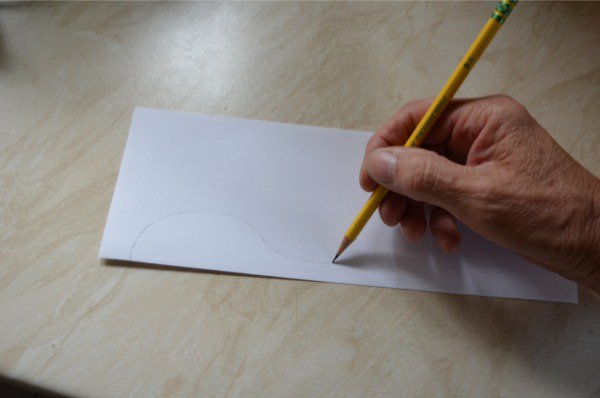
Folding the piece of paper presents us with a tablet to draw on. The fold becomes the centerline of the spoon we will make. This practice is common, simple, quick, effective and accurate. You can complicate it if you want to but I suggest you take the risk and freeform right from the beginning. As I said, spoons come in all shapes and sizes. Large or small, the process, different patterns and so on for making the spoon remain the same.
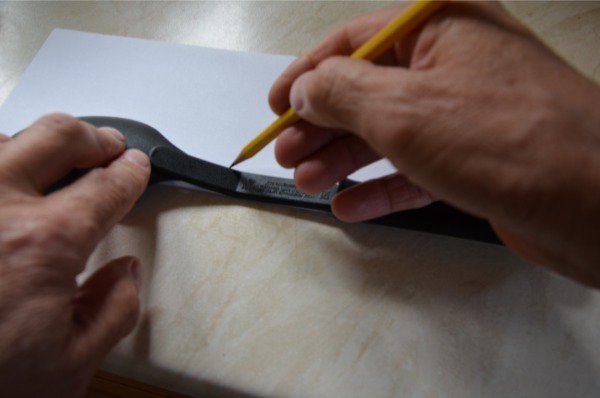
If you have an existing spoon size and shape you like you can use that for a pattern too, or even make your shop pattern from that. In my case, I always make patterns so that I have a permanent collection of template shapes and a record to pick from as, if and when I need. For this I use old plastic lottery or shop signs discarded at the back of shops or from old sales signs anywhere I can get them. I still make the paper or cardboard pattern and transfer it to the sign material. Using a sharp, pointed knife score-cuts the surface and the material readily snaps to the cut line on straights and curves alike.
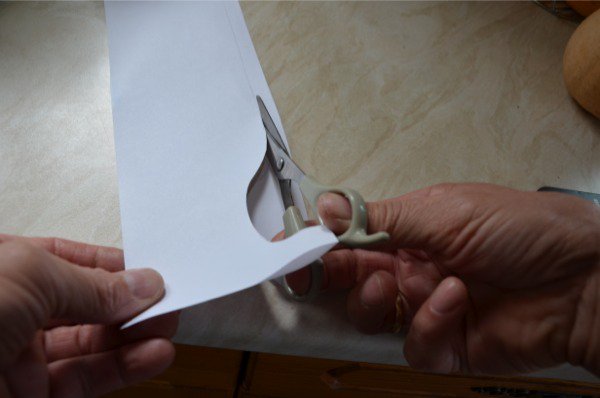
Cut the folded paper along your drawn lines and you have perfect symmetry for a pattern.
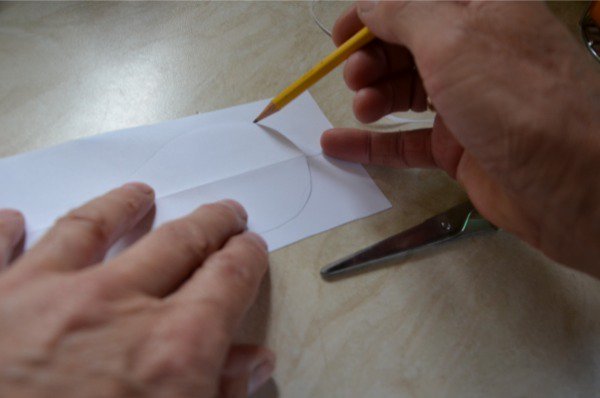
On a second piece of paper draw the spoon part onto the paper...
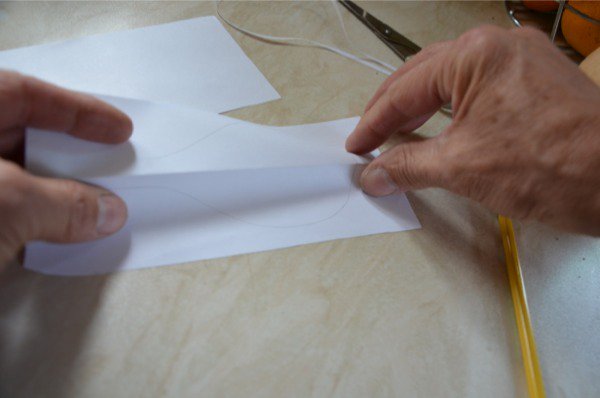
...fold it along the centreline.
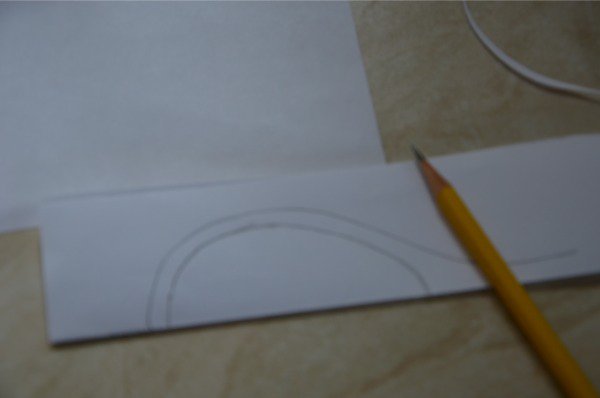
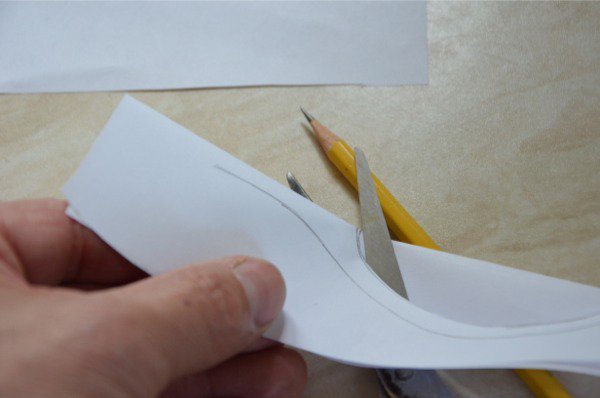
Cut out the spoon bowl shape and you now have the two patterns you need to lay out your spoon onto the blank.
Comments ()