
Reworking new planes to act like old and well used ones
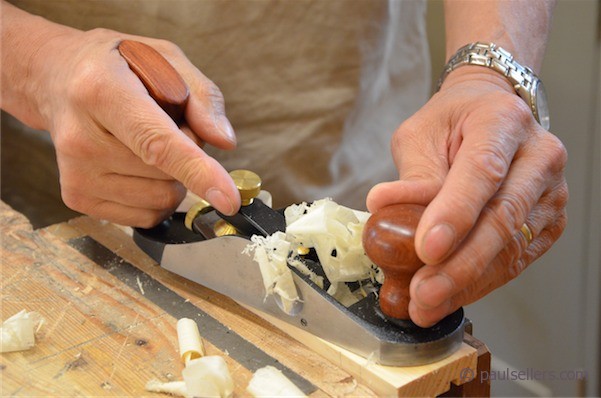
Introducing thoroughbred plane sole changes
All planes work best with bevelled edges to the outside rim of the sole. It's not commonly done and yet all planes benefit from this simple and remedial step. I was reluctant to post this because some modern makers do go to great lengths in making their high-end planes, and use engineering methods that give top quality engineering results. Not all planes need this step, but smoothers and jacks definitely do and only because it improves performance exponentially, taking what could be described as sluggish into realms of high-power performance. I suppose such a radical work might void a warranty, I am not sure, but these planes are usually so well made they defy the likelihood of such a need.
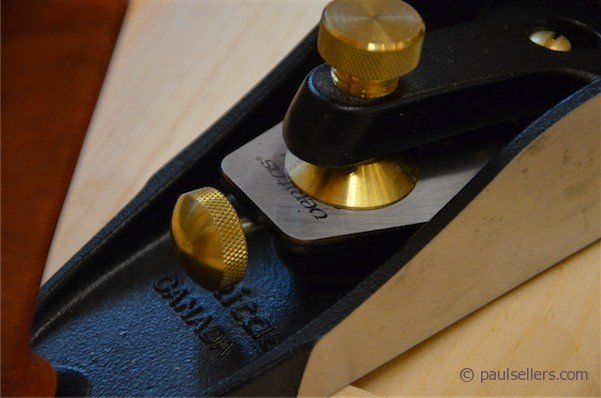
No modern day plane I know of develops this essential step to improved performance so it is indeed my suggestion that you make the change and see the results. Even older planes often need this step because many have stayed in the box with scant use and certainly not enough to change the outer edges as shown below. The final decision is of course yours and not mine. Perhaps buying new old Stanley or Record would be a good move to try it out what I recommend so you can assess the value and worth of what I am saying. That would be fine.
Steps to reworking the soles of planes for real woodworking
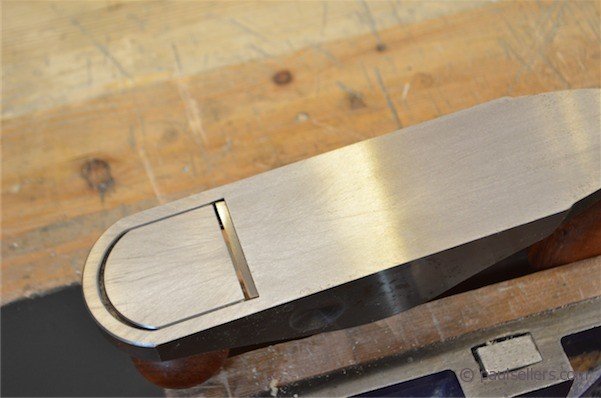
I have worked this specific plane for about eighteen months now and I go to it for more and more of my daily work. Now that I have it refined and fine-tuned to meet my needs, I really love. What I am recommending will indeed work on any and all cast metal planes and it will only improve what you have.
Smaller bevel-up planes
I have mentioned this smaller bevel-up smoothing plane made by Veritas of Canada a couple of times now. I first met with the plane a couple of years ago when I met with the engineers and designers to see just what was behind the scenes in bringing new and innovative designs to hand tool enthusiasts. I couldn't help but feel that this plane was destined for good things and though I have seen reviews from time to time, I must say that cannot praise the quality of the design and what it brings to market. Scarcely has any tool, plane, impressed me so much.
I have used all of the Veritas range of planes for a substantial period now and know them to be very well made. I have used just about every other type of plane too, old, new, wood, cast iron, plastic!!!! I am well acquainted with them all. It's somewhat controversial today in my saying that bevel-up planes cannot fully replace bevel-down planes, but I stand by this because I know it to be perfectly true. My experience working planes at the bench throughout my ten hour days most days helps me analyse these things and though I may be seen to be controversial, that's never my intention. Countering misinformation gets more and more difficult because so many opinions that have little or no real basis from those with a real working knowledge. Only time will tell about bench heights, bevel-ups and usually after the damage has become irreparable. So I blog in hopes that some will listen.
On then to BU planes.
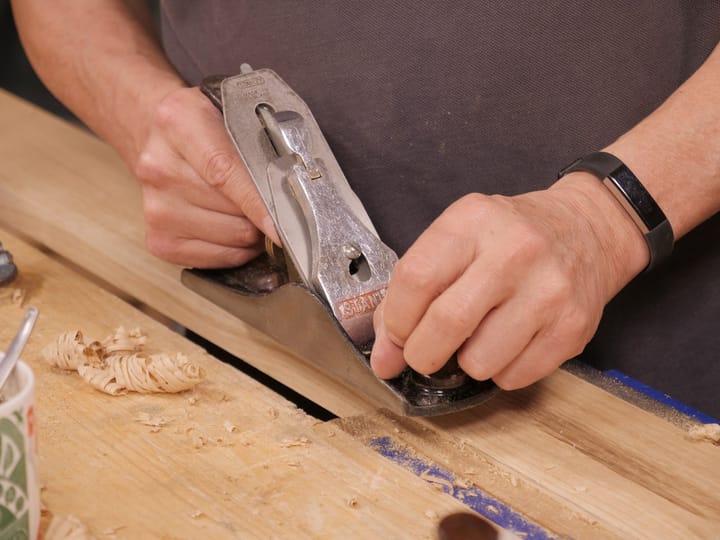
Using the small bevel-up plane at first left me reserving my use of it because of a couple of things. I was reluctant to do to this particular plane what I really wanted to and always do to all my personal planes and the school planes and that is bevel the outer rim or corner of the plane's sole with a very shallow bevel all the way around the underside corners where the sides, front and back and heel meet the sole of the plane. This relieving is not something plane makers have ever done as far as I know, but decades ago I questioned why old cast metal planes felt so much better on the wood than any new one, regardless of the maker, the quality or anything else. In two seconds I knew the very obvious answer, and on all the planes I owned I did what I said, I beveled the soles. The difference this one act made totally transformed the planes and made them pure joy to use.

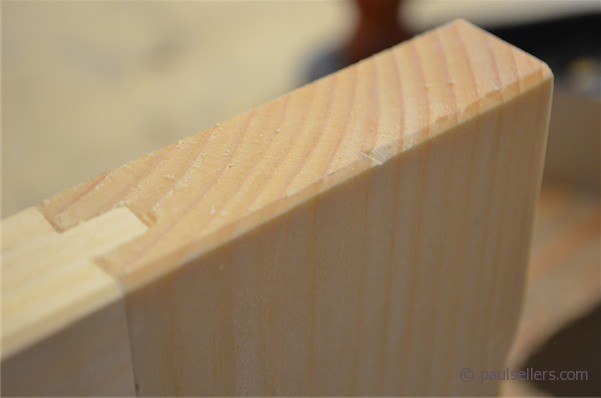
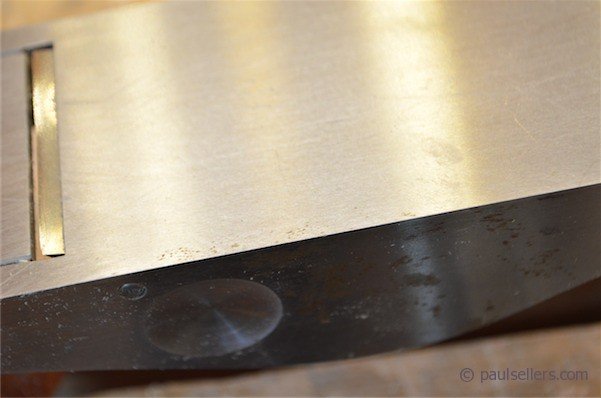
One fault I find with the more modern and better quality planes is the square and angular corners. They are OK on flat surfaces, but when you come to edges, corners and chamfering, these hard plane sole corners seem to snag on the wood when you least expect it and when you least want it too. This happens because the corners of the wood are under slight compression and this often results in a tear or deeper dig in the corner which trips up subsequent swipes and the problem deepens.
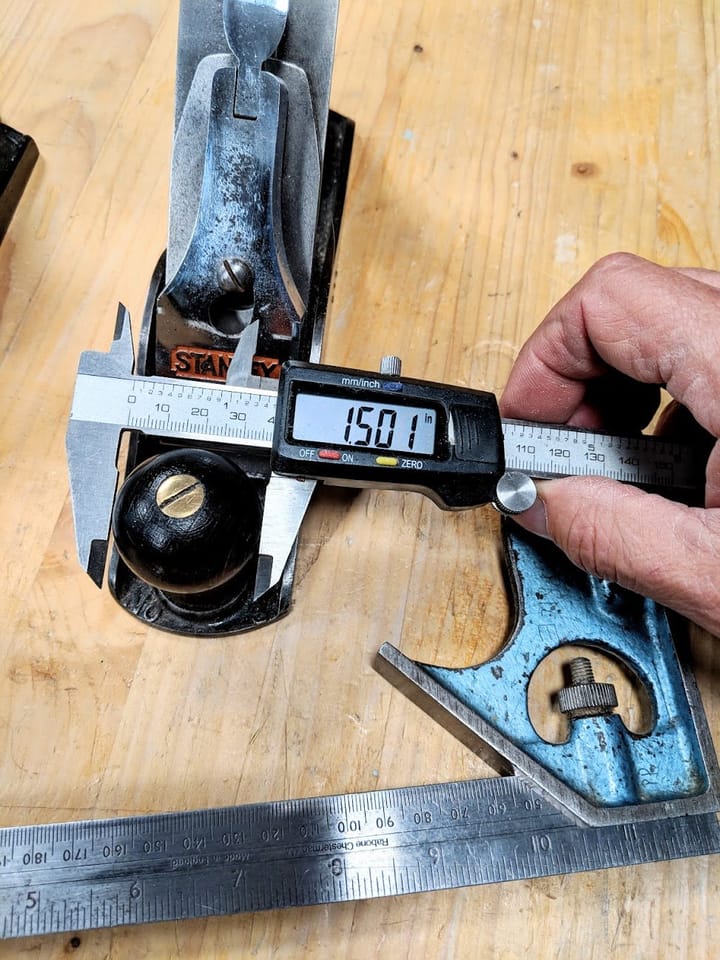
This week I took the Veritas plane and beveled the edges on my diamond plates. This may seem quite drastic, but it remedied things that you and others might not be aware of. I used cardboard to elevate one side along one edge of the diamond plates I use for sharpening. A steel rule would also work well for this. I rubbed the tilted plane back and forth along its length until the bevel was about 1/8" (3mm) wide consistently along the long edges as can be seen in the before and after images.
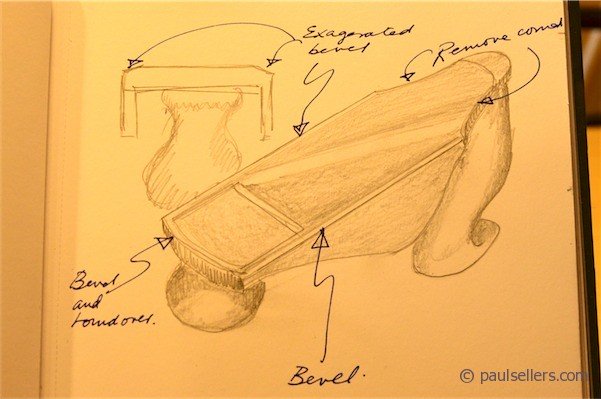
The drawing shows the bevelled area
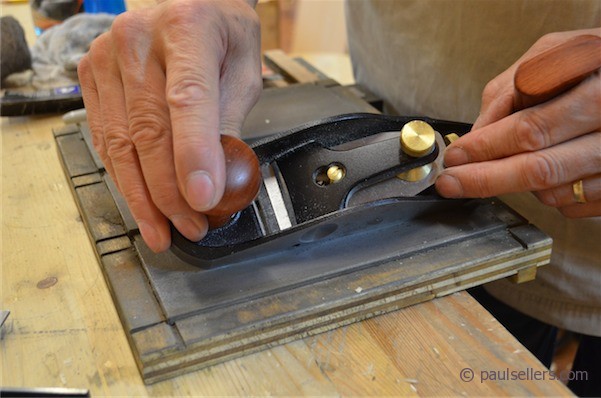

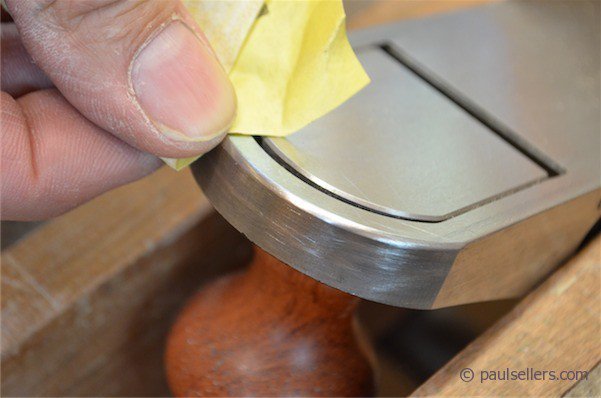

From here I again went back to the plates and made subsequent strokes back and forth along the length and increased the angle with each stroke in both directions. This effectively rounded the edges equally. I then abraded the corner with abrasive paper to even out the facets caused and smooth them into round overs.
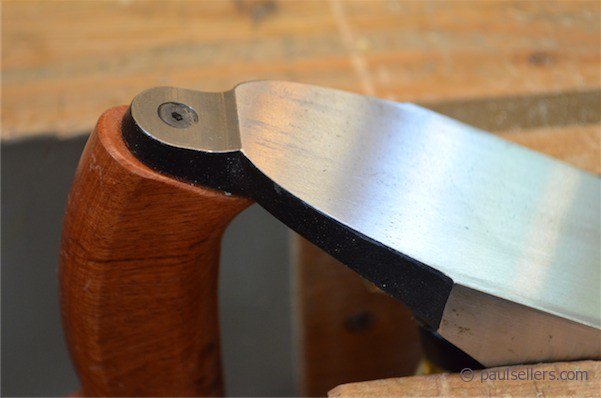
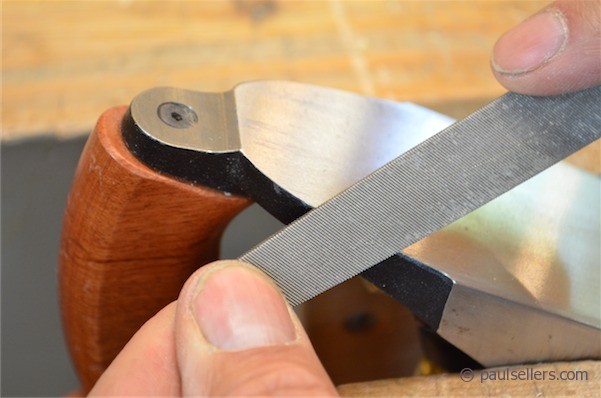
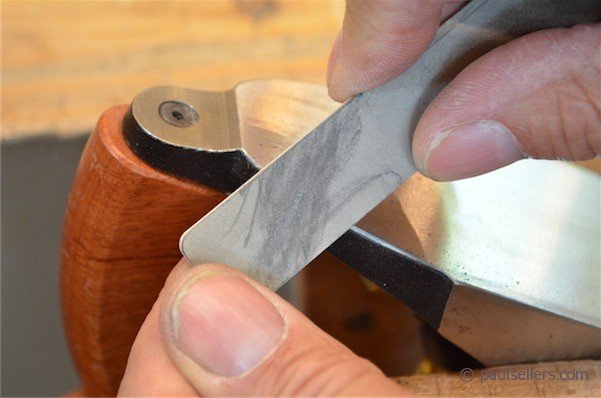
This front corner has a 45-degree beveled edge to the round toe. This may seem to be enough Neil thou plane adjacent surfaces say at the corner of a door stile where it intersects the rail. If one is a little higher than the other, the plane hits the side grain, it compresses and then collapse into tear-out. Ouch! Then it's too late to correct the damage. Here I filed it further to give good relief and then I rounded it with sandpaper so that it had a very soft round that mounts adjacent surfaces with ease and hey! No more torn or bruised surfaces.
Though the heel of the plane is stepped, I still felt there was arise that these edges might catch the corners. I filed off the cornerstone relieve them and that made me feel better.
Here I tried out the plane on a round over, something I have been reluctant to do because of the risk of catches on the corner. Especially is this a risk on softer woods like pine, spruce, poplar and so on. The plane operated just like my Stanley #4. It's the first ever plane to do that and the reason I loved the results was that the plane is so light to use.
In working the plane, I have found I can joint edges to about 24" long with very little effort. It is especially good on stock 3/4" and thinner and I love it on 1/2" stock such as drawer sides. I have jointed edge three feet long so far and found it works very well. I use the plane for breaking corners trimming the rims of boxes and drawer fitting. It takes a little more for me to surface plane because of surface grain tear out, but I do do it from time to time. I bevel or round the corners of the iron just as I do on the bevel down bench planes and this has the same effect of preventing step-down track from the width of the blade.
Shooting boards guarantee results
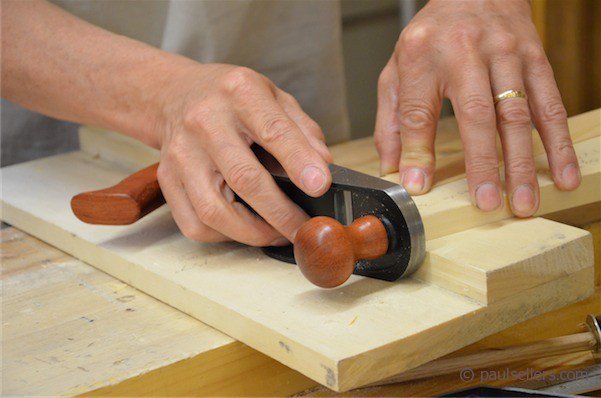
On the shooting board this plane is highly effective and especially so on lighter weight stock. I should think violin makers would like this plane for shooting the curly maple necks and finger boards as would guitar makers too. The bouts would be a breeze on curly maple and with the plane being so small it would handle the 2mm,1" wide material easily. Box makers should shoot for one of these planes too.sharpened to 15,000, this plane will trim, shape and refine fine work like no other.
The smooth and well-finished hardwood handles are wonderful in the hand. They fit comfortably and hold up under the stresses of planing very well. Thy feel so solid and never flex, something you especially don't want in planes and saws.
The closing of the throat is very similar to some of the older block plan from the Stanley and Record stables of pre- and post-war eras. Don't be surprised if this plane doesn't replace your block plane, although I am not at all suggesting that it should. Closing the throat opening prevents the fibres rising ahead of the cutter and tearing out the awkward grain. Most work with this plane will be finer work, so I have mine set pretty tightly.
I suppose the whole of this article sums up my conclusion really. It's a really fine plane and I like to use it for finer work. This next few weeks I will use it as much as possible to see if there is any change of mind now that I have made the changes to the plane. The work I did took only a few minutes. I am glad I did it.
YouTube video:
If you want a 7-minute video showing the refinement go here. W did this some time back and it shows a practical way of outer-bevelling accurately.

Comments ()