
Last week of a month-long intensive 2013 class
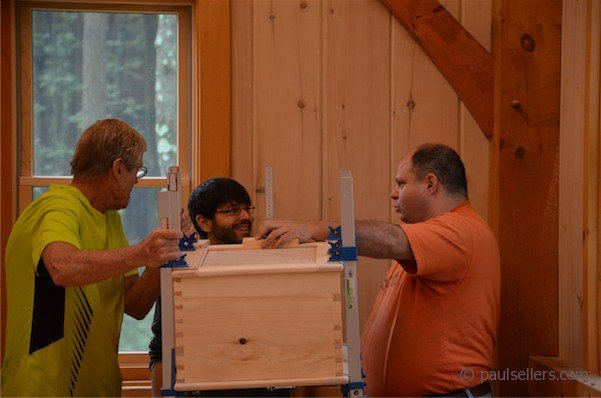
About three weeks ago I met a mixed group of men and women in the workshop, some of them I had met somewhere briefly, and each day we met at round 8am and worked through the following day making three major pieces. At first, for them, the projects became increasingly important. For me, they were and always will be of secondary value to the skills they gained and the working knowledge they now own in their own right. Many if not most of them had not done much if any hand woodworking and nor had some of them used machines. I mention the machines for parity or equivalence. The two methods used for working wood, hand methods and machines, are in no way the same animal. Machines were developed to displace the need for skill, effort and energy, speed up the manufacturing process and provide us with what they are essentially good for, which is of course to take the donkey out of work and dimension wood perfectly and with little effort at all. This of course is why they appeal to the masses and with half a day's instruction you can become a machinist. The dangers of using them on the other hand are exponentially higher than almost any other type of machinery. Safety is rarely mentioned in any sales pitch at supply stores and also in magazines, but my students are on a training program to establish woodworking skill and that's where we split comes.
It has become increasingly more apparent that machine methods for working wood are now the more conventional methods that people in the west use. Most if not all of my students on the other hand have come to a point where they want to expand their knowledge and working skill through developing more advanced methods we call traditional. They wanted to master skill and indeed, wherever possible, learn from other master craftsmen in their field.

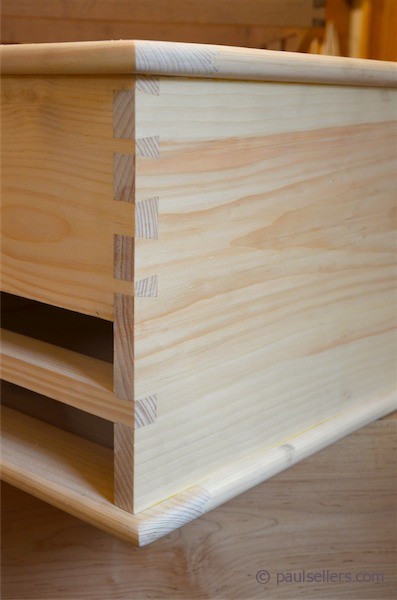
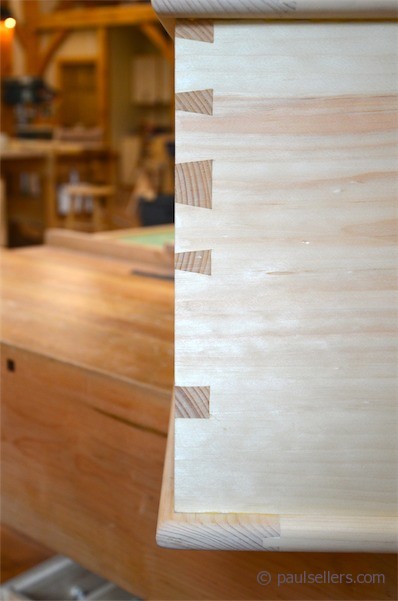
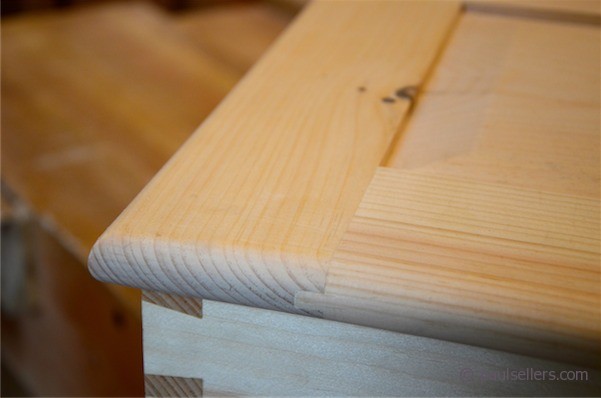
Early each morning I take a walk past the pond to the woodshop and look at each students work. This morning was no different and the reward for me was even greater. In fact, I think that the results were quite stunning and prove that with investment of time, effort and the right training, people can leave the mundane and reach forward in ways that defy convention and the very boring
status-quo. These dovetail joints here are not mine. They are actually the joints of a man 38-years old from Canada who never made dovetail joints before and did not know what a marking gauge was, had never picked up a #4 Stanley and had to ask the name of almost every tool. Here is his haunched mortise and tenon joint. His first of eight that all look the same. And it's not just him; everyone else's look like this too.
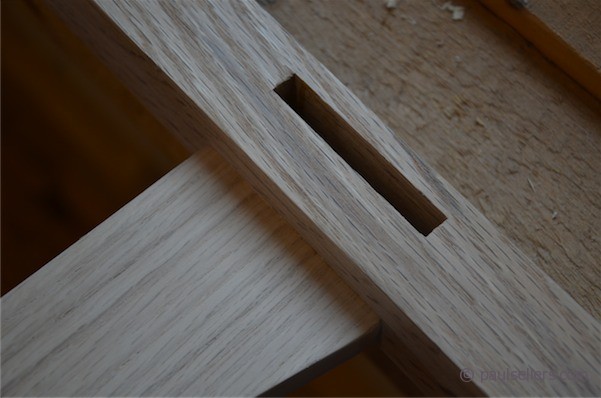
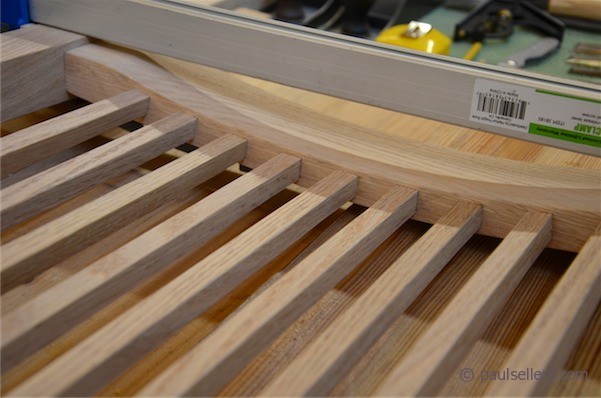
This one of the mortise and tenon joints he made in his rocking chair. This too was the first joint with a four-shouldered tenon out of 46 that will have made in this rocking chair build. As you can see here, he's done 30 plus 4 mortises so far.
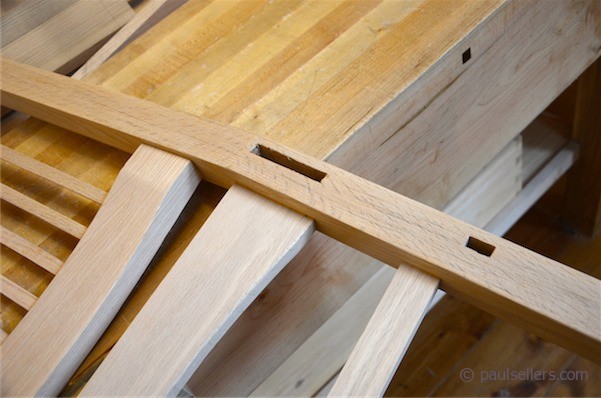
Here is the back frame of a rocking chair being made by a woman who only had a machining course prior to coming here. In her brief excursion into woodworking by machine, under instruction and in a training environment, she received injury to two parts of her body, her right forearm and her neck. To near serious and permanent injuries very capable of disfigurement. The injuries came as a direct result of using machines. On a second occasion, again under instruction, she received heavy bruising to her back, which again was no fault of her own but the fault of another student using a machine. Herein is reality. This lady felt it was time to make some changes to the course she was taking in her desire to become a woodworker. Shall I tell of another man who swiped four fingers off of his left hand from the 2nd knuckles on a machine jointer? Back to the point here. On the back of this rocking chair frame there are 26 mortise and tenon joints. Only one was loose and needed a 1/64” shim, none were out of alignment and all of the joints were hand cut and fitted to perfection with no shoulder-line gaps at all. She had never made a mortise & tenon joint before her preparation class, which we provide for those who have not been on our 9-day Foundational Course at the beginning of the course.
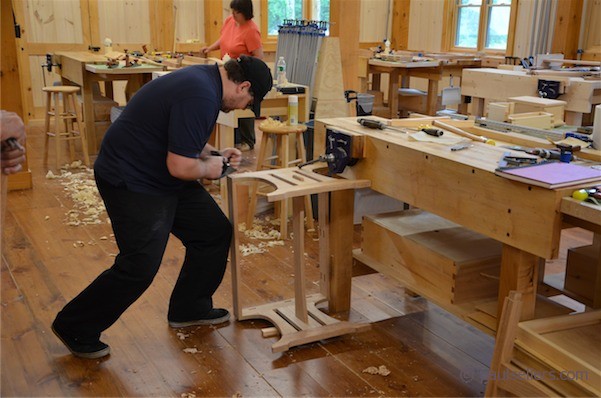
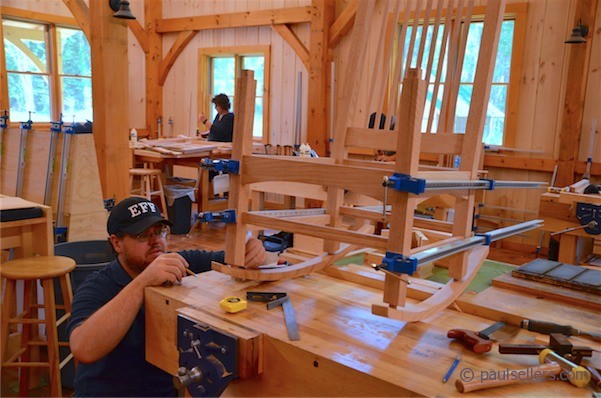
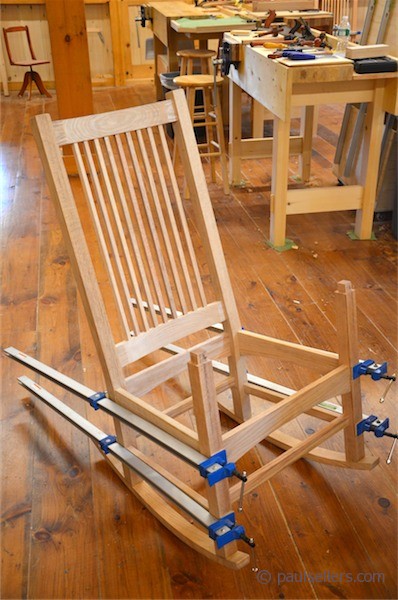
The man who is making this rocker aspires to work with his growing children when he gets back. I had to add this picture because this is how you would look if you were 5'10 using a bench height of 29". It's not comfortable at all, but he was prepared to discomfort himself to plane this face of his coffee table. Anyway, he has ambitions for his future as a woodworker and has no woodworking machinery as yet. He knows that he will eventually need to get some because it’s impractical to think you can live prep wood without them and perhaps make a living from woodworking. But this course has helped bring true balance to counter some of the mistaken impressions people have about machine only woodworking. He feels that he is now equipped to enter realms he could only dream of before. What he has learned over the past three weeks has unlocked the door to real woodworking and a way forward for him to work with his children as they grow. Now, having made such progress in making his three pieces to such high standards, he knows that he can indeed be not just a machinist, but a crafting artisan skilled in his work.
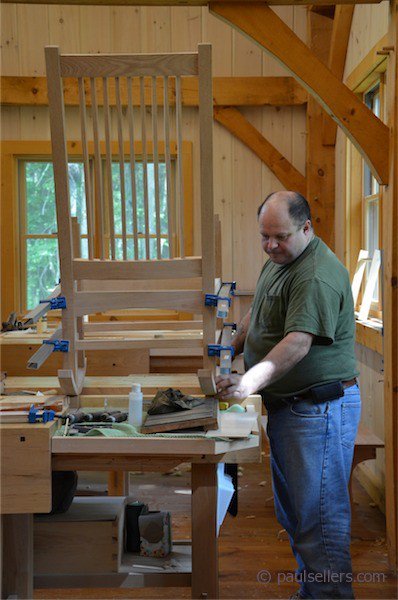
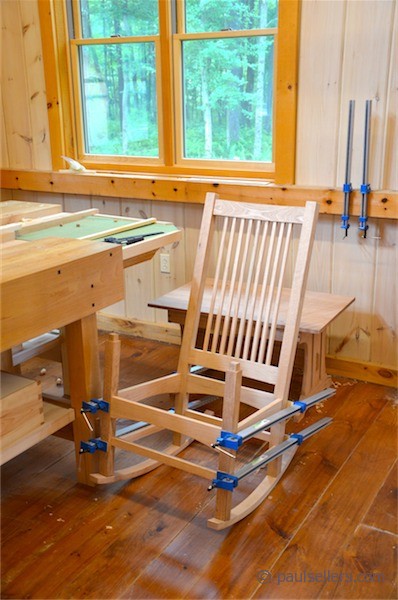
Here is another man, but he is used to working within the architectural millwork industry. In other words, all that he makes in his day to day work is done by machine. What he has always wanted to be but never had the real opportunity is a skilled woodworker. Instead of applying his life to MDF, plywood, plastic laminate and OSB, he wanted to transition into realms of aspiration whereby he too could work with his son and at the same time defy convention to do what he had always wanted from the beginning but didn’t quite know how. Through this intensive month of training he has also made his transition from the mundane into new realms of depth and substance he aspired to when he started work as a union carpenter. His joints are perfect too. He is usually ahead of the class because he is used to handling his work, not working with hand tools. He jumps in to help the others every opportunity he can as does everyone else.
You see, people pass from bench to bench and watch each other as they work in a machine-free environment. Interaction is much greater and camaraderie come from them talking to one another in a machine-free workshop where machines no longer dominate and they are free from the tension and dangers that must always surround machines. What I like is that I find them smiling and that they can laugh if they are not wearing dust masks and head gear. They can share what I had as a boy apprentice when the machines were separated out from the hand tool benches. It steadily becomes as much about interaction and sharing as the woodworking itself and hand tool woodworking becomes the vehicle through which this can happen. Yes they share their successes, but they also feel it when someone has a blowout or the wood splits the wrong way, the plane jams or the saw twists from alignment.
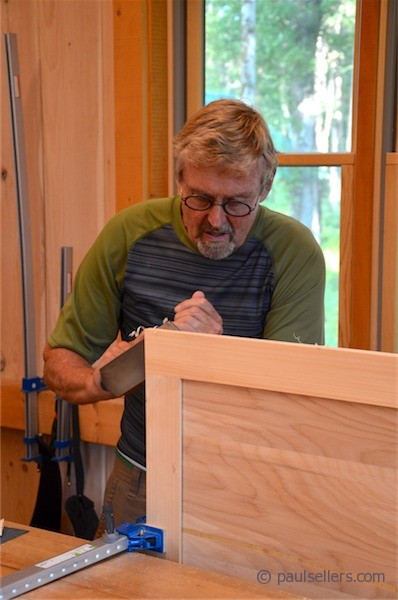
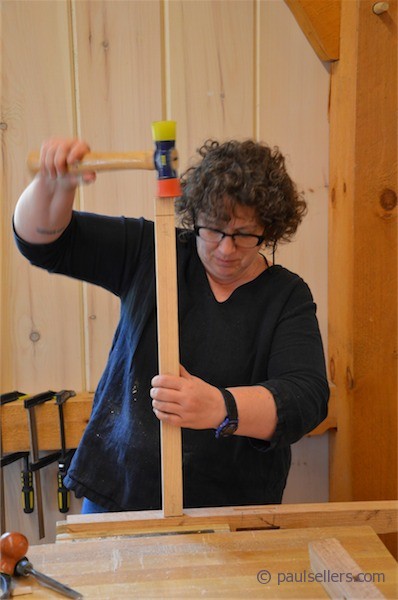
This week I saw the confidence levels jack right up like a forklift truck with two tons of curly maple stacked four feet high. No one was left waning in any way and we all helped one another. This course is a commitment for each and every one of us. They will have earned credibility by the time they are done and whereas I designed the course over many tried and tested years, they are the ones that really make it happen and indeed prove the efficacy of the work I do in training the new genre woodworker. Their backgrounds are about as diverse as it gets. CEO of a health clinic, high tech IT, a physicist, another who lectures as a professor in dentistry, a union carpenter and and computer hacker legally testing security of systems. One man now works at Lowes in his newly attained retirement years and another man retired last year from being a public school superintendent. There are others but I can’t even pronounce what they do.
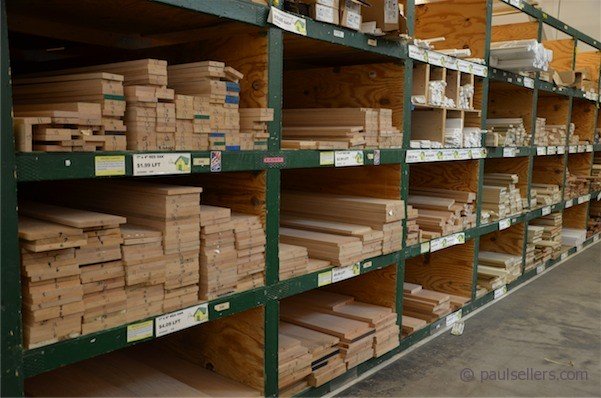
This is my Sunday rest day so I am off to Curtis Lumber in Ballston Spa to buy more wood and then I am going to the shop to mill it for tomorrow. Thanks for reading all of this. I know it’s too long but that’s what happens when you do what I do with so many people.
Also, thanks for the stack of encouraging emails I get every day from you thanking me for what I do. Of course there are many behind the scenes people that make all of this happen so I thank them too for their staying power and enthusiastic response in making all of this really work.
Comments ()