
Tails and Pins - Which is Best?
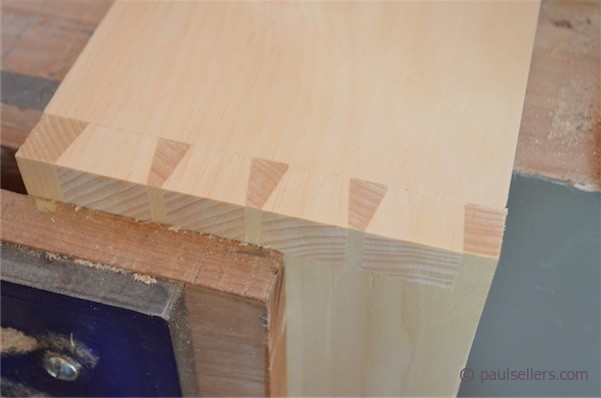
This highly provocative issue is a regular question for me and I usually avoid the controversy. I might be guessing here, but I would say that from my personal experience, most woodworkers who actually made their living from furniture making and woodworking in general cut their tails first. of course everyone is entitled to their opinion whether they are right or wrong. It's a strange new world this world that changes with each typed symbol that others occupying the globe read, judge and pass opinions on as though just opinion alone somehow mattered. Many write that there are many ways to cut dovetails after they tried but two methods and then then made two or three dovetails before realising that there may be many methods to make the cuts, but that there are not but a couple of methods to sequentially cut them, if you see what I mean. Distilling out the fiction of pluralism just a tad takes out the excesses of verbiage and leaves you with actual task that we woodworkers who 'do' woodworking do. Generally, you either cut a pin or a tail first. Which ever one you choose first means that the other quickly follows. Because a small minority of people cut pins first, I take it that the tails is the better, more practical way forward, but I don't discount that the 'other' method works preferentially for some people.
Resolving mistakes
I cut pins first only because I made a mistake. I don't need to throw away a piece of wood that's already fitted with dovetails to a previously made corner. The adjacent dovetailed effort may have failed because a piece of wood split wrongly or something and so I then cut the new tail piece from the existing pins. This is logical and resolves the issue. Like many things in life I have a choice of just two ways to do some things. I can walk forwards and see the future or I can walk backwards but not see where I am going. I cut tails first because cutting from the outside on push strokes using my native western-style saw means the outside fibres are supported as I push into the main body of wood. (That's also the reason I don't use Eastern-style saws too.) This means that I don't get broken fibres on the visible outside corners of my dovetails (very logical, really) and so, when I press my dovetails together the corners are in tact and the dovetails look pristine. If I cut the tails from the pins I must then cut from the inside toward the outside face of the joint and the risk is that the crispness I seek can be lost. Aside from that, every craftsman I ever worked with, that guided me through my formative years to become a craftsman, cut their dovetails before they cut the pins. I never met a practicing craftsman from my youth who cut pins first. Knowing both ways means that repairs can be made when something goes wrong. Add into the equation that it is extremely difficult to cut half-lap dovetails accurately using the pins-first method, it makes sense to cut tails first as a matter of course. Understand that though we call through dovetails common dovetails, it is relatively more common to cut half-lap dovetails than through or common dovetails.
Comments ()