
Plane soles reflect their use and their users

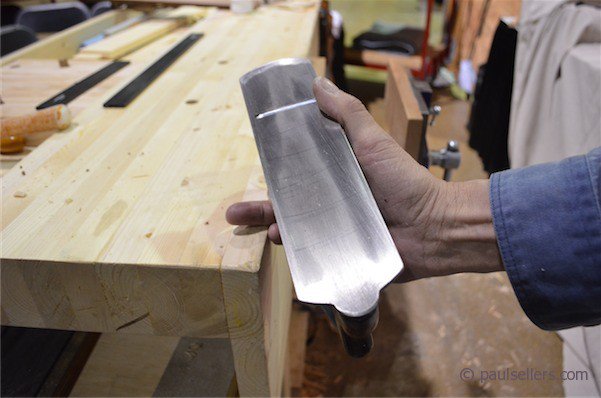
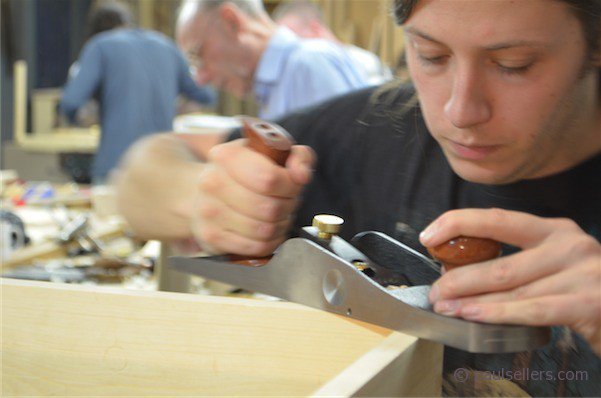
An interesting point just came up on the woodworkingmasterclasses.com forum and it's something most people will not be aware of when restoring hand planes like the #4s, 4 1/2s, #5s and 5 1/2s. Cast iron soles of any and every type wear and wear quite quickly; more on some woods than others, end grain trimming and especially quickly when trimming narrow engineered boards such as plywoods, melamine coated fibre boards or plastic laminates and so on.
When it comes to flattening plane soles, balance is everything and though of course it is a matter of personal preference how much polish you want to bring to the sole casting, actually polishing the sole does not last because the wood itself is so abrasive. In my view it also makes little difference to the functionality of the plane within a few initial strokes. As I said, wood itself is more highly abrasive han we think, it gradually, sometimes quickly, wears away at the sole of the plane and thereby changes its flatness. Many woods will roughen polished soles in a heartbeat and whereas there is nothing more pleasing than flattening out a sole, getting it ready for real work, the polish will get scored by the wood, and other substances, as you use the plane. To show how much wood is abrasive, think how plane soles actually end up going out of flatness. I often buy planes secondhand that have a channel along the length. This is a plane that was used predominantly on narrow stock, perhaps 3/4"- 1″ or so in width. Then there are planes that are hollow along their length, round or twisted. This is a regular issue and not rare at all. Imagine the plane has been used on hollow faces but the plane is always used at a slight skew because of body presentation. The plane sole then develops a twist and so too the wood it planes. Same in reverse. These are indeed common phenomenon and not rare at all. That’s why planes, if used a lot as my own are, need periodic flattening. Another not so apparent influence that changes the sole's flatness is how the plane owner uses the plane with regards to the plane handles. Planes can be bent by pressure on the fore and rear totes. that means they can be bellied or hollowed depending on the pull and push applied to these two points of contact. Over a number of years, this alone creates hollow, flat or twisted soles. The longer the plane, the more the flex and the more the problem increases.
It’s not a one off to flatten a plane sole, perhaps every year or two depending on the amount of use, the biased you have, and the wood you use in the everyday of woodworking. Because I demonstrate sole flattening on average 3-4 times a week, my plane soles remain dead flat. That makes my work easy and so my planes are always ready for fine work. It is a rare situation that demonstrators demonstrate real situations for planing wood. For instance, planing curly maple or even highly figured woods is more rare than normal yet somehow this supposedly proves the plane. This is also true of people showing the thickness of a shaving on a piece of hard maple or oak. These two woods in general plane well and actually, figured maple planes exceptionally well. So too a hardwood billet 1 1/2" by 1 1/2" wide and 18" long. Planing adjacent surfaces of say a door frame, or the rim of a box on the other hand presents a more realistic occurrence for the plane to be proved, so perhaps it's better to look for this when you are trialling a new plane.

Comments ()