
Drawings, journals and stuff like that
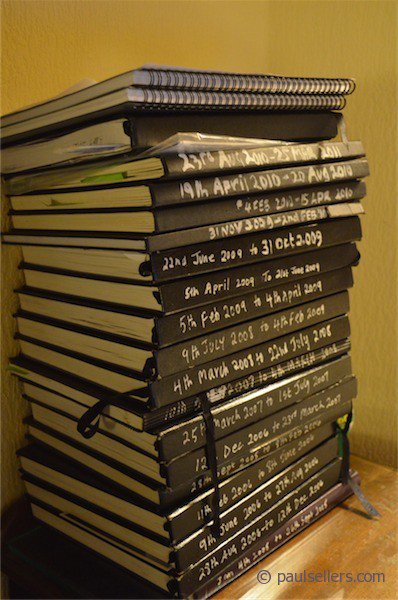
You ask about keeping a Journal
Many people like to see my journals. When they pick one of them up from my bench they don’t get too far before realizing this is not just a business book about my work but a record of what I make in a day. My journals are of course a record of thoughts in progress through my sketches, drawings, measurements and much, much more. Journalling for me is a way of life - my life as a workman. These entities do not separate out in nine-to-five days but cross pollinate throughout all that I do. I am sure that one day they will warm the faces of somebody who may not know what they were for, or feel that they no longer have value. So, why do I journal?
Journalling is different than keeping a diary
Some years ago a student came to class with a black sketch book. It was a standard A4 size and had perforated tear-out pages she never tore out. Instead of writing down information as most all students do, she sketched. Now she had the edge on most people because she was an art professor teaching art at university level. Her sketches went from random doodlings to fully orbed drawings and of course we all admired her ability to draw hands. At her invitation I flipped through the hundred pages she had filled during her week-long workshop and my only regret is I didn’t photograph her entries.
I think that the written word can never be replaced by sketches, but I also think that a sketch , even a thumbnail sketch, can indeed paint a thousand words. That’s why, when I sketch what I envisage a potential customer wants to have made, they rarely walk out without placing an order.
I studied art at college and also studied technical drawing too. I have sketched since I was ten years old and and my days rarely pass without a drawing coming from my pen tip or pencil somewhere, even on the back of a boarding pass or a bus ticket. These often get pasted in my journals too, alongside Journalist passes and membership cards. My desks and cardboard boxes are full of sketches and so too my journals. How do I find time for this?
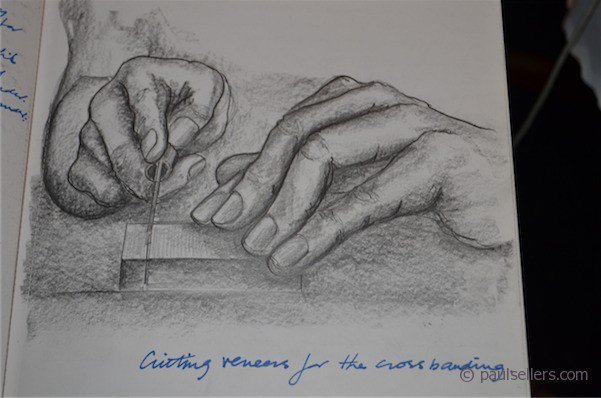
People think that they can't draw
We all do different things with our time. I was recently asked what I did when I wasn't working wood. In other words what do i like to do most. well, I tend not to watch TV very much at all, perhaps more a film or something like that. I find sketching life enables me to see what others may have never seen. Not doing one thing enables me to do other things I might prefer to do. Anyway, aside from all of that, I think that the following has become a true statement for me: If you haven’t drawn it, you haven’t seen it. Drawing stops you, says look many times, and demands every ounce of your attention. It forces thought and action to work together symbiotically, interchangeably, and then synchronises what you see in frozen moments on the page. You adjust your whole body to see and to understand what is there within your sight. Your eyes focus back and forth, forwards and backwards in better ways than an autofocus lens on a camera and you transfer all of the information you see in microseconds (possibly nanoseconds) to the receptors and storage vessels of your brain. That’s why I draw and sketch. I like to capture what I see and feel when I encounter something of value. What stops most people drawing is criticism. This criticism comes mostly from self, sometimes but rarely from others and it’s most often this that stops anyone from drawing anything at all.
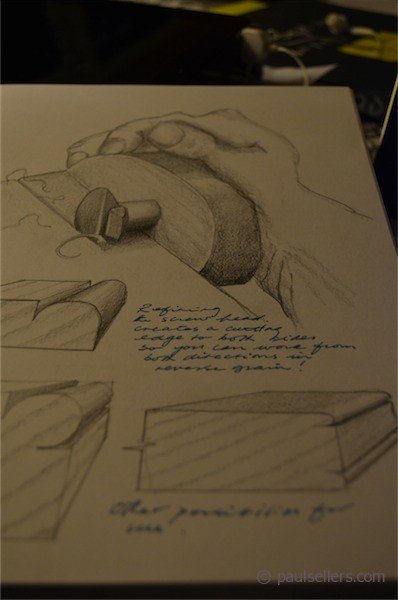
I can't draw
I think that this is more untrue than true. I have found that over 90% of people absolutely believe that they cannot draw and in my experience that is the product of someone else's misconception of what drawing is or what drawing needs to be. If you can pick up a pencil and pull lines across a page, you can probably draw. Now if you say that you cannot draw like a fully fledged artist I might agree. If you say that your technical drawings are confused or confusing, I might agree all the more, but with help and guidance, a few pencils, the right tools, everyone can draw to some level.
Making a drawing or sketch that represents what is actually there in front of you may differ and I know that I experienced that kind of doubt in my early days of art. You know though, amazingly, a stick-man sketch drawn by you will always bring back valid recollection and very vivid memories. Seeing the image you drew unlocks these memories and even unlocks certain smells and scents associated with the sketch. Smells you haven’t smelled or sensed in decades even though only momentarily. Such a sketch will record most accurately what you alone saw at the time of sketching, even when the sketch itself may in the eyes of others have little value. The first step toward keeping your journal is the realization that you are keeping the journal for you and not anyone else in the world. If you are frightened someone else might see it, lock it away. Go on. Pick up a pencil and an old envelope. Draw the cup in front of you. Get started!
An important tool? No, essential!
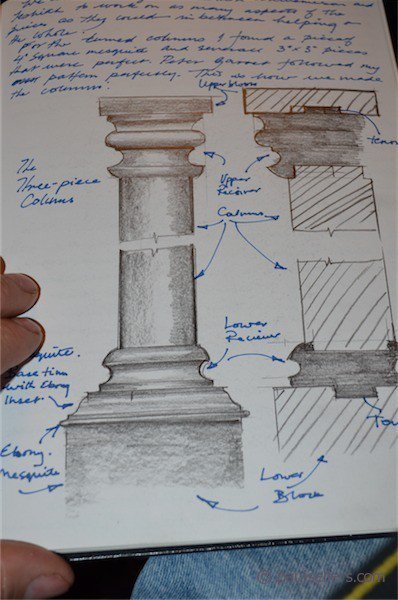
For my work, sketching is imperative. I sketch projects yet unseen and also sketch the completed work standing in front of me when the impression I had becomes a reality. Throughout every piece I make now, I sketch important details and details I alone understand the content of. When I designed and made pieces for the White House Permanent Collection in 2009, I thought it was imperative that I kept my preliminary sketches and also my finished drawings. It’s a shame that my finished drawings were never returned, but my journal entries have been an accurate record detailing sizes and shapes that were critical to the design and that is why journals are of such key important.
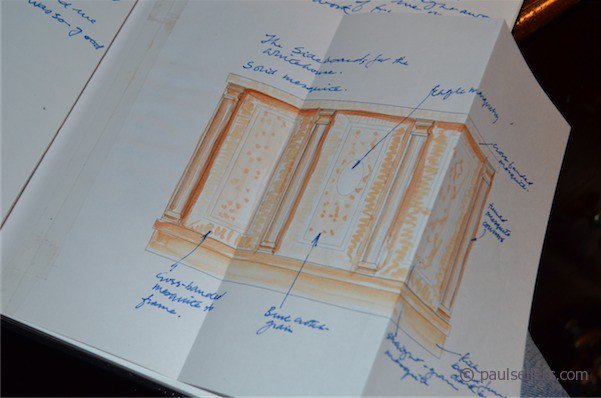
It’s important for you too
If you have only made a few small projects, perhaps projects like the ones on our Online Broadcast, you might consider sketching what you saw both during and after the completion. You might consider writing on the page the cutting list and recording changes you might have made. It’s a good place to start drawing joints and their relationship to the grooves or decorative moulds. make it an exercise and a discipline to train your hands and your eyes. If you are not used to this and the drawings seem funny, remember, the drawings are a record, a memory aid and a reference for you in years to come.
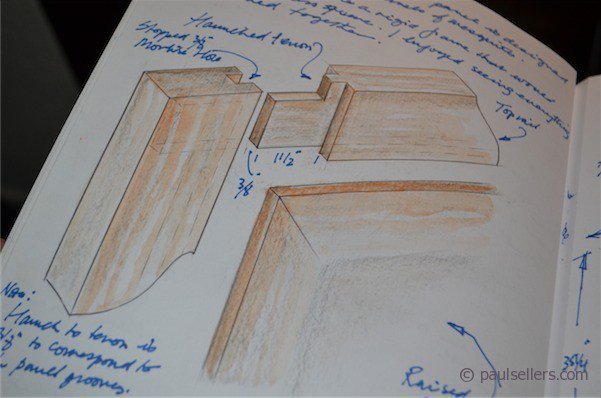
I want to make a few entries on this subject to try to help you keep a journal. Please take a few steps toward starting journaling and we can get started straightaway. As we progress on the Online Broadcast I will be giving some more guidance on the drawing and techniques I use. They are very much a tool for you to use and they are more instant than any software package you can buy. This keeps it very simple. Remember that the techniques we provide are always free when you hit the subscribe button. We will not bombard you or try to sell anything to you and we never give away your email to anyone.
Oh, and with regard to sketching and drawing. Remember, it's better to have tried and overcome your doubts and fears than to never have tried at all.
Comments ()