
Tool review - Veritas router plane
Hand routers = controlled power

I often explain that tool reviews are seldom based on viable tests through longevity of use but at the time the tool arrives and then through one time usage by the author of the report. I may do something similar from time to time, but always with the caveat that this is not field tested over a prolonged period. That said, I rarely recommend any tool that has not had that prolonged testing at the bench in the daily work I undertake as a practicing craftsman. Most tools must be in use by me for about two years and so I present the Veritas router at this time having used one since it first came out some years ago.
When I test tools sent to me by manufacturers I test them and send them my findings. When I find something of concern I let them know and ask them to modify the product. I give six months and then try the product again. Whether the changes are made or not, I then feel the liberty to release my findings as a review. When safety is a primary issue for me I handle this on a moment by moment basis. No point waiting six months if someone is in danger.
I recall receiving the first prototype from the R&D engineering at Veritas. I want to say 6 years ago, but it could be more. I loved the way the tool felt, though the piece was made from plate steel at the time and now it is a cast body, powder coated and pristinely finished. I love prototype tools. There’s something beyond innovative that strikes me when a new design emerges from the techy screens of R&D that becomes the tangible entity in your hand and the minute I held the Veritas router I fell in love with it. It has lots of bottom weight to undergird the hand pressure and gives a real oomph when needed, which, though rare, gives the certain confidence I like.
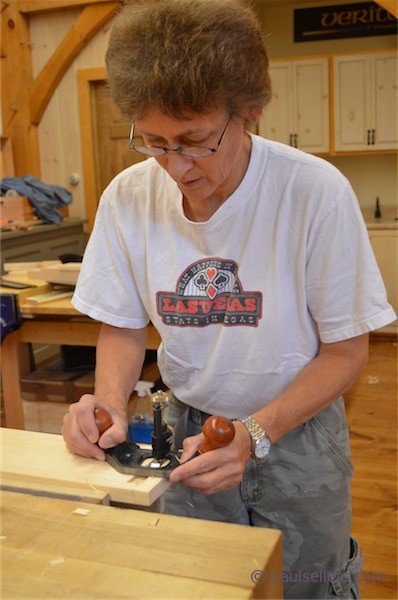
There are many features I really like not the least of which is the expected quality Veritas stakes its whole reputation on. The polished Padauk handles are of course from sustainable resources and the quality of the engineering means that this is undoubtably a lifetime tool for anyone no matter the rigors of the work. The fine depth adjustment means I can set fractional depths of cut with the accuracy I need and of course the brass on steel means smoothness in each revolution I make. We use this tool on each bench at the New Legacy School of Woodworking but my Veritas router has been in full time use for several years as I said. There are of course a couple of other makers of old including record and Stanley and they have worked for over a century now. Record models are no longer available, which is the sad demise when productive companies come under new ownership of giants like Irwin.
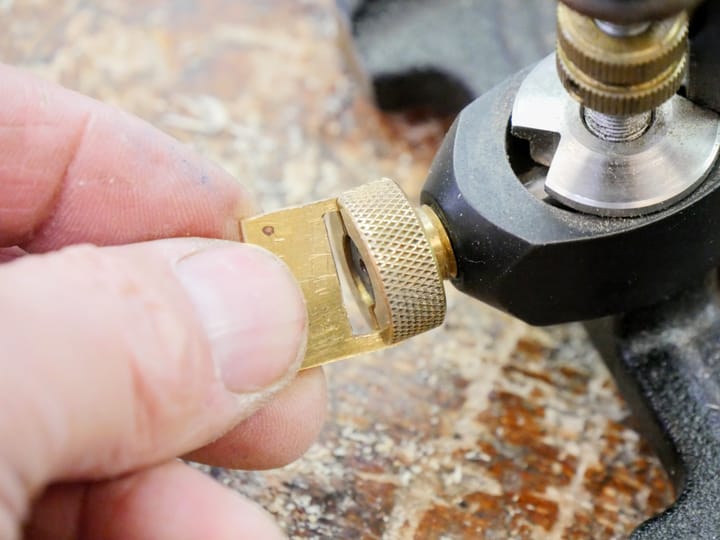
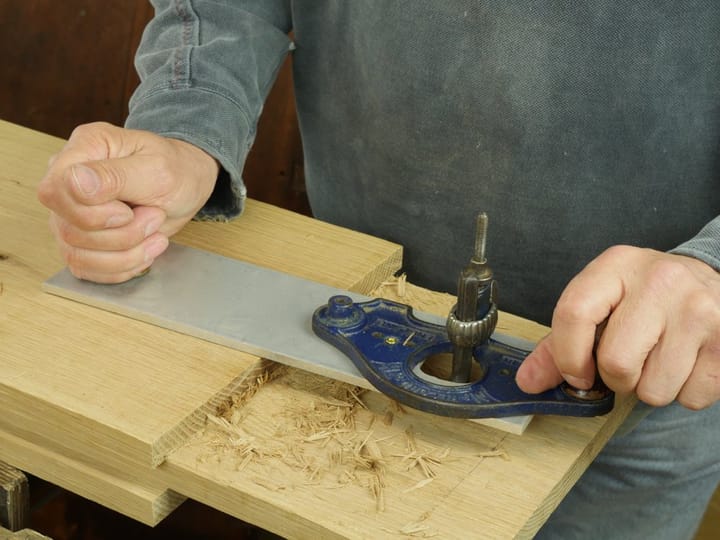
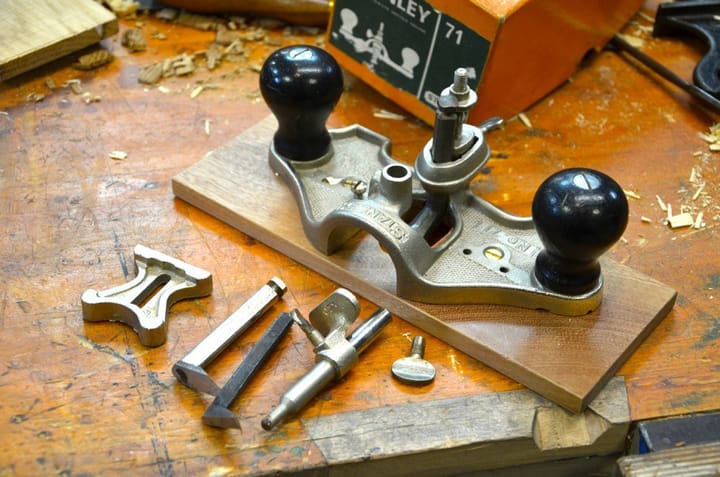
A feature I really like about the Veritas is the ease with which it can be sharpened. On all other models the cutting iron is a fixed shoe shape that can be hard to get to the stone and equally hard to grind and hone. Not so the Veritas cutting iron. Veritas developed a strategy whereby the two piece system can be quickly separated from one another and then the cutting section attached to an alluminium holder that allows presentation to the sharpening stones in the conventional way. It’s quick and simple and it works without fuss. The carbon steel alloy holds a good sharp edge and the edge holding qualities mean sharpening is fairly infrequent. My overall impression is of course quality, functionality and longevity. This tool ticks all of the above for me and it's one I reach for over all others. I love it and so too my students who all vow to buy one for their tool arsenal asap.
Comments ()