
Buying good tools cheap #7 Marking gauges
Marking gauges of different types
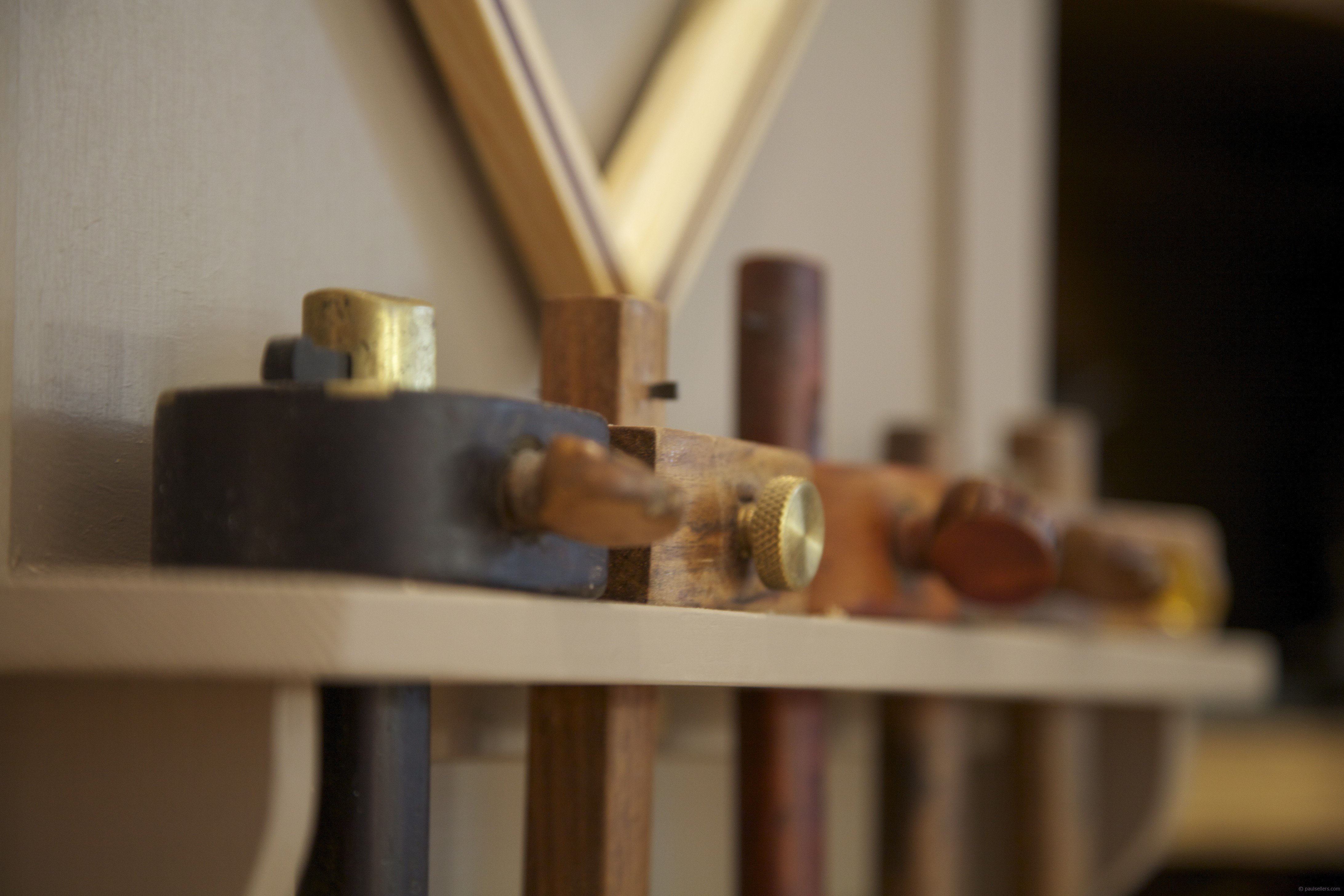
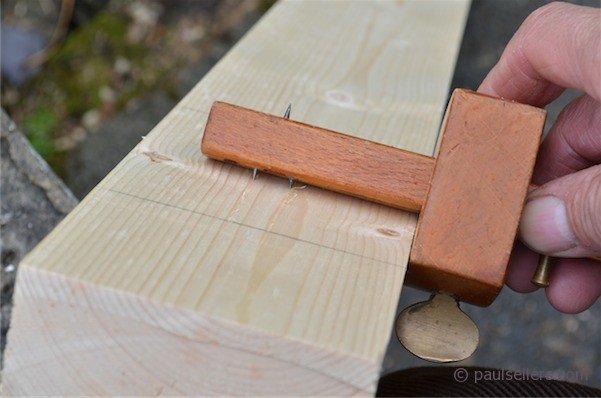
There are many different types of marking gauges used by woodworkers all of which comprise a stock and and a stem or beam and some kind of pointed marker or cutting blade. The stock and beam of most 99% of gauges are made from wood, whereas with more modern types we see more made from all metal. Personally, I still find that wooden ones, older ones especially, work the very best of all. That said, I use both types at the schools and this can also be an advantage.
All types of marking gauges are made to score or cut one or two parallel lines parallel to the edge of a board, stile or leg. These lines delineate the precise cut lines we use to guide subsequent stock removal by sawing, planing or chiseling. In general furniture making and joinery we use mostly two types of gauge, a marking gauge and a mortise gauge. As I said, the marking gauge has a single pin or cutting disc and runs a parallel line to the edge of a section of wood. Another type of marking gauge runs two parallel lines adjacent to each other. We call this gauge a mortise gauge. Since the 1950s, makers have combined both the marking and mortise gauge in a single gauge we call a combination gauge. This is marginally less convenient than owning the two types. Eventually you will want to own more than one of each type but, to start with, a combination gauge is indeed an excellent starter tool with lasting qualities.
I have bought most of my gauges secondhand and there is little to go wrong with them. For my schools I bought some rosewood and brass ones with good features and solid setscrews that I liked. There are many sellers on eBay offering sound choices and a combination gauge will cost you less than £10.

The five I recently bought were produced by a company called Am-Tech. They have the usual round, pointed pins of hardened steel with a sliding brass bar used to adjust the second pin. The thing about the gauges I bought was the unfinished quality I see as the hallmark of most gauges made by modern makers today. That being so, I see many tools as kits. That way I am not disappointed. I am ashamed to say that even well known Sheffield makers seem to now produce tools of substandard quality on a par with Asian importers yet selling under the once well-earned Sheffield banner. Therefore there are no guarantees any more. Many US catalogs are buying from English makers that have poor quality in production so, regardless of where you are, most of these tools must be further fettled on arrival.
The first thing I did on arrival is sand down the finish to remove the harshness of the lacquer they used as a finish. I then break the edges by planing the arris with two swipes on a shallow setting. 240-grit sandpaper finishes the job and i then apply a coat of furniture polish to all areas including the slide-bar groove. I file the ends of the stem with a flat file and use a diamond file to shape the pins and level them if necessary.
The next posts will flesh out thoughts and ideas that will help you decide and show what to do with them to improve their functionality and feel.
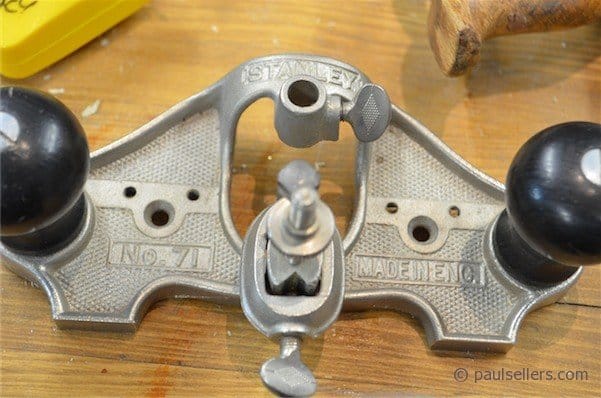
For more info on one of Stanley's best ever marking gauges go to a previous blog here and another for changing one here and here.


Comments ()