
Questions answered - Painting my projects
Questions answered - Painting projects
Q:
I was wondering of you could talk a little bit on painting your pieces. The tool chest you finished recently and many of the boxes have a lovely paint job, at least from the photos. I apologize if you mentioned this somewhere. I did read about the shellac that you like to use. What type of paint do you use? Do you mix it with anything? Do you put on a coat of anything before painting? Do you put a coat of something on after painting? After looking over your blog I have been convinced to buy your book and dvds the next chance I get.
J. D.
A:
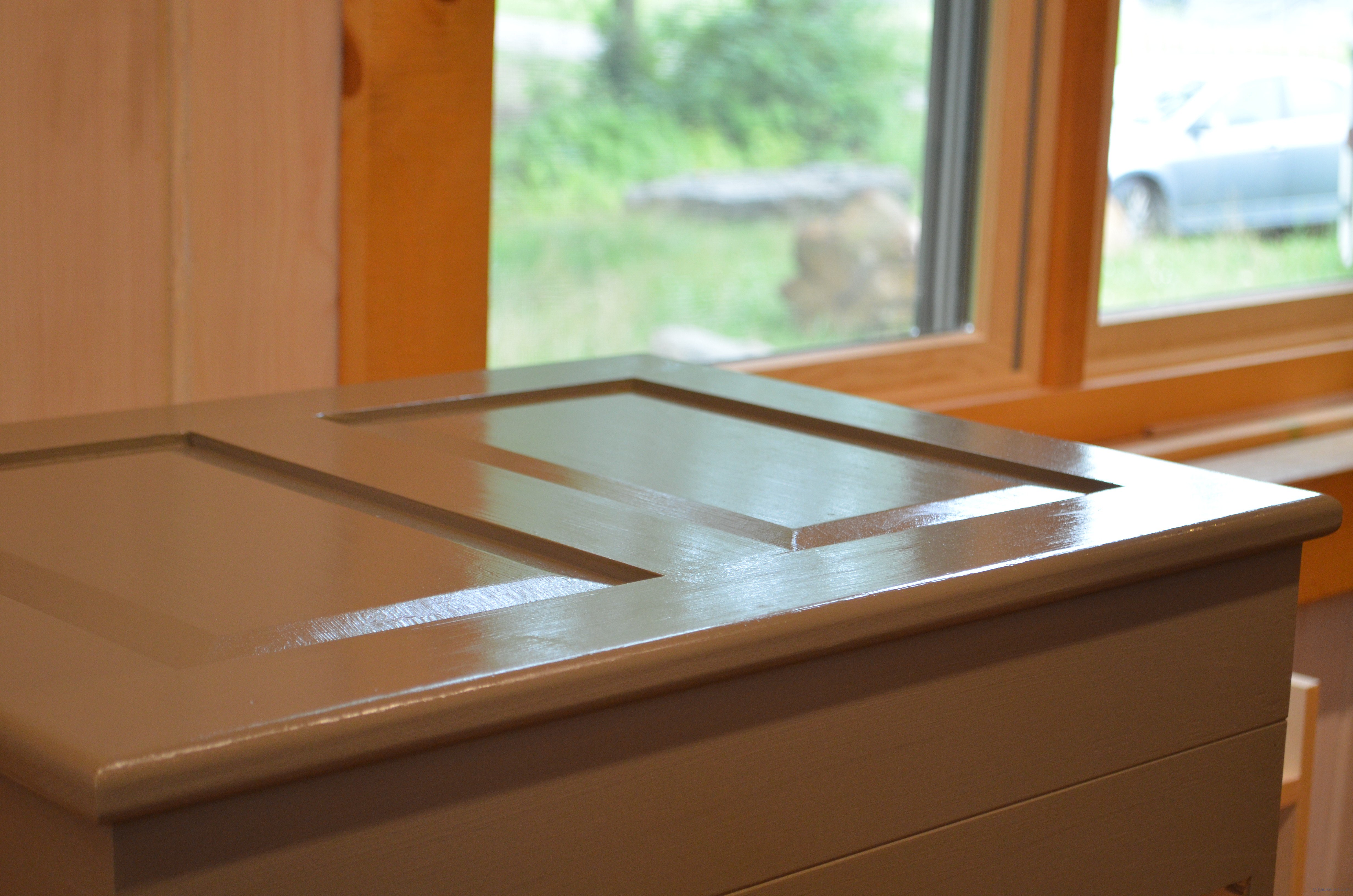
Firstly, I love painting wood and the way wood painted looks. Even painting over my hand cut dovetails raised eyebrows with my students until they saw my finished box at the end of class. painting brings a certain uniformity to woods that might otherwise compete in parts contrasting grain colour and texture. Painted wood gives good, permanent protection but many people create problems because of their lack of knowledge or experience The following method will give a good, well-used appearance and can be completed through between 5-6 1/2 hour sessions with 1-2 hour in one day. This will depend on temperature, humidity and the paint type you choose.
My project is sanded to 240-grit on every facet and roundover. I am using an interior eggshell wall paint made by Benjamin Moore Paints. This paint is water-based and there are a zillion colours to choose from. here in the UK I would choose 1829 paint, again in satin or eggshell, and I buy this from B&Q. This is a great paint for wood.
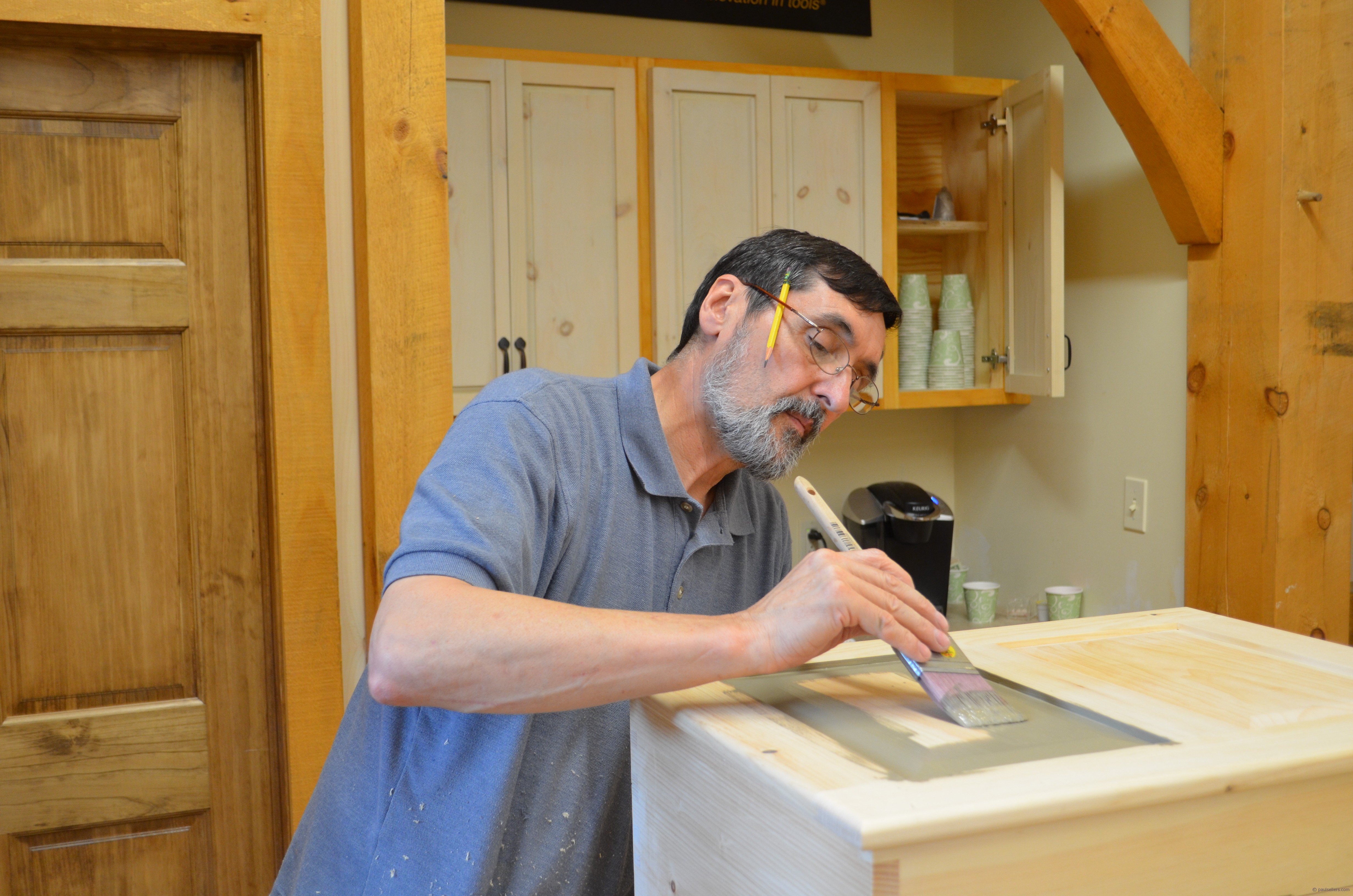
Firstly, though I might use a primer and undercoat to build up body, I usually do not, not on interior projects like boxes anyway. One step I often take is to apply one coat of shellac as a base sealer/sanding coat as this reduces grain raising that occurs when using water-based products like this. I sand this shellac coat after an hour or so of drying.
One criticism of water-based paints is flow-out. The oil based paints have a longer open time that allows the paint to level and so minimise brush marks. the trick with any paint is to apply sufficient paint to allow it to level and yet not apply so much it runs into candle-wax drips and hanging curtains. Experience really helps here, but with a good brush, I am using a 2" Purdy here, you should be able to load your brush properly and apply it evenly.
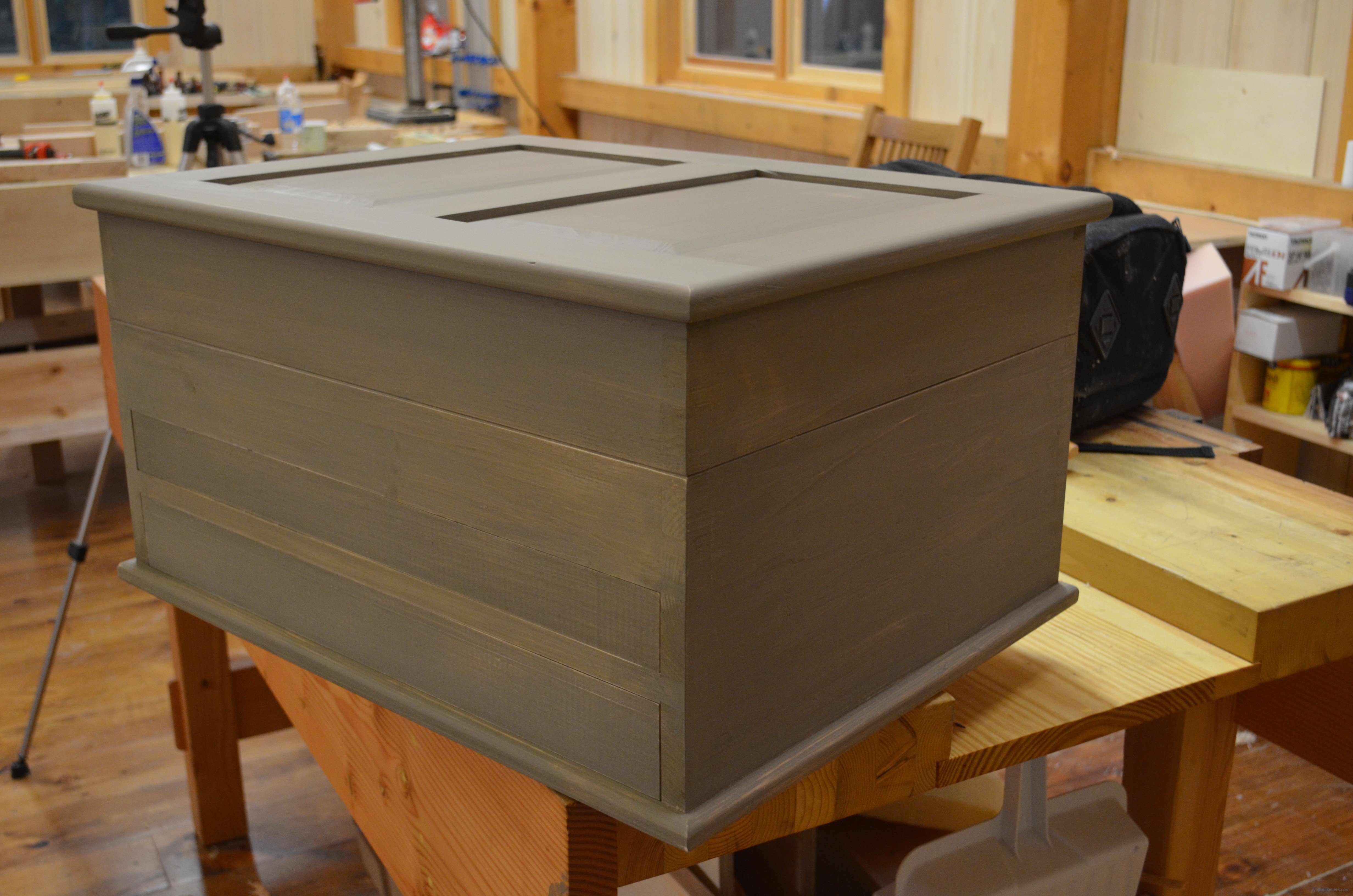
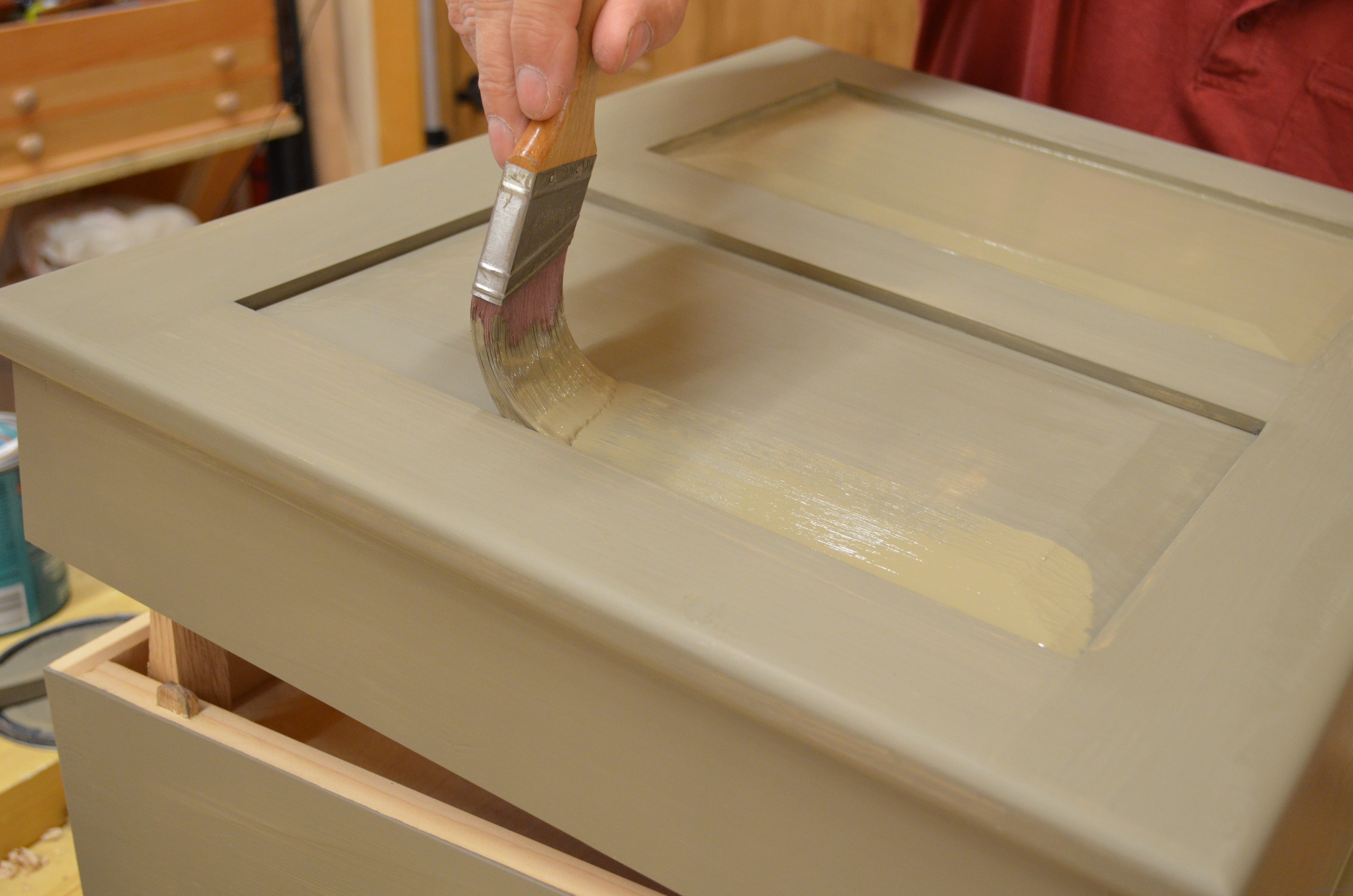
In this case I simply used the top coat as a base colour primer undercoat. That way I have done two things in one. One, I have a solid base colour underneath and, two, any grain raising takes place at this level and not later. Light sanding with worn 240-grit sandpaper preps the wood for the subsequent full colour coat. Take care not to unnecessarily cut through the primer coat as you sand. Go lightly on corners and roundovers. Use fingertips and hand pressure rather than a block.
This last colour coat should be full and even in colour with no see-through surfaces. If you need to apply a third coat of paint, sand first to 240-grit and that will do it.
I allow my chest to cure as well as dry, and so I left it for three hours. In this case my final liquid coat is a single coat of brushed on Shellac.
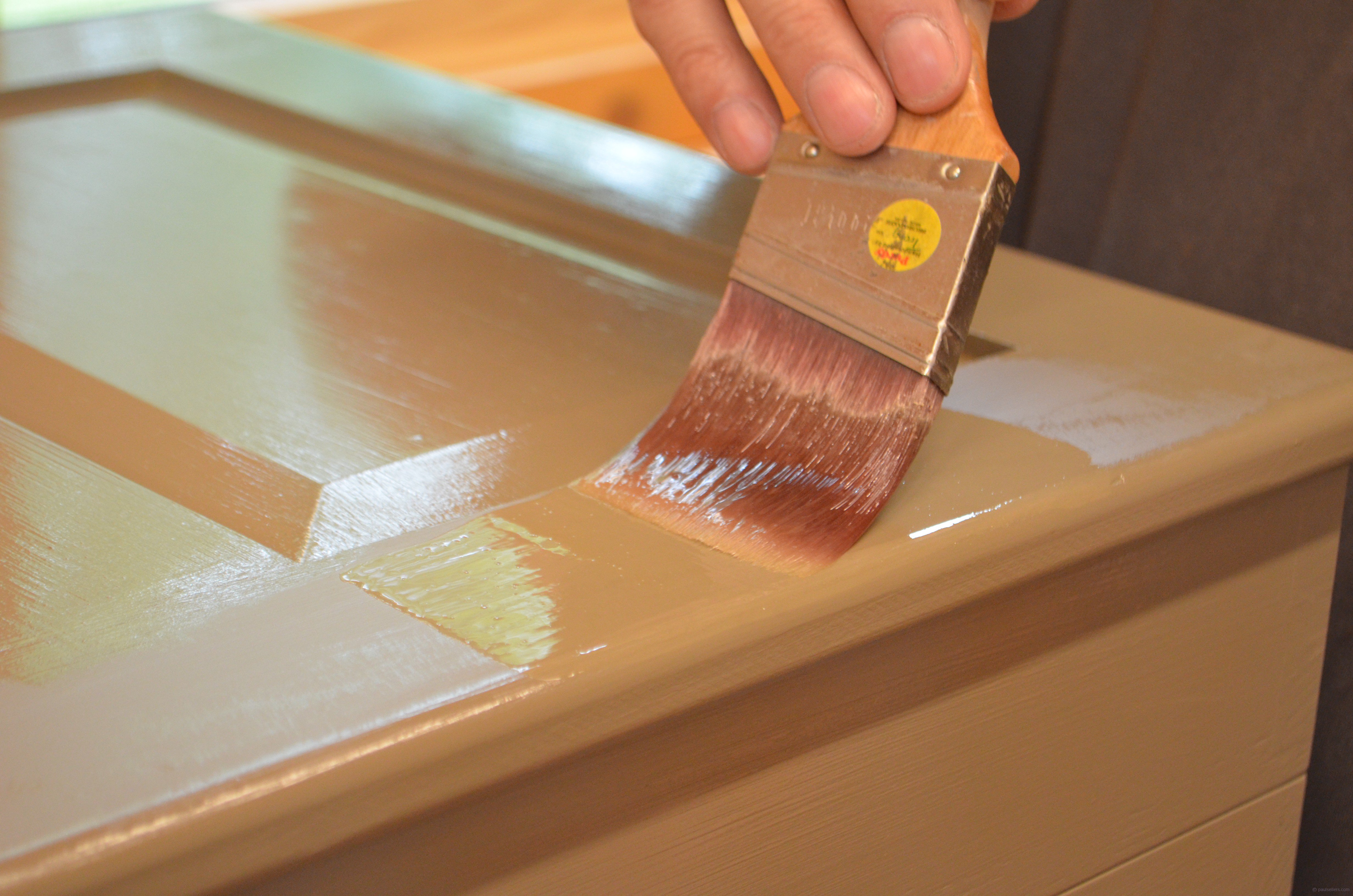
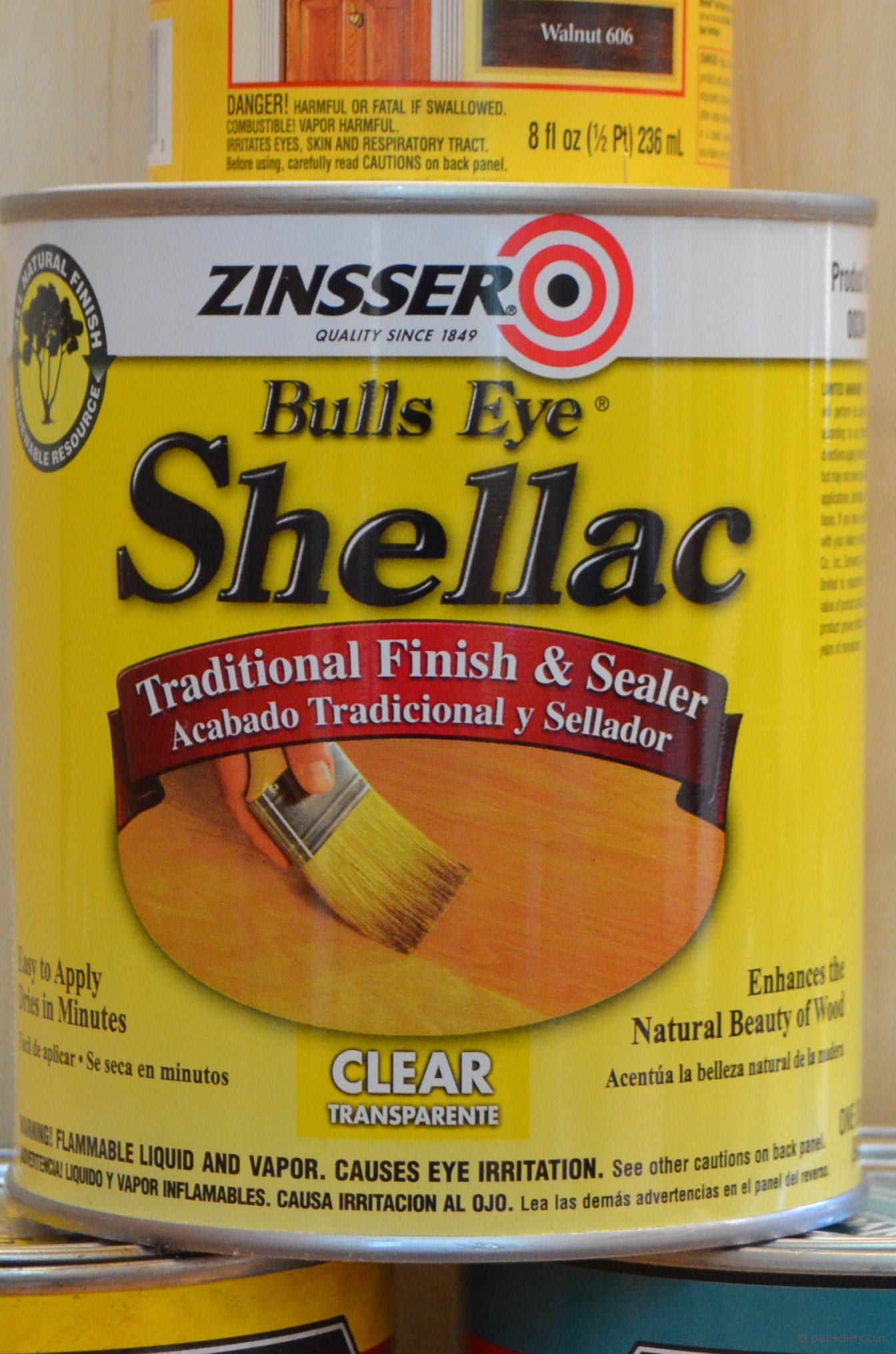
I used Zinsser's bullseye clear transparent which is bleached shellac rather than the traditional amber colour because it works well and is ready to go and don't end up recolouring the original colour which can create a muddy finish.
I used the same paintbrush is used for the paint. I can get a heavier coat with a brush rather than the cloth pad often associated with shellac applications, and the corners are much easier with a brush too. Remember too to paint internal corners first with whichever level of painting you start with. Then do the raised surface plains of the raised panels and then the larger areas of all wall panels and faces.
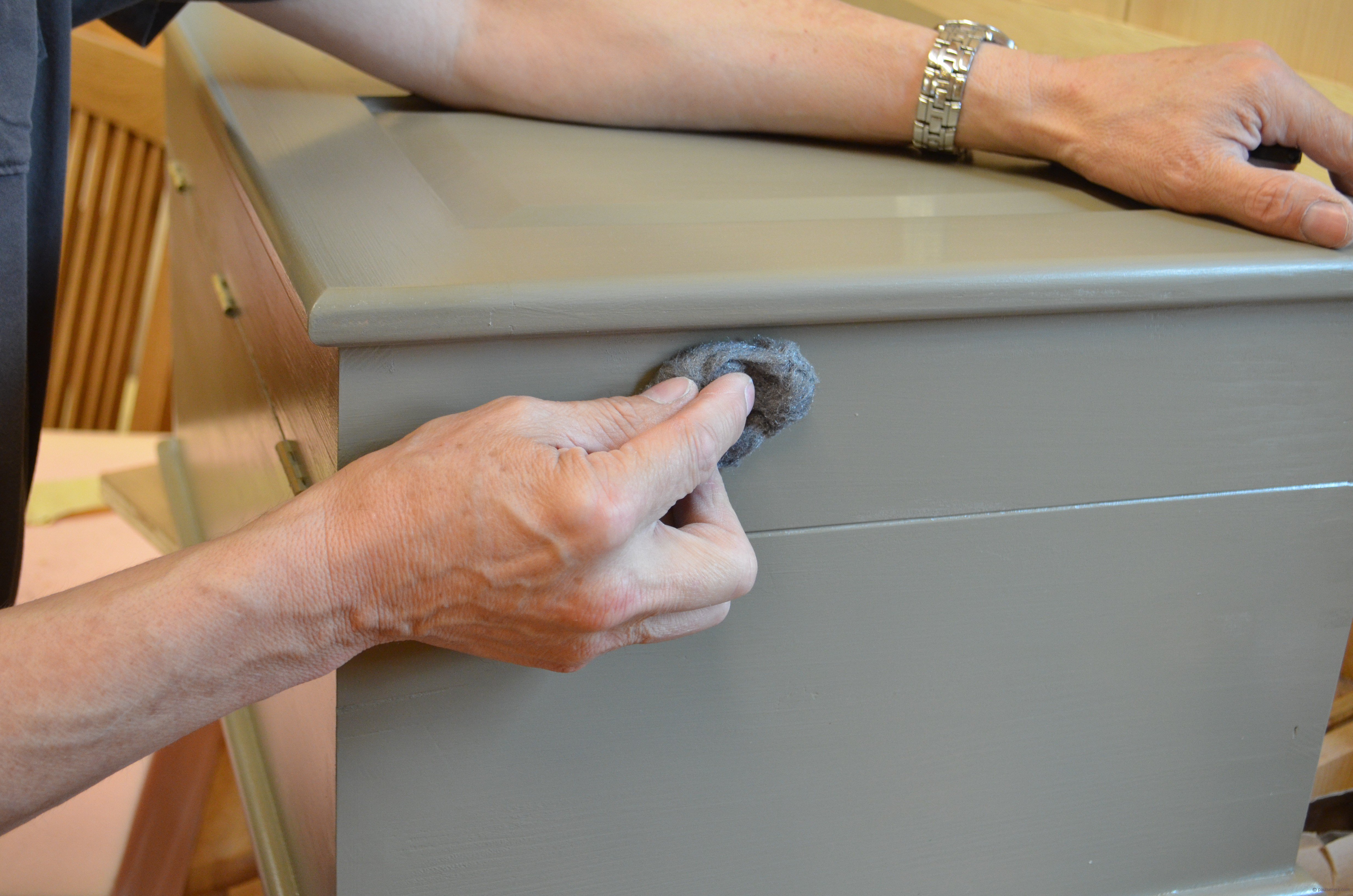
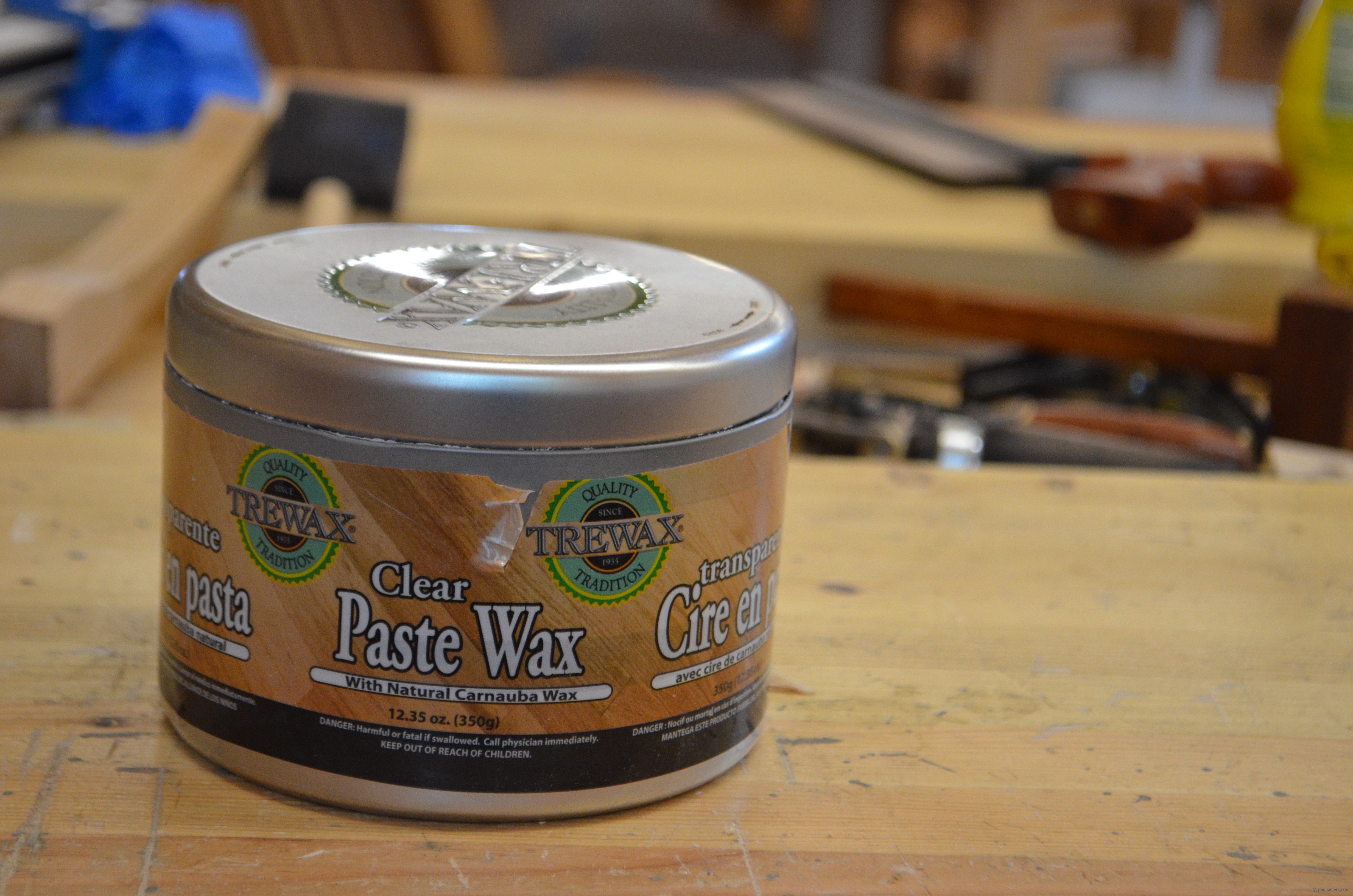
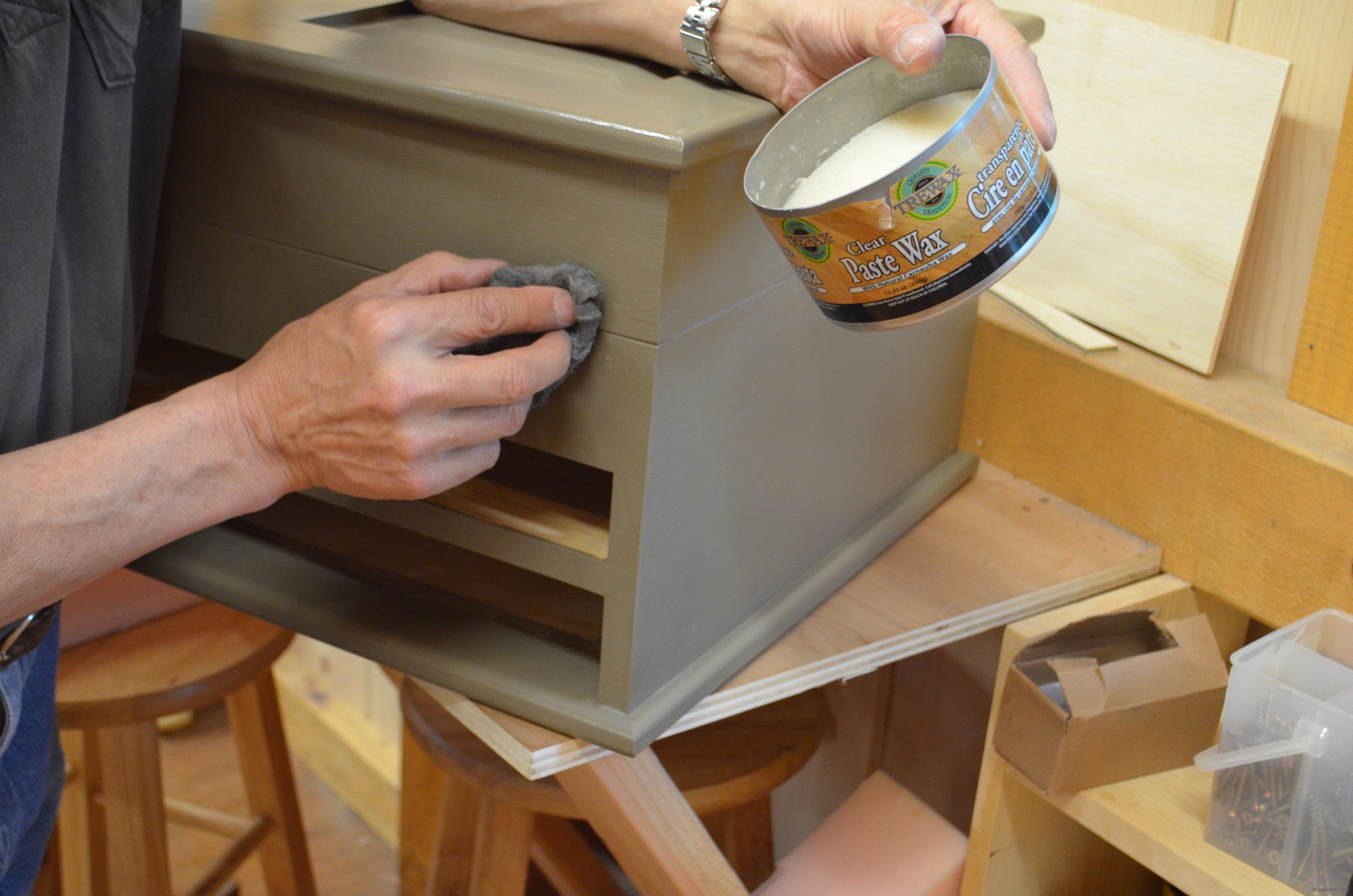
When the shellac is thoroughly dry and cured, usually a couple of hours in a warm room or gentle dry air current, I steel wool all surfaces with 0000 steel wool to remove any nibbing from the paint or shellac and I then apply a clear wax coat using 0000 steel wool as the applicator.
This prevents thick and uneven build up of wax. I work in small surface areas and polish the areas with a soft cloth as I work around the box.
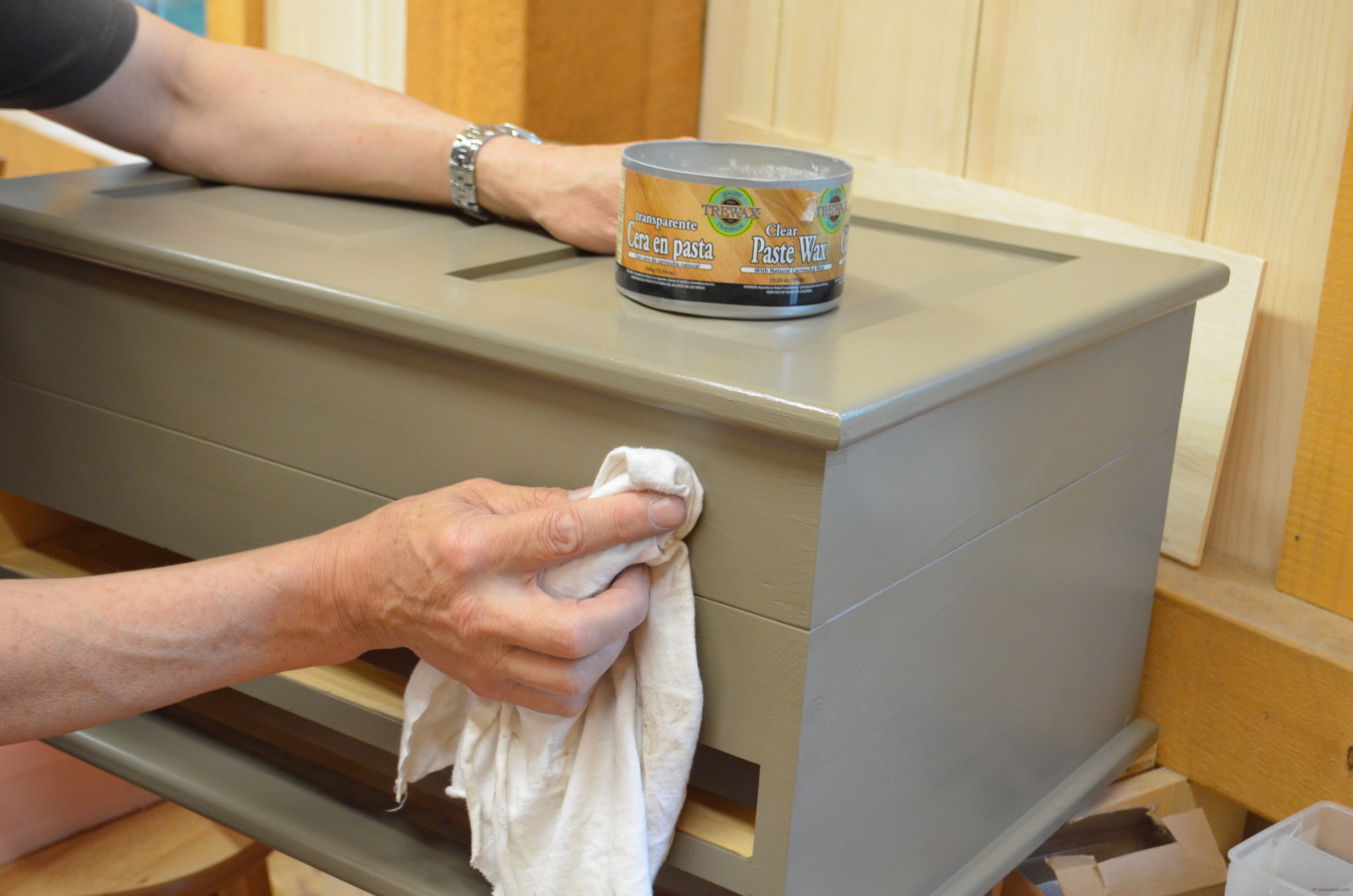
When finished, I finally buff with a soft Kiwi shoeshine brush to get the luster I want. The top picture shows how I finished my box. To soften the shine you can simply steel wool with 0000 steel wool and leave as a waxless finish. Or, do as I did and remove some of the wax shine with 0000 steel wool.
Comments ()