
Old saws
I don't suppose a Bahco hardpoint saw will ever be restored. Certainly never resharpened. Plastic handles do disintegrate when left in the sun and so it's hard to imagine why they would ever be restored.
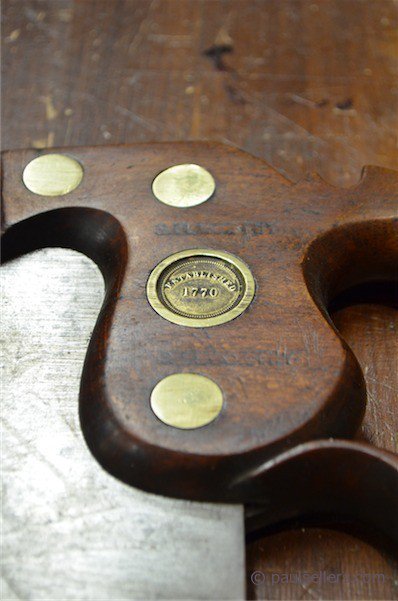
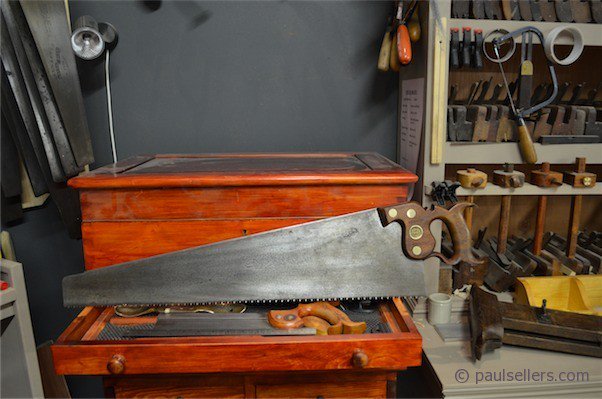
I worked in the Castle today and caught up on some restorations on two saws I bought on eBay. One is quite rare, an 8" Robert Groves I had wanted for some time, and a larger 26" handsaw by the same maker.
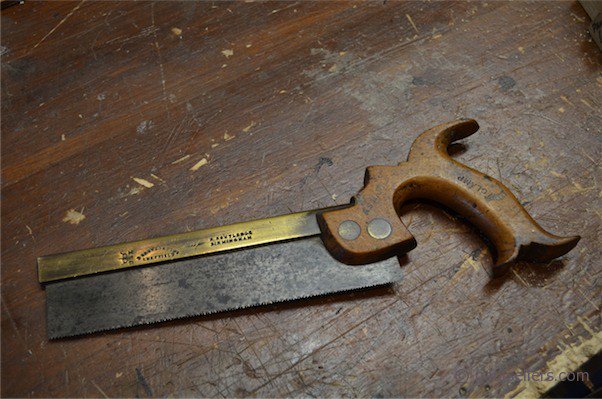
The dovetail saw is really very nice despite a couple of emerging teeth and some uneven sections that undulate periodically. At 16PPI, the saw is resharpenable and this was the reason that this saw the most commonly available tooth size for small saws. In my view, the only disposable saw should be saws with finer teeth, because to sharpen finer saws becomes much less practicable and the steel is often too thin to sharpen with any degree of success. That's where Zona model saws come into their own. They are not classic looking and most people might at first glance dismiss them as hobbyist level saws, but the cut metal and wood very effectively and are especially useful for ultra fine work. I keep a couple around for miniature work and superfine dovetails in 1/8" thick stock and such.
This saw had a couple of emerging teeth and I corrected several spots of unevenness along the length of the saw teeth. This took one session of reshaping, one topping (jointing USA) and one further filing to actually sharpen and finally shape the teeth. It also needed some new set. After 20 minutes the saw became an addition to my user saw collection.
Overall, the condition was in good shape so I havent actually cleaned off any area because of rust. Pitting is a minor concern in terms of functionality. One thing that many people fail in in restoring a newly acquired saw with misshapen or overly dull saws is topping the teeth too soon. I find it best to go one pass in each tooth gullet along the whole length of the saw with the saw file first, to deepen the saw gullet before shaping. This cleans out any rust and debris on the teeth and preps the saw for shaping the teeth and so on. Once that's done I can top the saw with a 10" single cut mill file to even out the hight of the teeth. The before and after is remarkable and I soon feel excited that this is in fact restoring a saw that was made in the 18th century.
Comments ()