
More on Narex mortising chisels
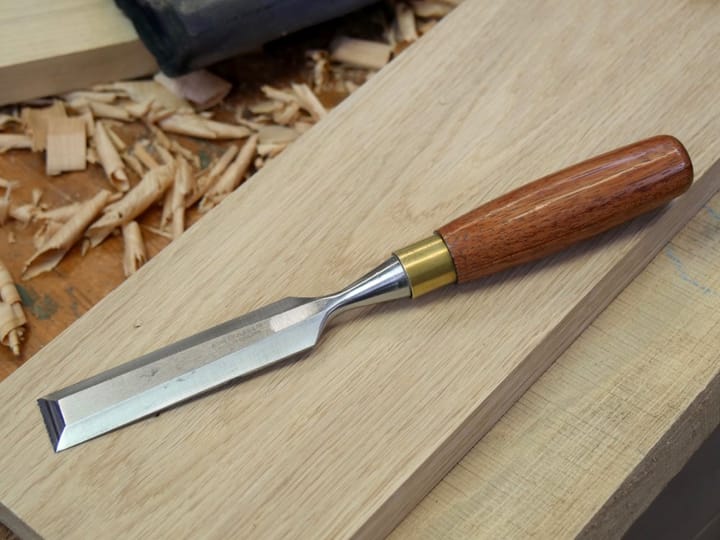
I don't know what Narex means in Czech, but in my hands it means tangible, solid quality and good value. In response to those who asked about a heavier mortising chisel form the USA I looked at the Narex brand because I had had such good results from the Narex bevel-edged chisels since we started to use them at the school. I am often concerned about those touting hardness of steel these days when it's important to look at toughness and durability combined with good edge retaining quality. I don't think that I have tested these chisels long enough yet but I will use them alongside the Narex bevel-edged chisels when I make the coffee table and the Craftsman style rocking chair in the next two weeks. These are both oak pieces so that will be an ideal testing ground.
As a boy growing in my craft back in the early sixties, all of the tools I bought came unsharpened and had only the primary ground bevel at 25-degrees. I think that it was understood that sharpening was a task for the craftsman not the maker. Edge tools such as planes, spokeshaves and chisels needed to be sharpened to task and that would vary with the work in hand and the individual craftsman using the tools. This stands to reason and so too the fact that sharpening is never a one time practice but repeated many times throughout a given day. That said, our culture tells us that an edge tool should be ready to go at point of purchase and so many tools have something of a cutting edge rather than none at all and it's this that can create the confusion. As soon as a cutting tool touches the wood sharpness is affected and when we start slicing and chopping with chisels we have taken the first steps towards dullness, so then it's up to us as to when we resharpen the edges of our tools.
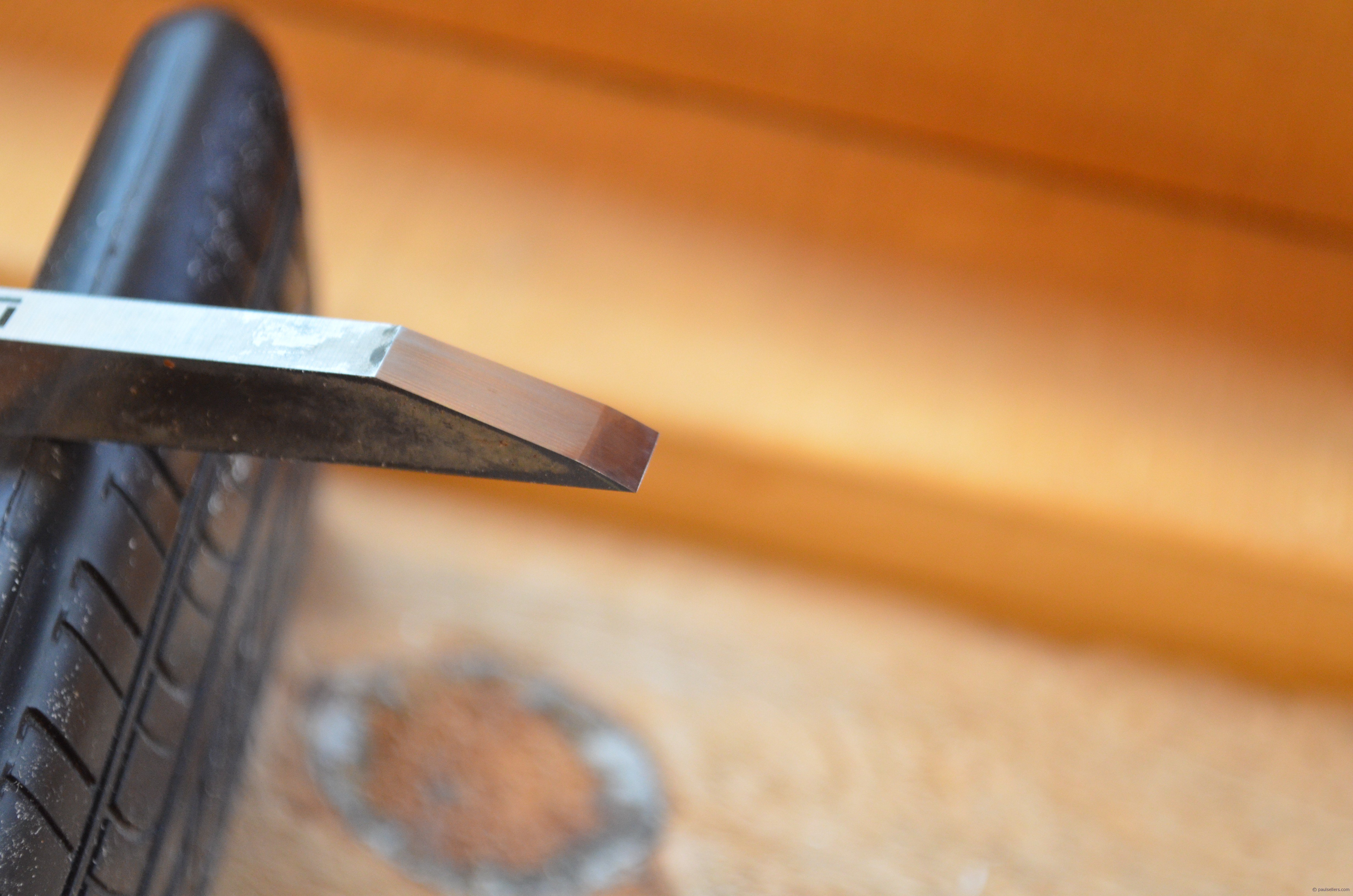
In this case the Narex mortising chisels arrived with a single bevel of 24-degrees which is too shallow for chopping out mortises at the cutting edge but ideal for the main bevel of the chisel. This is where we use a secondary bevel, not the same as micro-bevel, to strengthen the cutting edge and substantially increase the longevity of sharpness to the edge. Depending on the wood, a good secondary bevel should be about 35-degrees. The bevel should be about 3/16" wide and my preference is to strop the edge also to a mirror finish though this is not essential at all.
I really like the feel of the handle which seems to be the same handle as is on the Narex bevel-edged chisels but turned 90-degrees. The oval handle is ergonomically shaped and therefore gives good control as well as comfort. The flat faces of the chisels were quite flat and soon became ready for chopping with. Once the bevel was refined I was ready to go. For those who are looking for a heftier tool that will not bend or flex, these chisels fit the bill. More later.
Comments ()