
On sizing your workbench
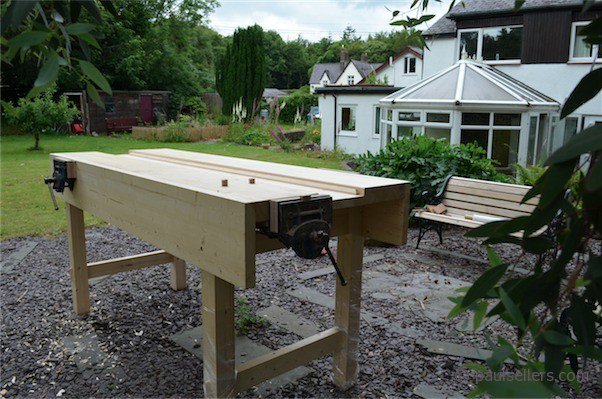
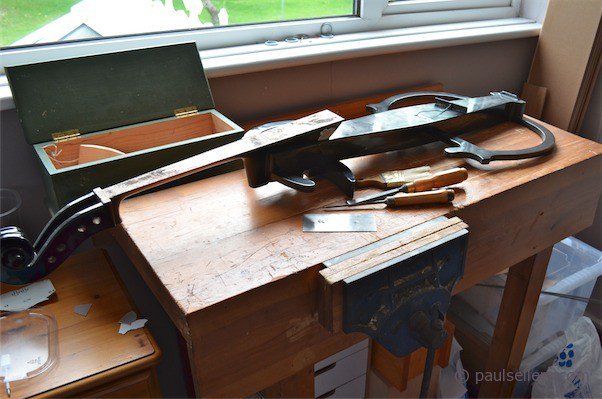
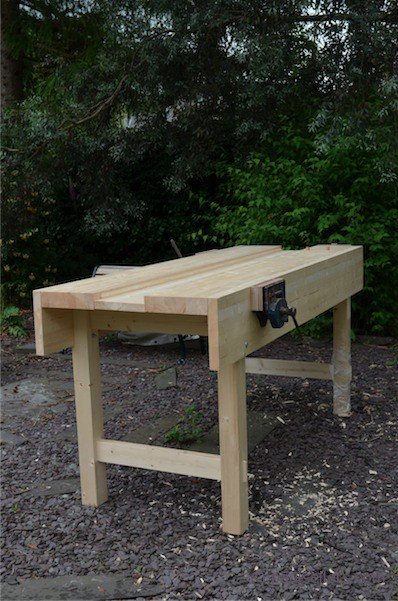
I would like to briefly discuss the size of bench you choose to make. I know it’s important to you and it must of course be fit for purpose, your purpose. My son Joseph, the violinmaker, uses a short bench three feet long. He has the same Record vise that holds stock for working and he also uses the benchtop and apron to clamp his materials to as he works them. Violinmakers plane the final thickness of their violin sides (bouts) to 2mm thick, cello walls are 4” wide and a similar thickness. They plane them to within thousandths of an inch of thickness using highly figured maple. His bench is two feet deep. The depth of the bench I made is for a freestanding bench. Of course were it intended to stand against a garage or basement wall it could still be the same depth, but without the second apron vise. Sawing dovetails on a bench is lightweight joinery. If all you are doing is making boxes then you need little more than that. If you are cutting a 10” tenon, then that’s a different story. At a show once I was asked to demonstrate using a 3’ square joinery bench. I could tell immediately that for others the bench might work, but for my work there was no way it would. I need weight, yes, but more than that I needed a footprint size that would counter the leverage and torque I would apply throughout aspects of my masterclasses. I required a bench sitting dead squat in place. The bench I used was identical to the one I us in the UK and US schools for students to work from. They measure around 2’ x 5-6’ long and 38” tall. So if you want a bench for a confined area that will work. The bench I just made is classic, a little longer than needed normally, but can readily accommodate myself and an apprentice, which is what I want. In my view, 5-6’ long should be adequate for anyone. All dimensions and sizes remain the same except for the aprons, well and benchtops. The final decision of course will e up to you.
In an upcoming series we will be adding drawers, shelves and cupboards to either side. These features too can be adapted to smaller benches. Meanwhile you have the step by step for the bench. More video will be released for the purpose of technique and so on soon.
NOTE:Just so you know, this is an older workbench series. Paul has a newer Workbench series. If you are interested in the updated version of Paul’s workbench please click the button down below. This page links to a cutting list, tools list, FAQS and much more.
Comments ()