
How to Build a Workbench – Drawings and Measurments (part7)
NOTE:Just so you know, this is an older workbench series. Paul has a newer Workbench series. If you are interested in the updated version of Paul’s workbench please click the button down below. This page links to a cutting list, tools list, FAQS and much more.
Click here to go to the workbench page
Keep a journal.
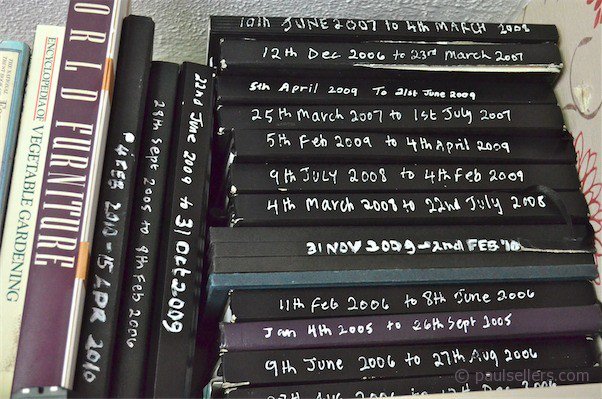
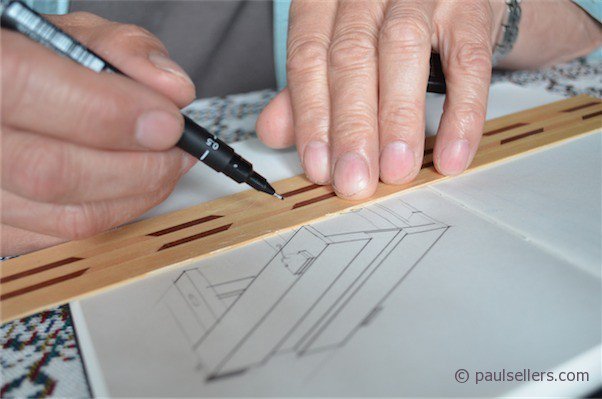
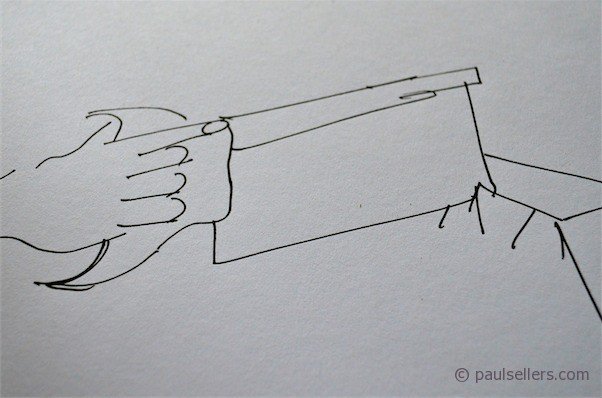
I have posted on this before. Keep a journal on your work, especially those of you new to woodworking (less than ten years in it). It’s amazing how your drawing skills will improve, but more than that, you have a record of your work, measurements you would otherwise lose and so on. I have kept a journal for many years now and I can go back to pieces I have made that were important. Making my son’s cello with him, designing the White House pieces for President Obama’s Inauguration. So many things. And I know, you can't draw, and you don't like to write. Well, even a simple and badly drawn stick figure hand holding a tenon saw has the power and dynamic to record and project the image you have and the journal isn't for others but for you to use it as a memory aid you can trigger every time you refer to it.
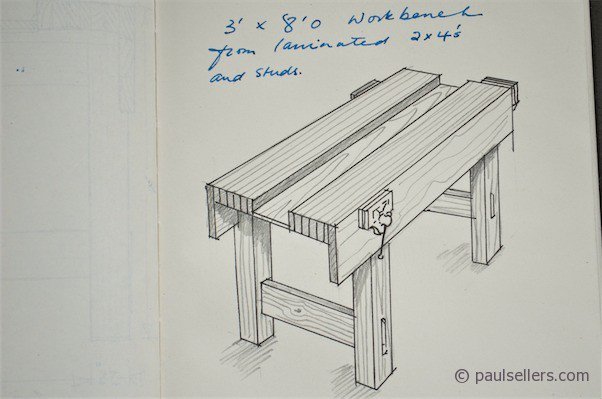
Here are some drawings from my journal re the workbench details. The sizes may need changing according to the resource of your materials, and also, you may want to change the size according to your creative workspace and so on. It is not so much definitive but clay on the wheel for you to work to as needed and shape and mould as necessary.
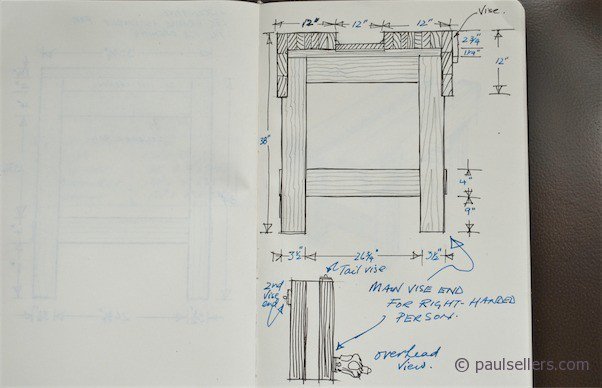
This drawing shows the basic end view of the bench from the main vise-use end. Beneath the bench top is a 1 1/4" x 4" bearer that secures the benchtop and well board from underneath. This prevents the use of metal on the bench top.
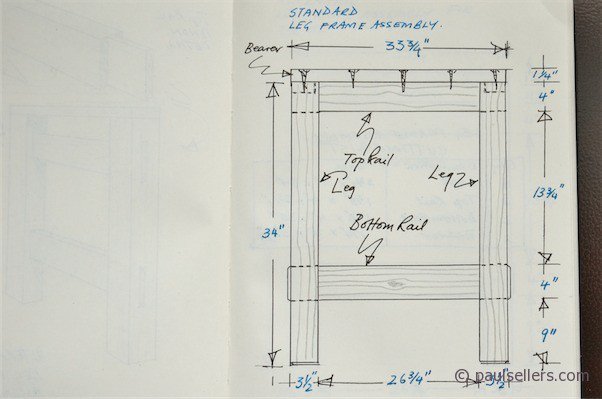
Here is the main leg frame assembly showing details of the tenons I used. You may want to change the details of the protruding tenon, but I prefer the Arts and Crafts roundover. which is fast and easy to achieve with a #4 bench smoother. The others we will show you how to form on the Youtube video soon.
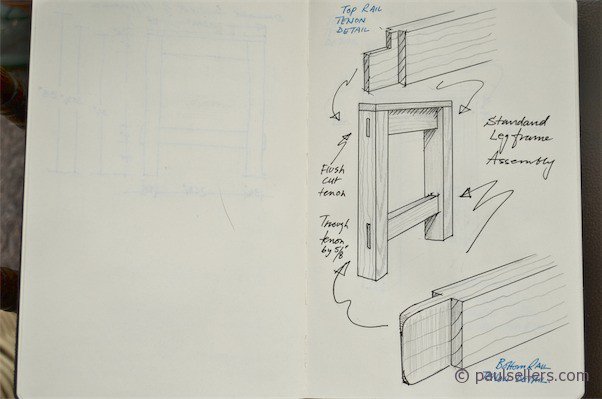
This is a perspective sketch of the main leg frame assembly to show also the two tenon types used on the bench.
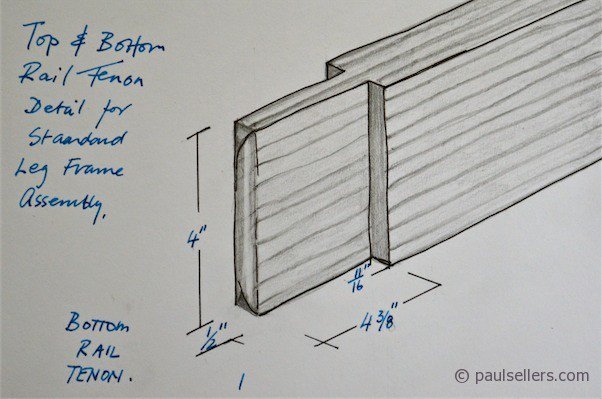
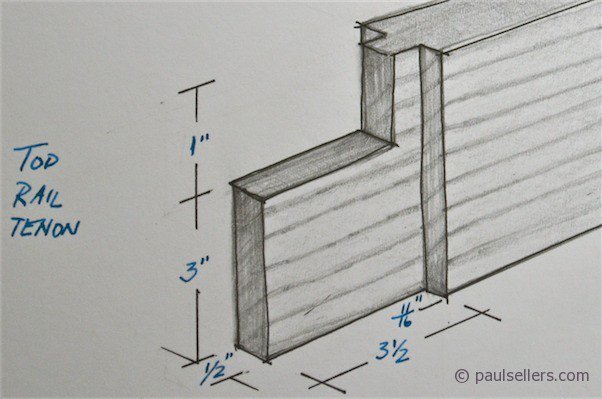
Specs for top and bottom rail tenons on main leg frame assembly.
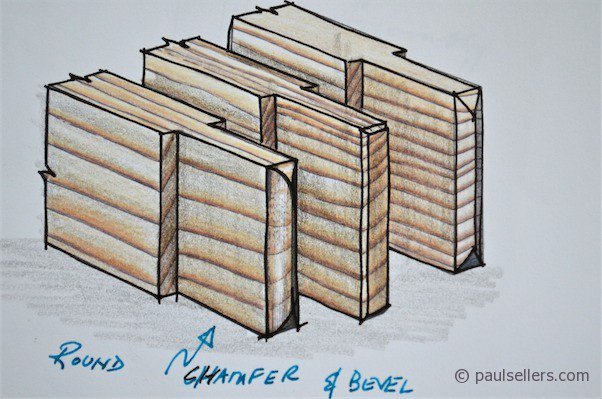
Bottom rail tenons
Top rail (haunched) tenons
Alternative tenon detail options you might want.
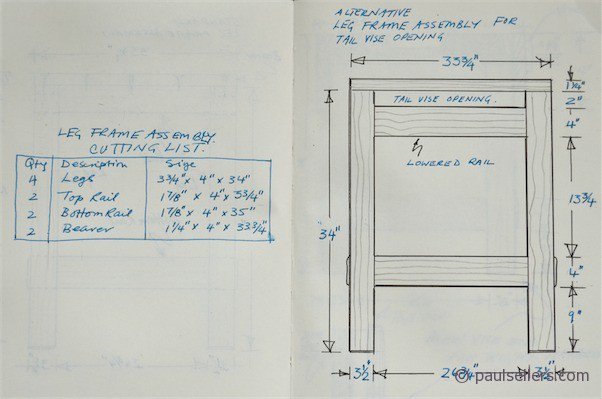
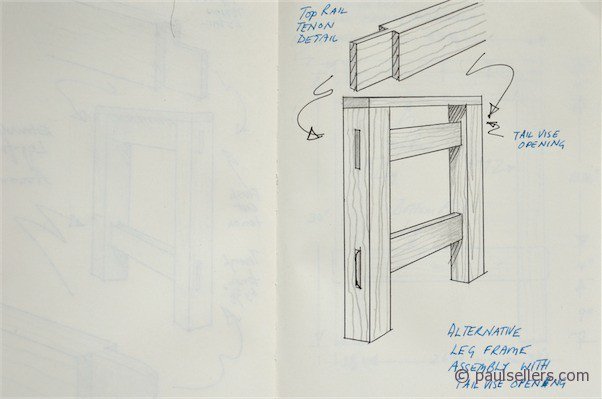
The two leg frame assemblies would normally be identically made, this drawing shows an alternative and so please note here that I have made provision for a tail vise to be fitted now or later and you may want to consider this as a standard addition. Adding the tail vise has meant lowering the top rail by 2" to accommodate the screw thread mechanism and parallel alignment bars of the vise beneath the bench top. This 2" allowance may be too much or not enough depending on the vise you have or buy. I think that so far it has been adequate for a range of vises, but you may want to check if you are buying a vise in for the project.
Comments ()