
My minimalist tool list - the combination gauge
The combination gauge
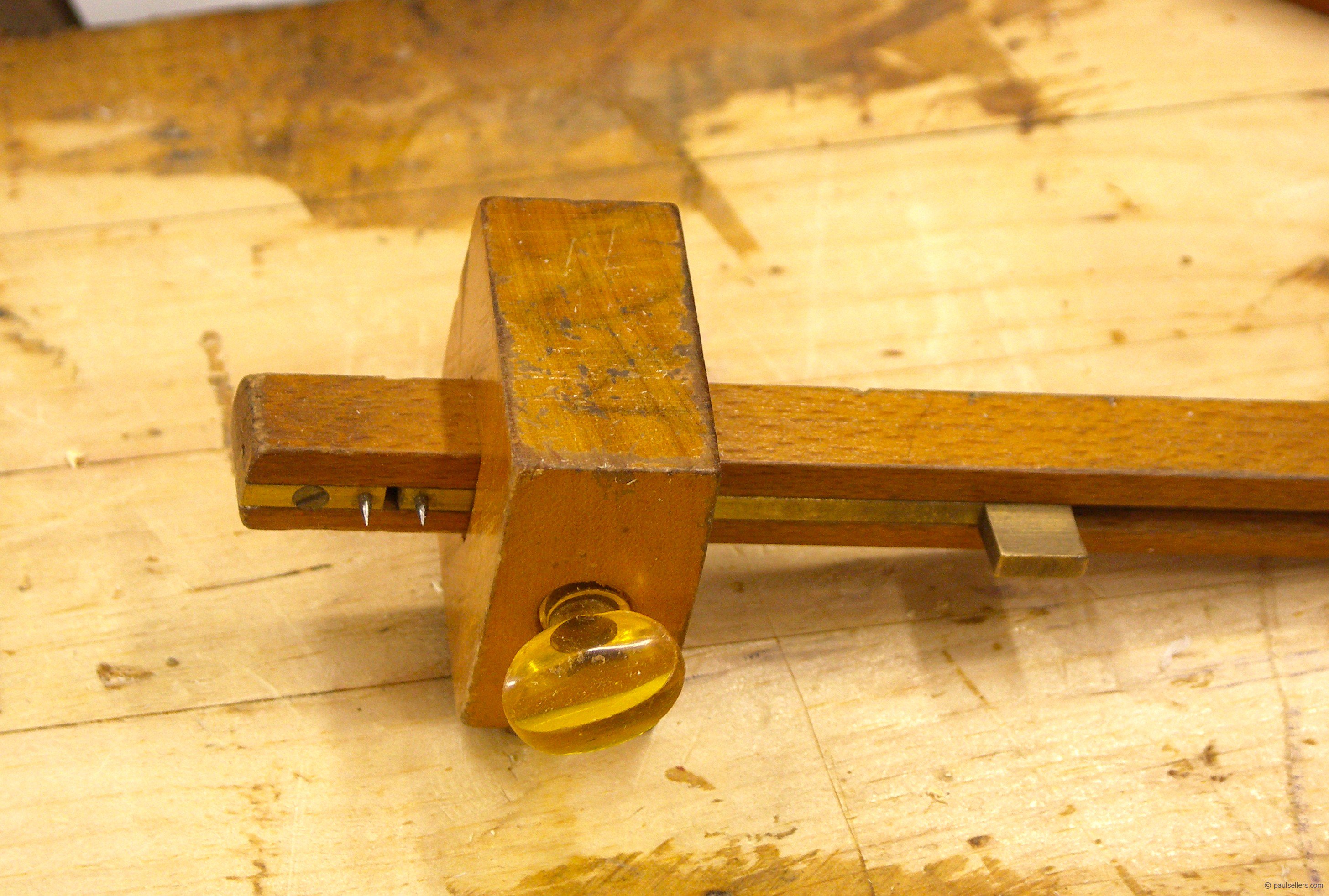
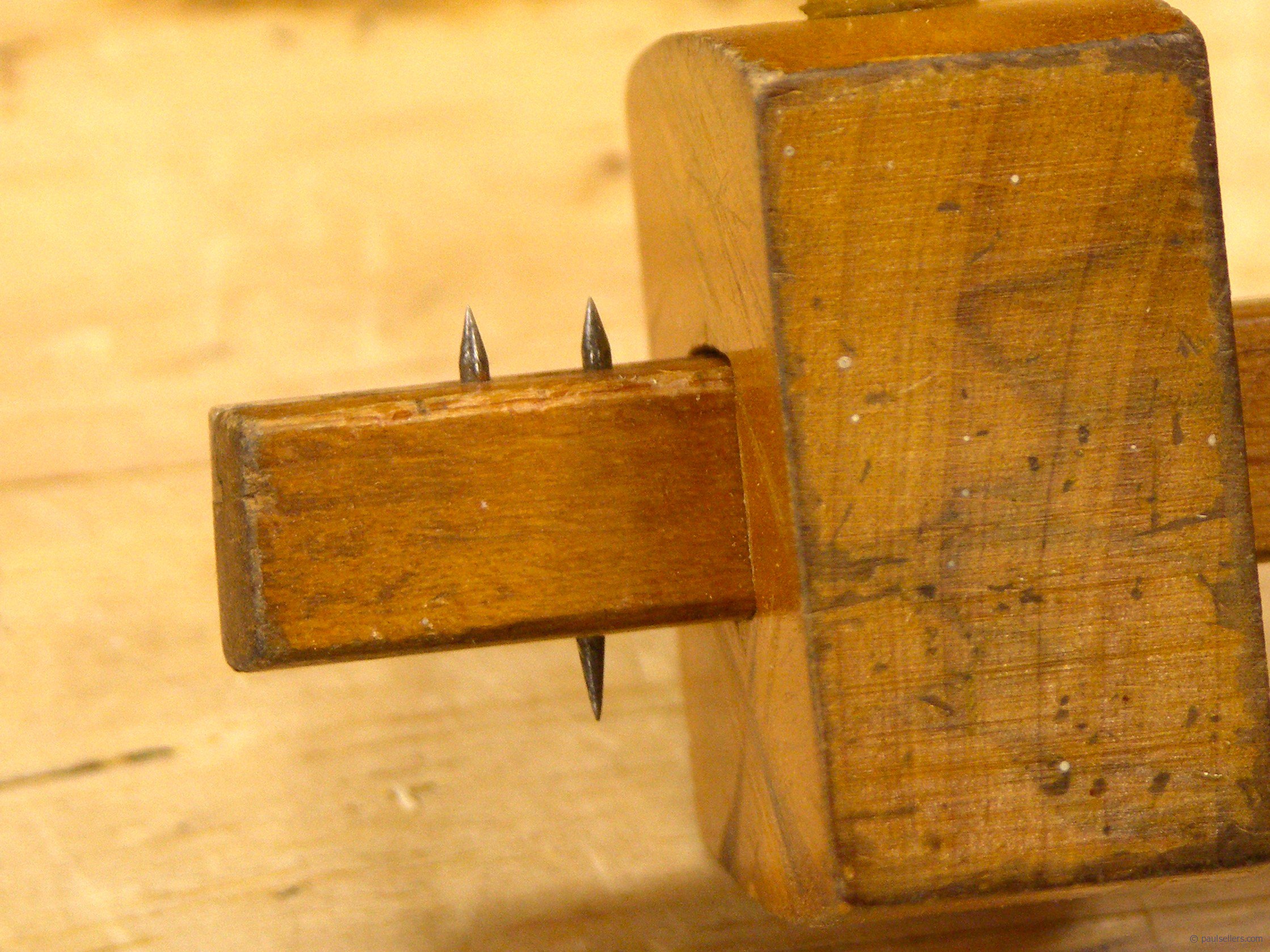
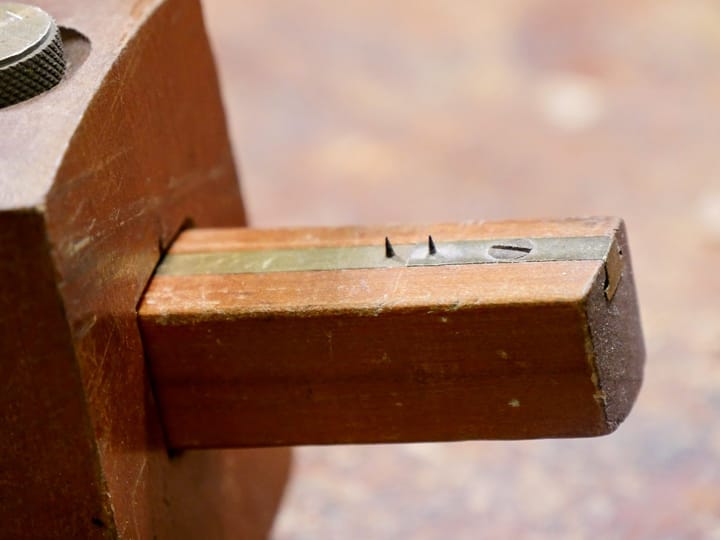
Two gauges common to woodworking are the marking gauge and the mortise gauge and both are essential primarily to joinery. Mortise gauges tend to be more expensive because of the addition of the adjustable extra pin point and so we find a unique gauge we call the combination gauge. It makes good sense then to add another pin to the opposite side of the gauge stem to make it into a marking gauge and combine two gauges - basically you get the extra marking gauge for free.
Retrofitting a gauge
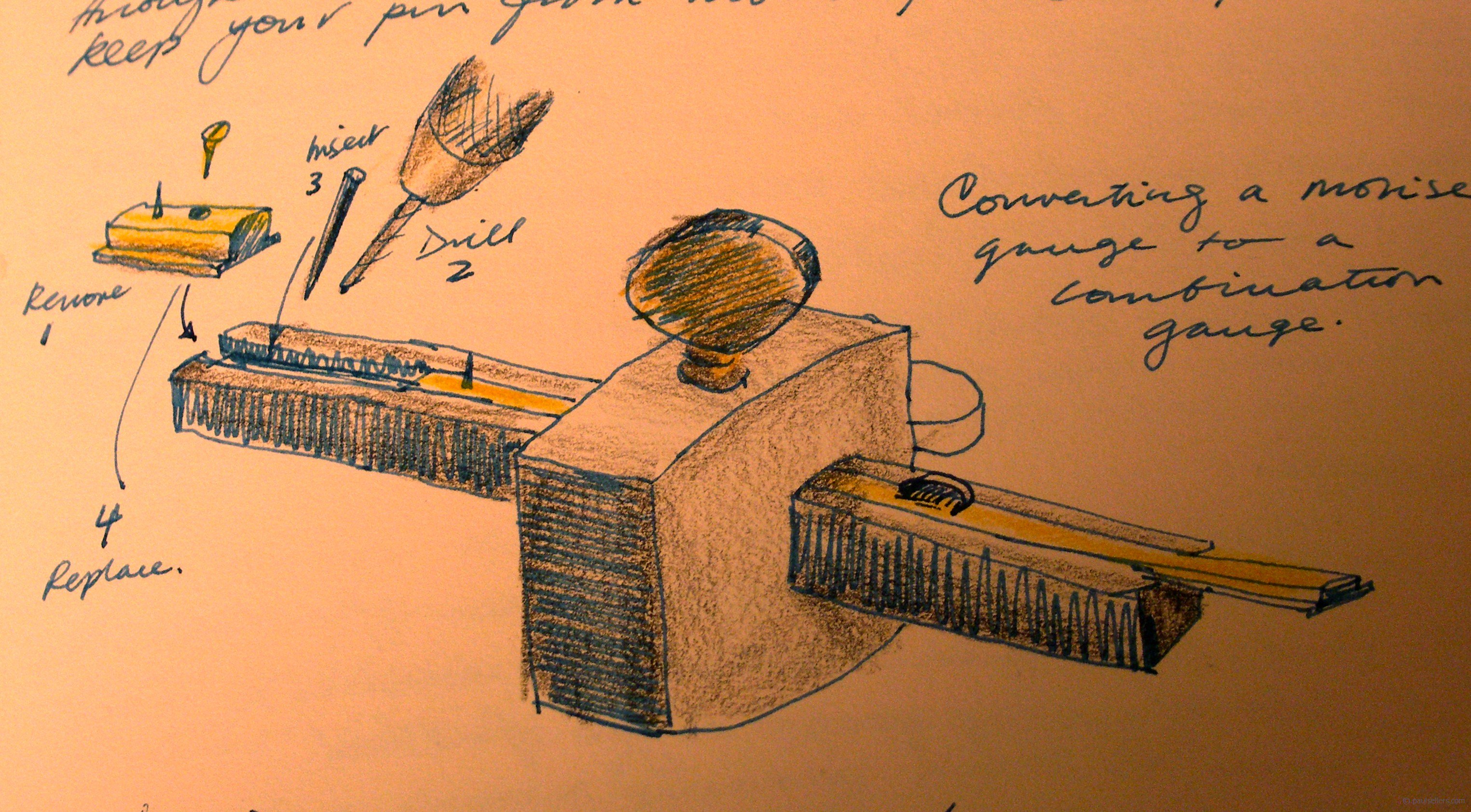
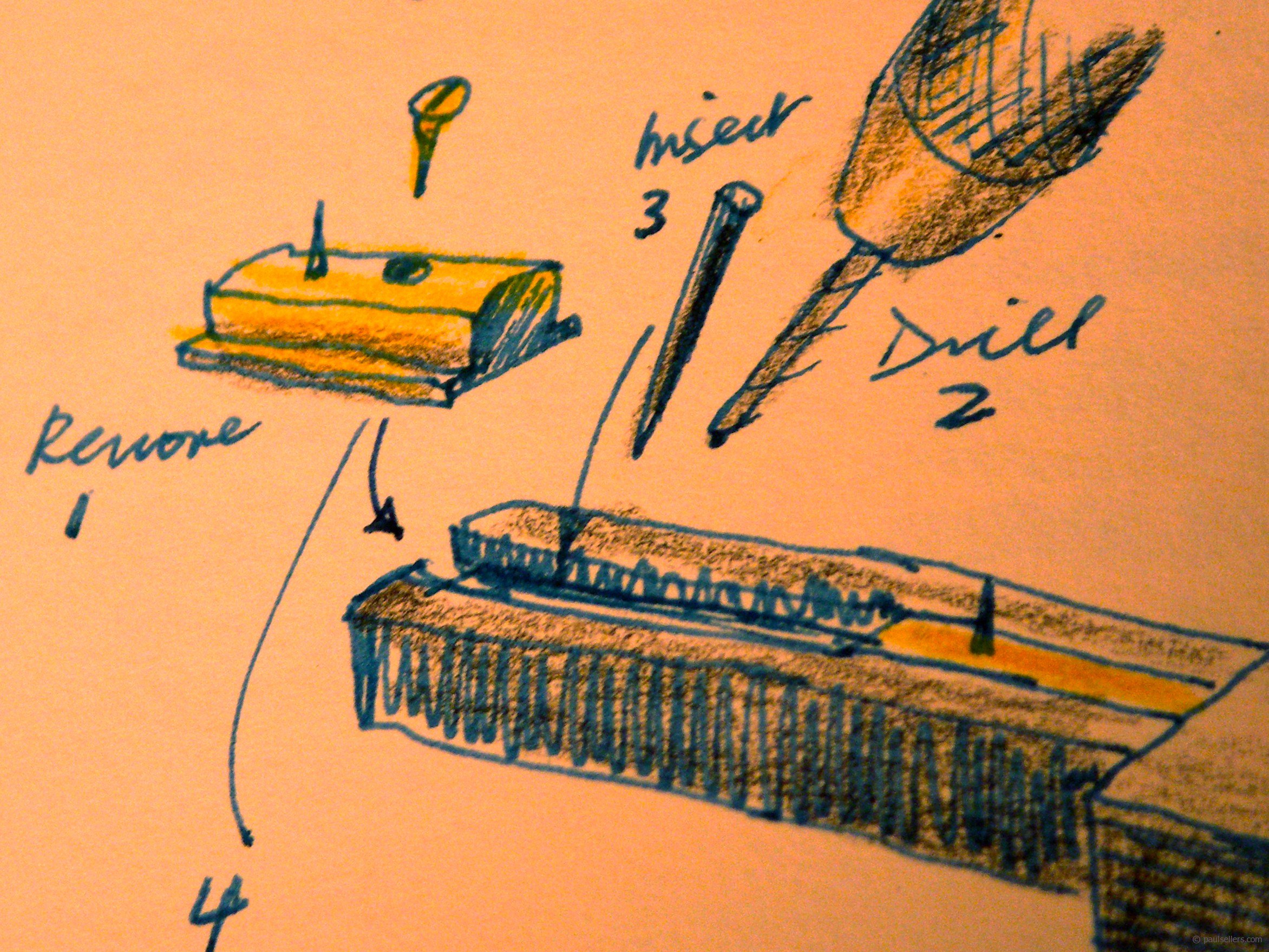
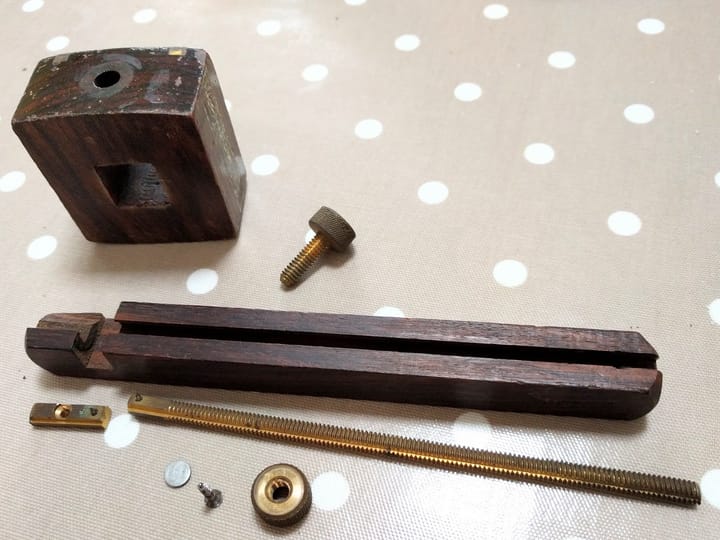
You can also retrofit an existing mortise gauge with an extra pin yourself. Pins are best if they are hardened steel and I have taken the marking pin from engineer combination squares as we don't use them in woodworking and snapped the pin from the pommel to use as a gauge pine. Drill a slightly undersized hole beneath the first part of the mortise gauge by removing the brass slide as shown, drilling the hole, driving the pin and replacing the brass slide. Just that quick and simple. See drawing and follow steps 1, 2, 3 and 4 below:
Combo's not so convenient
The disadvantage of combination gauges is the inconvenience of losing one for the other when we often need two or three gauges for an aspect of or project as in hinge setting for instance, where we have on gauge set for hinge thickness and the other for hinge width.
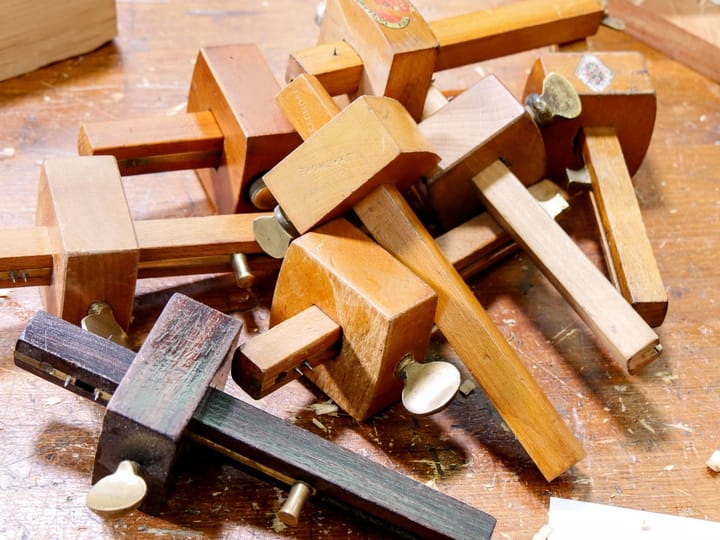
You can buy gauges of either types quite cheaply secondhand here in the UK. I own three dozen of them because of the school. Even so, I think a good number is two mortise gauges and three or four marking gauges.
Many gauges have brass wear plates to increase longevity of the stock but on finer work that's unnecessary - for large carpentry and joinery this is an advantage. I find that wear plates don't allow for the wood movement that occurs in the stock of the gauges I have, therefore the wood and the metal parts are rarely in harmony and one protrudes past the other, so I avoid wear plates for that reason. It's easy enough to flatten the stock every 20 ears or so with a hand plane.
I have several old gauges that have setscrews for securing the stock to the stem of the gauge. Thumb screws work better. Metal and wooden thumbscrews last indefinitely and I have plastic ones 40+ years, but I have known plastic ones to snap, which is inconvenient.
Conclusion:
Buy combination gauges to cut costs - you have them always and they can be convenient for travelling to on-site work. Add additional marking gauges as you find them at the right price..
Comments ()