
My minimalist tool list - the woodworkers knife
The woodworker’s knife
Knives for woodworkers are often called striking knives or layout knives because we strike and lay out the cut lines of shoulders, cut around hinges and other hardware and trim and fit veneers and thin or small sections of wood to size.

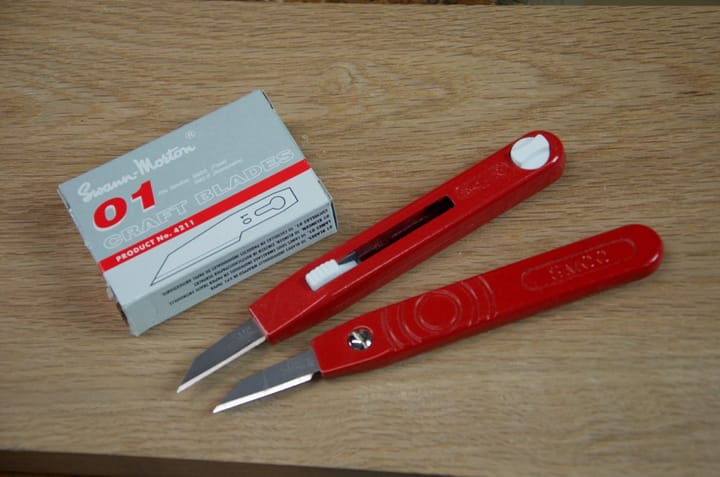
There are indeed many different knives to choose from, ranging from general utility knives to snap blades for a fresh cut every time and any one of them will work of course. I own several different knives by accumulation and use them for appropriate functions depending on my need.
Hand made knives can be lovely

Some I have made, these are favourites designed for purpose and made from O1 steel with hardwood handles of rosewood, ebony and cocobolo, are customized, while others are manufactured specifically as carving knives with long slender blades.
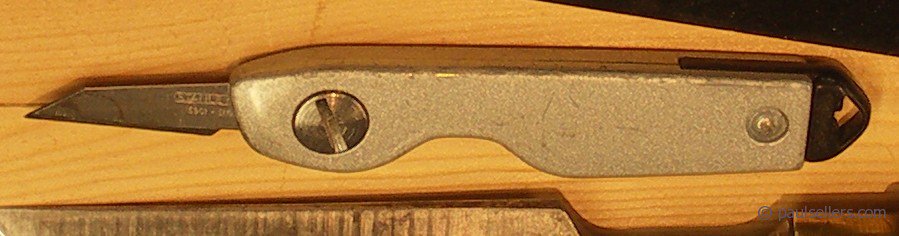
I would generally never buy a knife that relies on disposable blades because I want one that can be sharpened in seconds and get on with my work. This one, though made for disposable blades is the one I use and rely on the most. It's uncomplicated, effective and well suited to the hand; Stanley hit the spot for me with their Folding Pocket Knife model 0 10 598. It's a comfortable knife to use, is readily available, cuts pristinely and can be used with either hand when necessary. More than that though, it readily sharpens within my 10 second criteria, takes a good sharp edge and is strong enough for heavy cuts. For those in the USA this knife is not generally available, but a close second that my be as good or better is the Stanley folding knife 10-049
I didn’t buy my first one because it uses disposable blades but because I could resharpen the blade and each blade seems to last for about two years before I need to replace it. I am obsessive about sharp tools and layout knives especially. This knife gives me exactly what I want in a knife. I introduced them to the school and everyone likes them. They cost about £7 max, are very durable and so will not need replacing.
Joinery
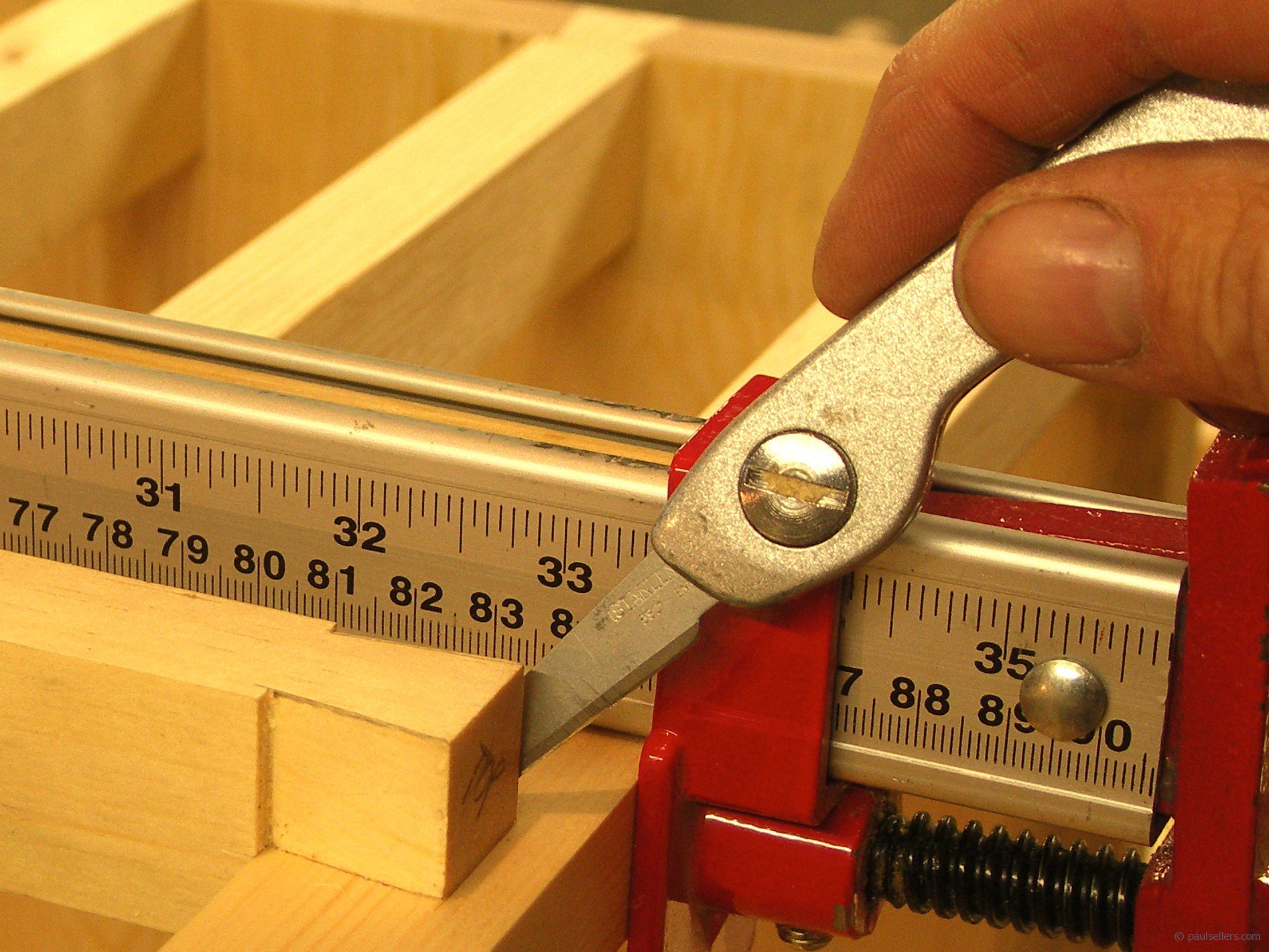
The main value for me is its use for joinery; making shoulder lines, scribing the cut lines around dovetails for dovetailing and so on requires a strong yet thin blade tapered to a long point for reaching into the inside corners of joints. Thus us especially true of dovetail joint where the interlock is critical to strength and dependability.
Comments ()