
Checking your square's squareness
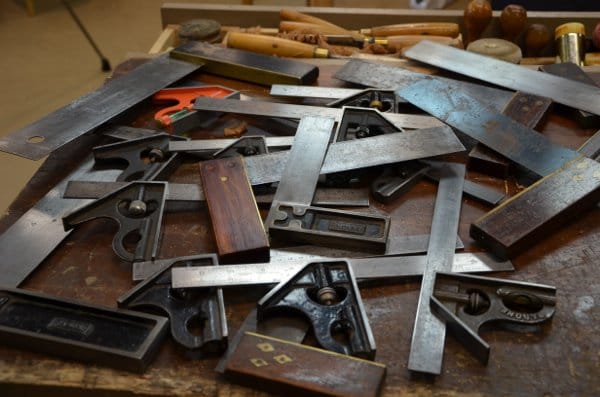
Provided you have a perfectly square square, it's a simple matter to check a square for square. Most people starting out may not have that luxury. So, you bought a tidy looking square from a carboot sale or flea market or you received one from granddad's garage tools. How will you know if it's got the dead square accuracy you must have for your work?
I want my squares dead square with no margin of inaccuracy so I strive for perfect methods to determine their accuracy so I can either correct the erring tool or get rid of it. The process is simple and quick, taking no more than a few minutes. To do this I need two flat boards about 9-10 wide. In this case I am using 12" wide boards as my square is 12". Pine is soft and easy and works best of all, but any wood will do.
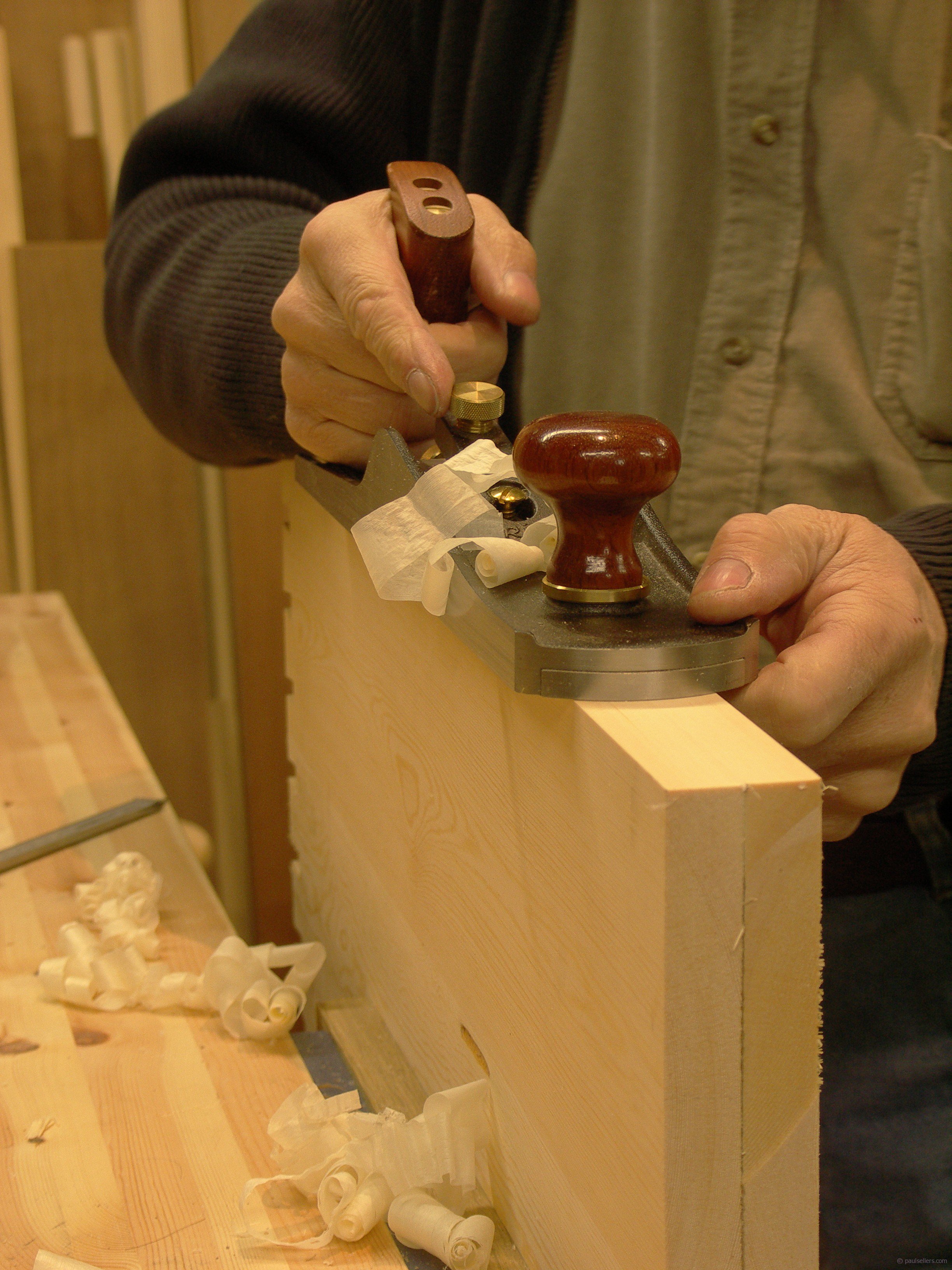
I edge joint two meeting edges of the boards as I would for any panel making project. I find that a longer plane around 15" works best for this. My panel wood is 24" long as I am checking a 12" square.
The reason for two boards is that one checks the other. Planing the two straight means that the two edges will meet perfectly with no gaps at an part. To do this, start planing in the usual manner from one end to the other, just to eliminate any disparity in levels. The move to a central point in the length of the boards and begin planing with short strokes working from the centre with longer and longer strokes until you get a continuous stroke from both edges.

Bring the two edges together and if the two meet seamlessly the edges most be dead straight; they cannot be anything but.
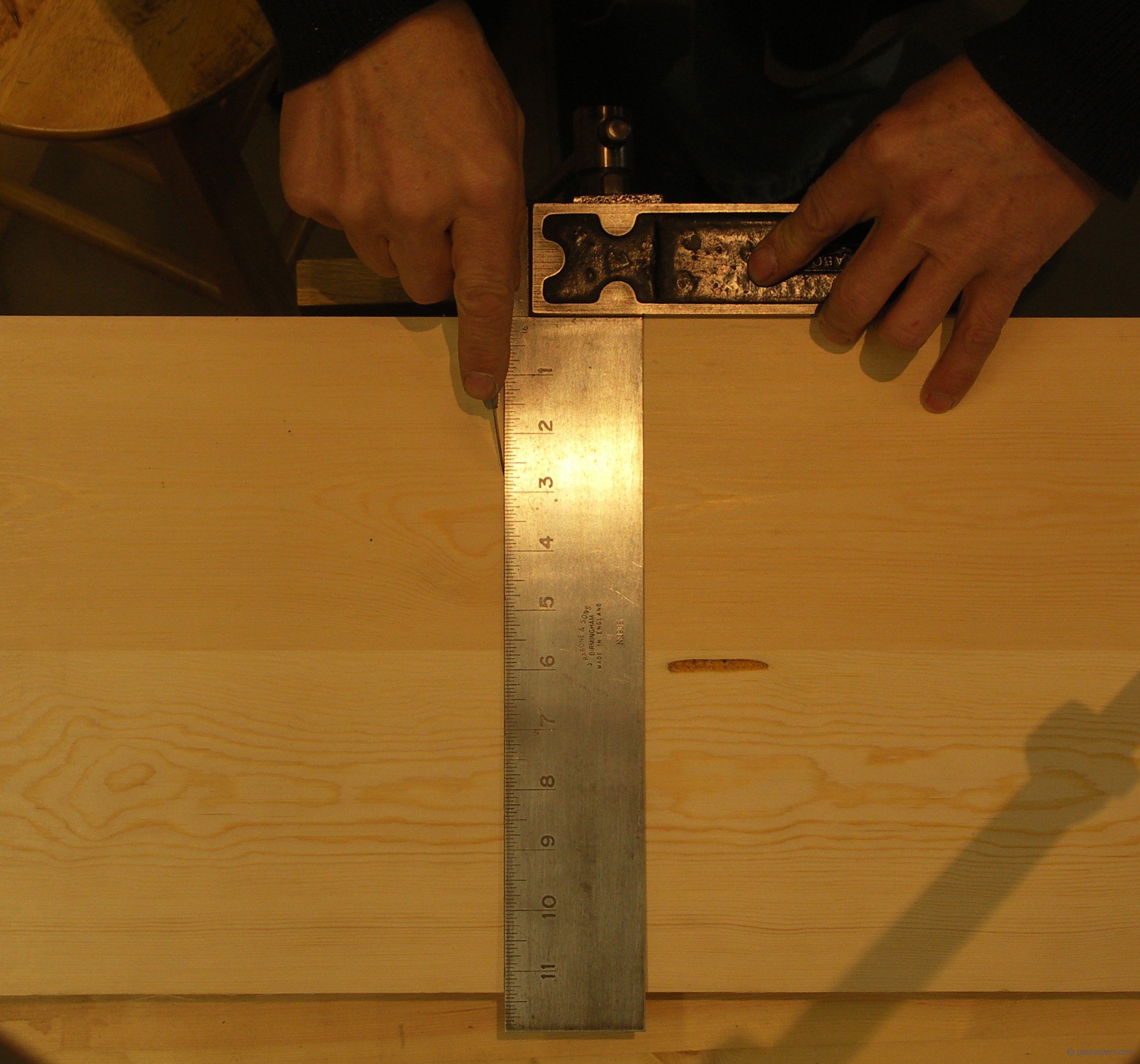
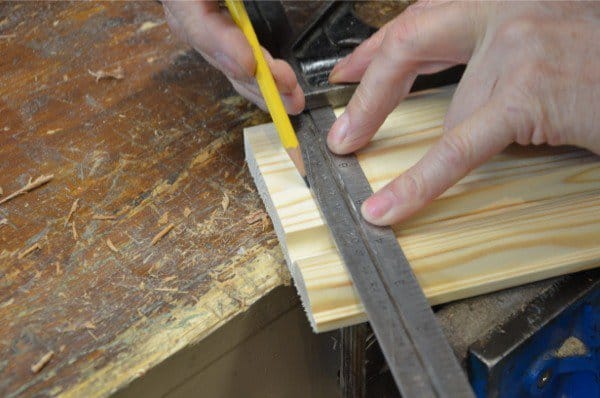
You can use either a very sharp pencil or a sharp knife for the next step. Square a line across the board from one side to the other.
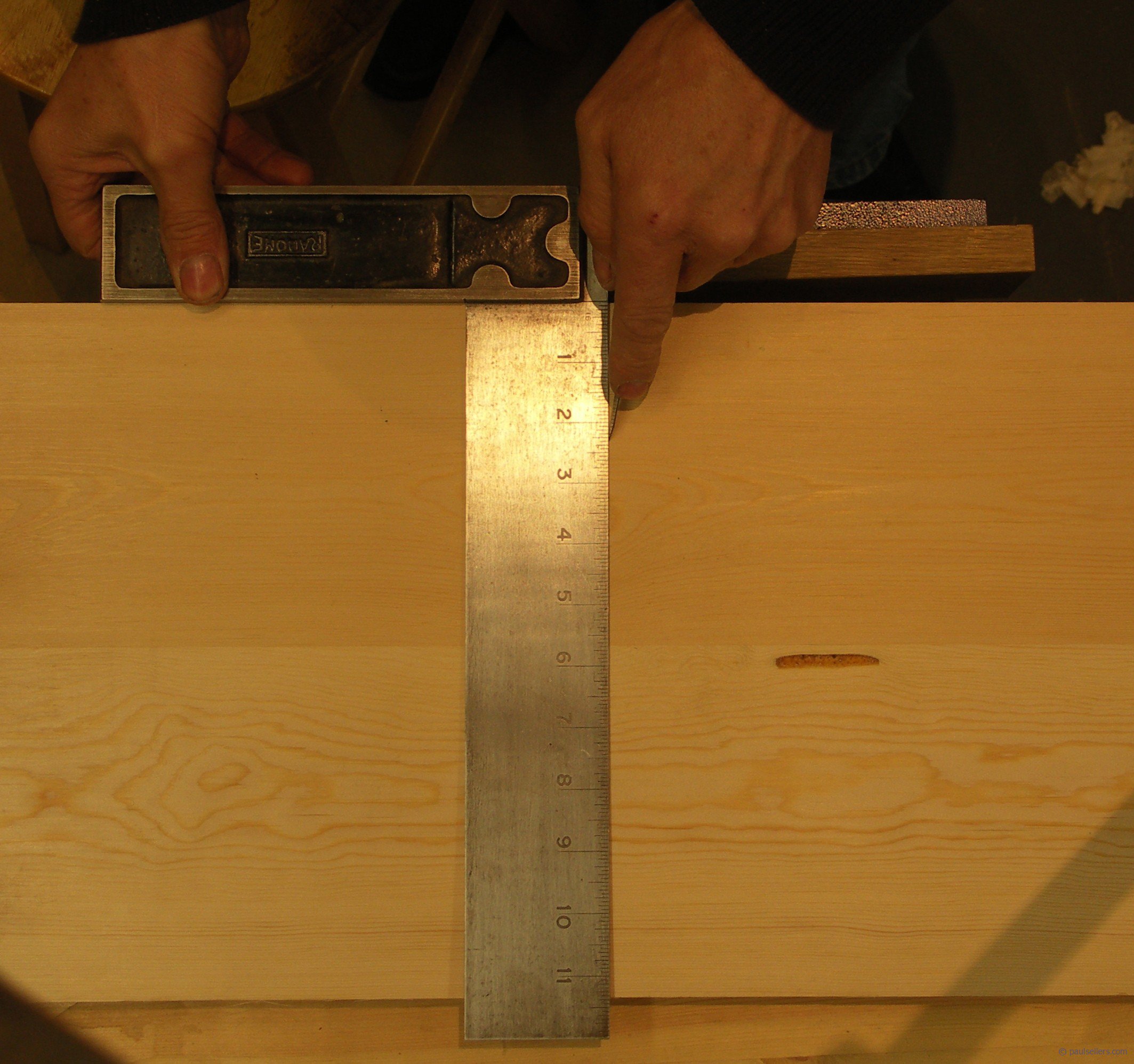
Flip the square over and test it against the same line. If the points meet across the width the square the square is square. Also, check along the whole length of the line made with the square after the flipover, any deviation will show that the edge of the square is not straight.
You must check both sides of the blade of the square by sliding the blade along to check the inside edge.
One part remains to be checked. The outer edge of the stock of the square. This is simply a measurement check to see if it's dead parallel to the inner face. If it is it is also square to the blade.
Comments ()