
Hand saw handles more than mere looks
There is more to the saw handle than you might realise. Yes a good grip is important.Comfort too. And having it fit your hand with enough heft to it so that your finger nails don't cut into your palm makes it about the right size. Sometimes we have little choice on such things, but usually there is a lot you can do to saw handles that creates a dynamic power tool in the right hand.
I like to buy secondhand hand saws of different types for different reasons. One is I hate to see good steel, good brass and good wood go into the landfill or, worse still, get recycled into a throwaway Bahco or Spear and Jackson plastic handled saw.Two, they are often made with good materials. Three, for 50p (40c USD) and an hour or two's weekend work they can cut as good as the best of the best. (Get my book and video course Working Wood The artisan Course with Paul Sellers to learn how)

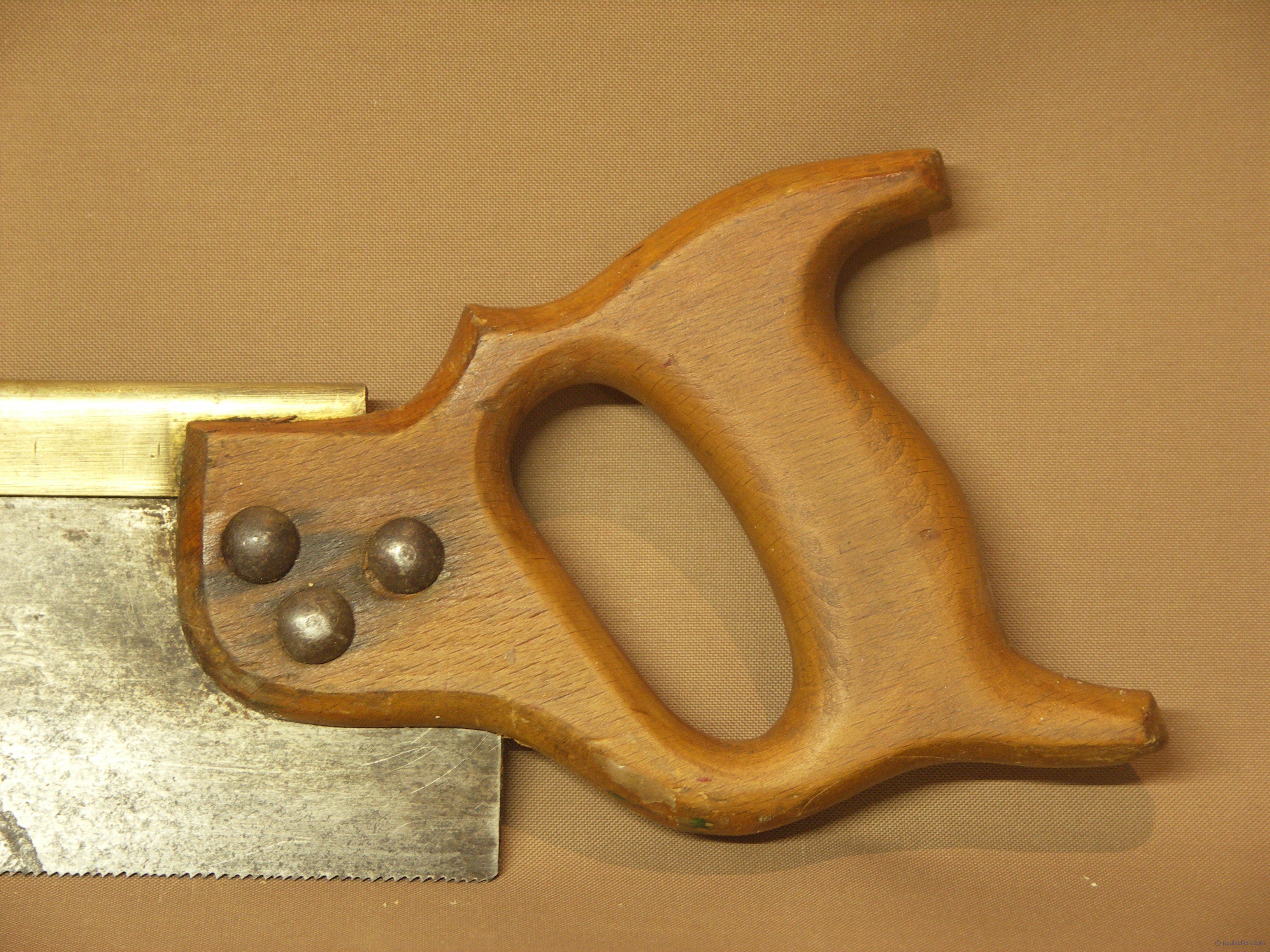
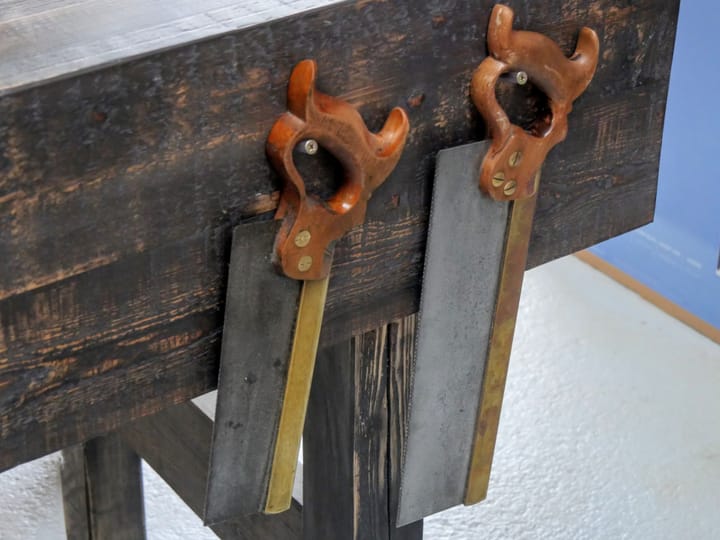
The saw on the left shows the saw handle position as it came from the careless manufacturer in the 1950's. The war years advanced mass making to its zenith and left us with low grade hand tools. The same saw right with the adjustment made to the handle line. See how the handle has been lowered to offer force more directly behind the teeth, bot NOT too low.
Some, many, of the old saws and indeed new ones too are presented inline at an awkward angle and this presents the saw to the wood without a true COT (center of thrust). That means that the hand is more overhand and on top of the saw rather than directly behind the row of teeth actually doing the cutting. This is never so apparent until you give the saw to as student who struggles to get the saw to make a full cut along the whole length of the teeth. In effect, the saw seems to 'trip' part way along and of course the student thinks that it is him or her and not the saw.
This handle is in the position it came to me. It's one of those post-war saws that marked the demise of British excellence in saw making. Bit like Canadian Disstons were to Henry Disston's masterpieces pre-war V post-war. The handle is too high on the hoof and aloof if you will. It needs rotating downwards so the in use, the heel of the hand is more directly behind the line of the teeth as the saw thrusts forward into the cut.
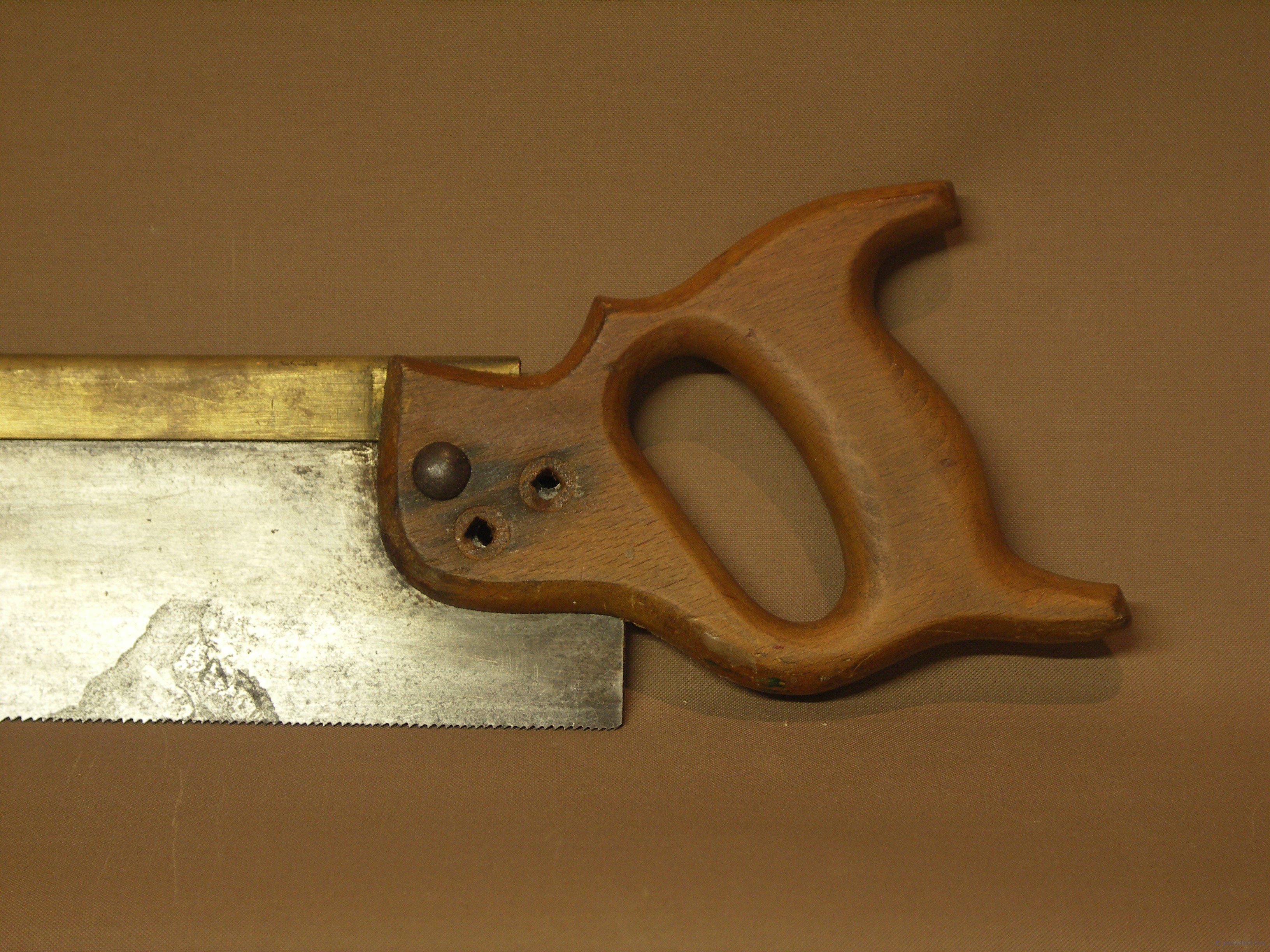
First, remove two of the handle screw nuts and bolts and loosen the third slightly. Just enough to allow the swivel of the handle.
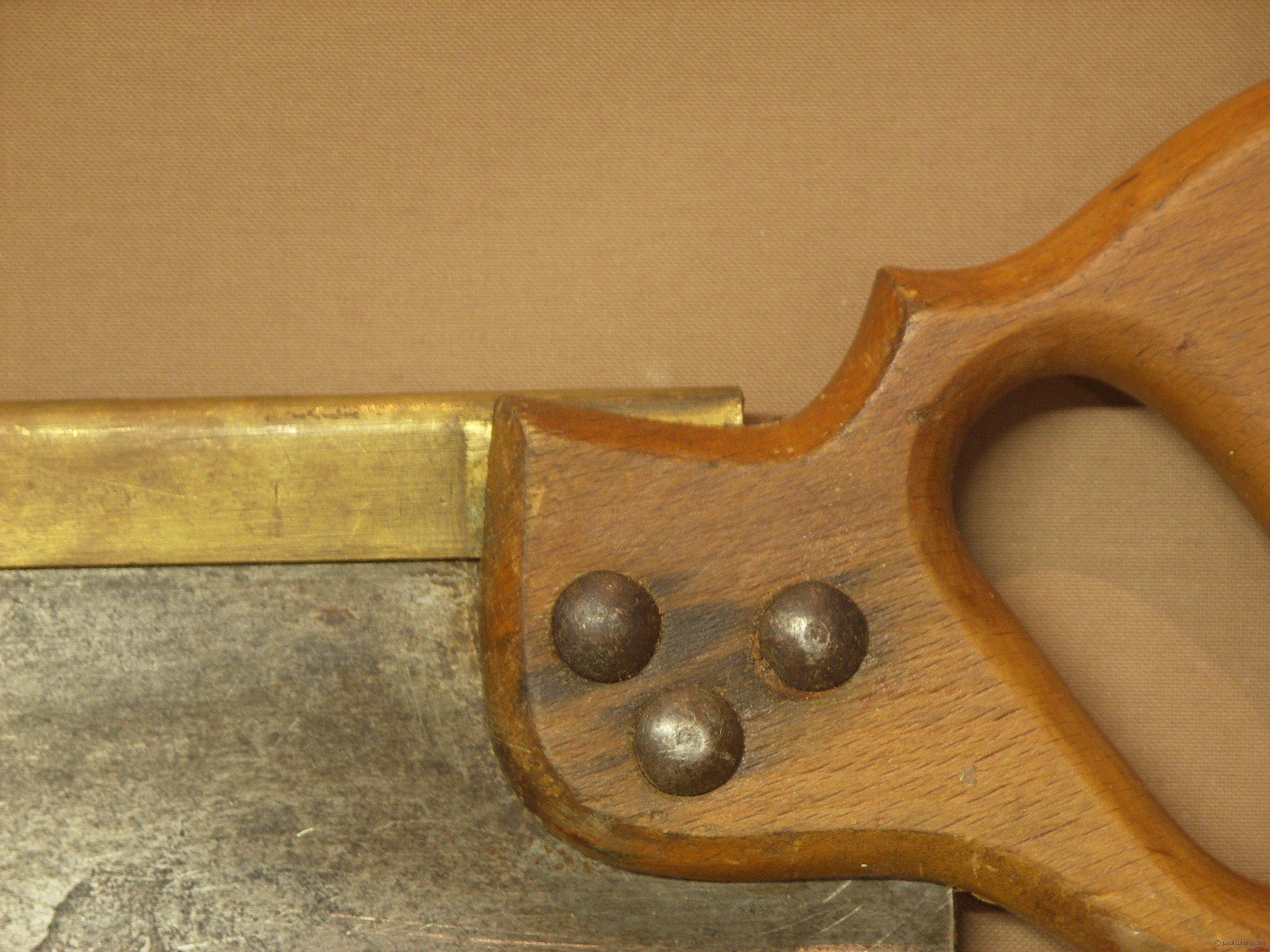
Here is the handle in its altered position. After lowering the handle, I drill out new holes alongside or into the old ones but now offset. Replace the screws and cinch tight.
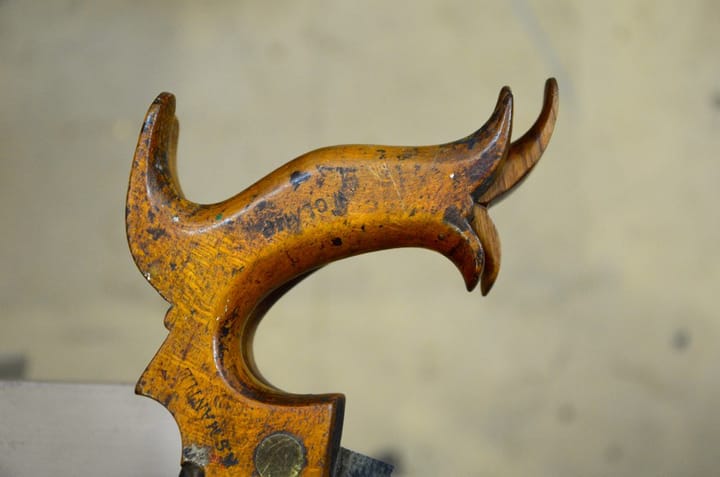
My next post shows how redefine the handle. The saw already cuts perfectly now, but it needs a graceful hand made profile like the old Disstons and the Spear and Jacksons. How ashamed those old makers would be if they saw what had happened to their product line.

Comments ()