
Restoring woodworking gouges: project 2 part 1
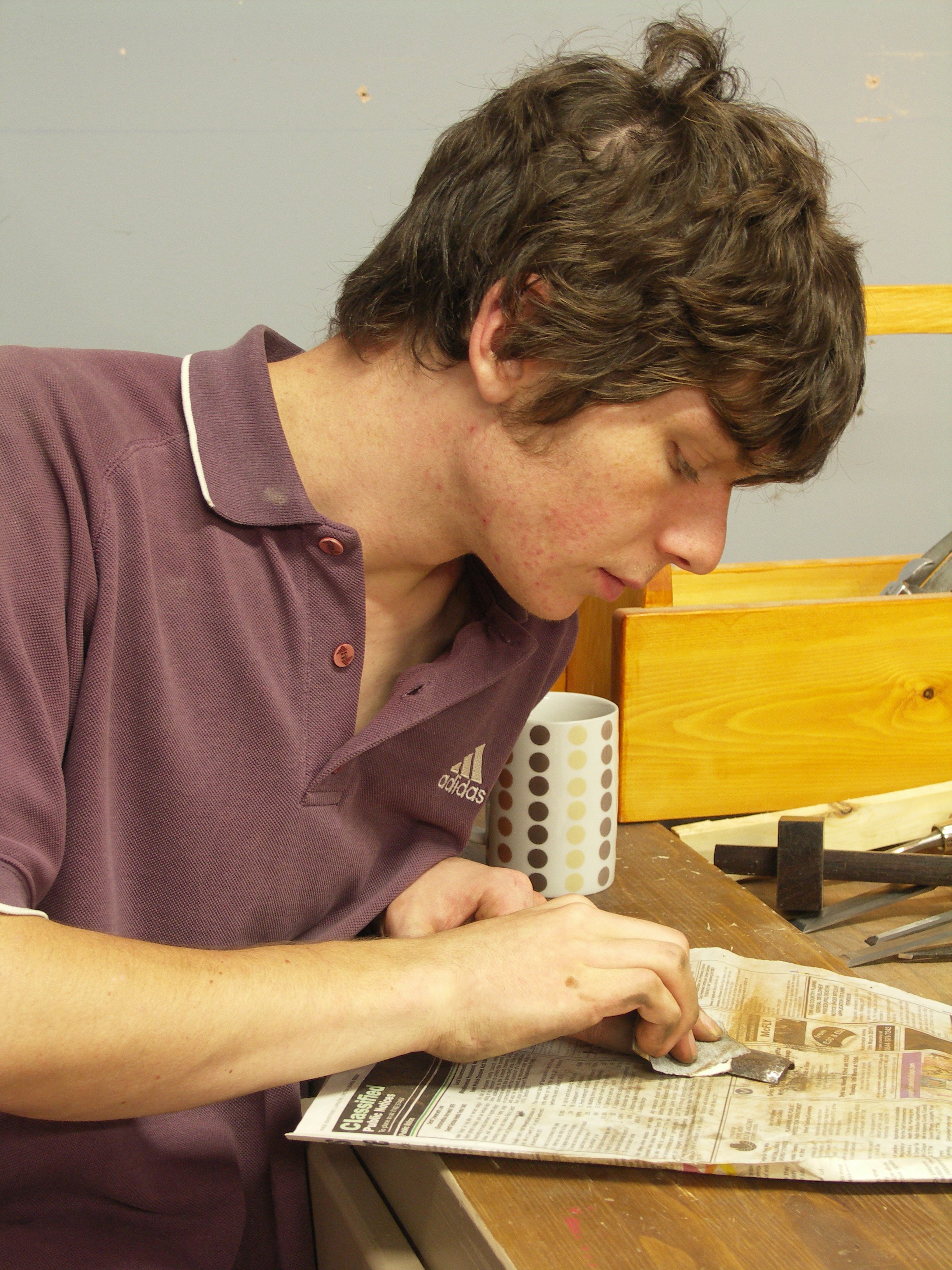
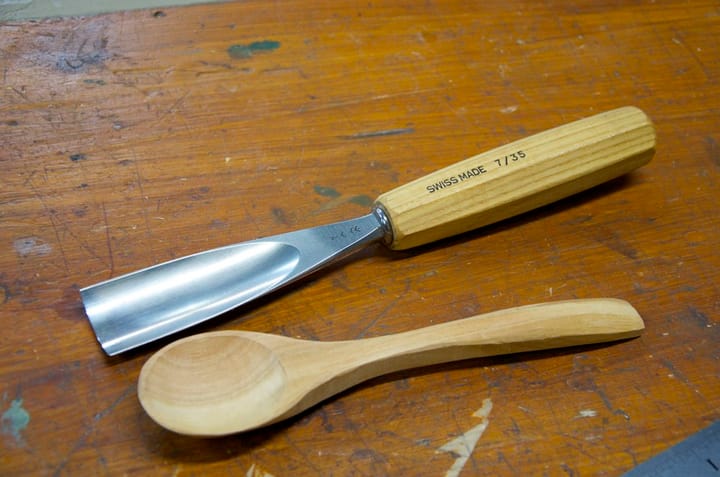
This 1 1/4" woodworking gouge has an out canal and is used for carving scalloped work like wooden bowls and spoons. This was made by Thos Ibbotson who was a famous chisel and cutting iron maker from Sheffield England and had a good reputation amongst hand tool makers and hand tool users like myself. Bit rugged to look at yet and John has a little more work to perfect it, but these are the steps to restoring an old gouge so far.
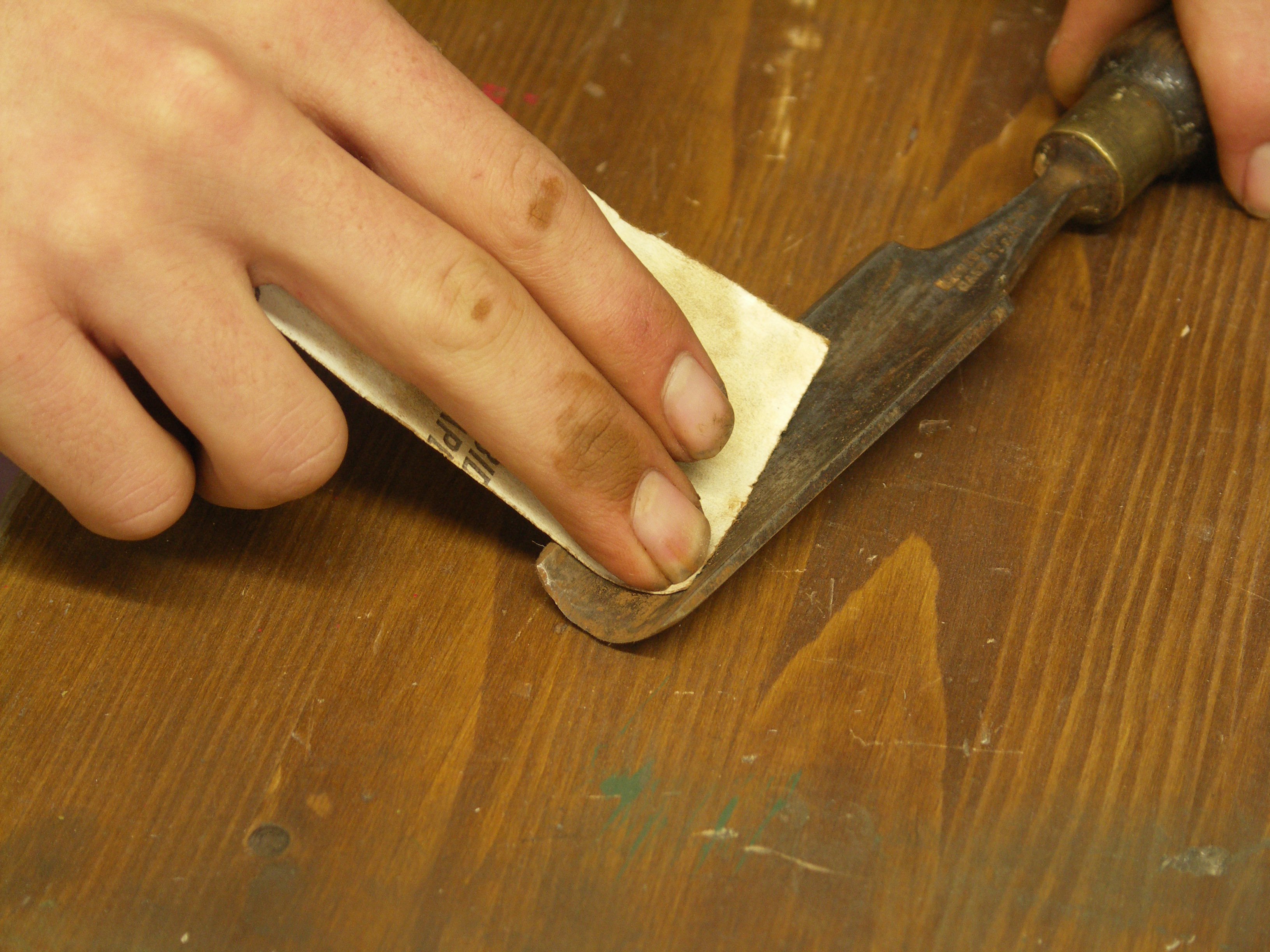
Remove as much rust as possible until clear steel appears across the whole tool. Go through grits from 150-grit to 250-grit. This should be smooth enough for most woodworkers.
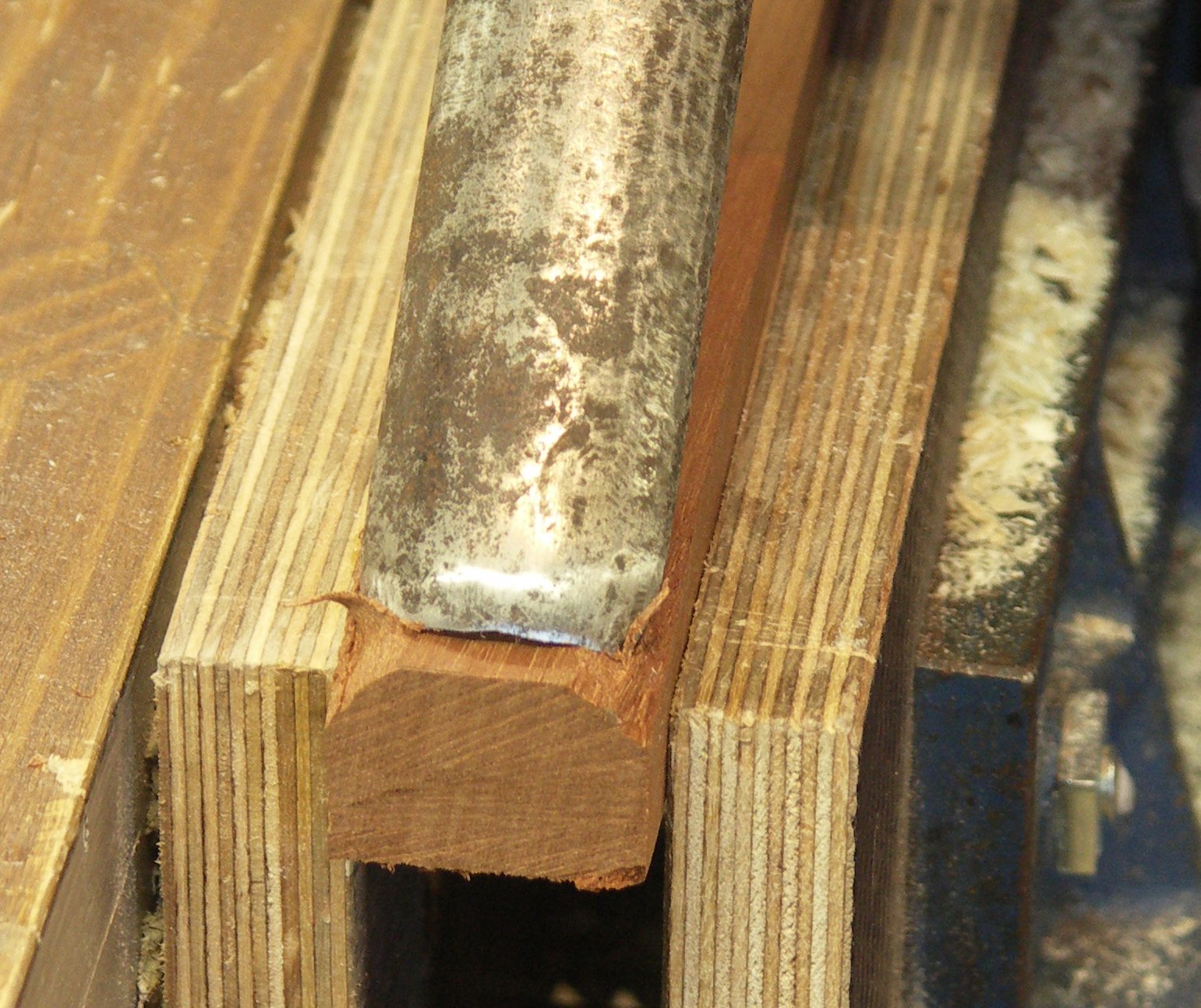
This gouge has lost most of its cutting edge through fracturing and rough treatment but no matter. I found John a piece of scrap wood and showed him how to get the profile at each end of the scrap using ht actual gouge as shown. Even though its a bit rough to look at this serves as a rough guide for profiling the round.
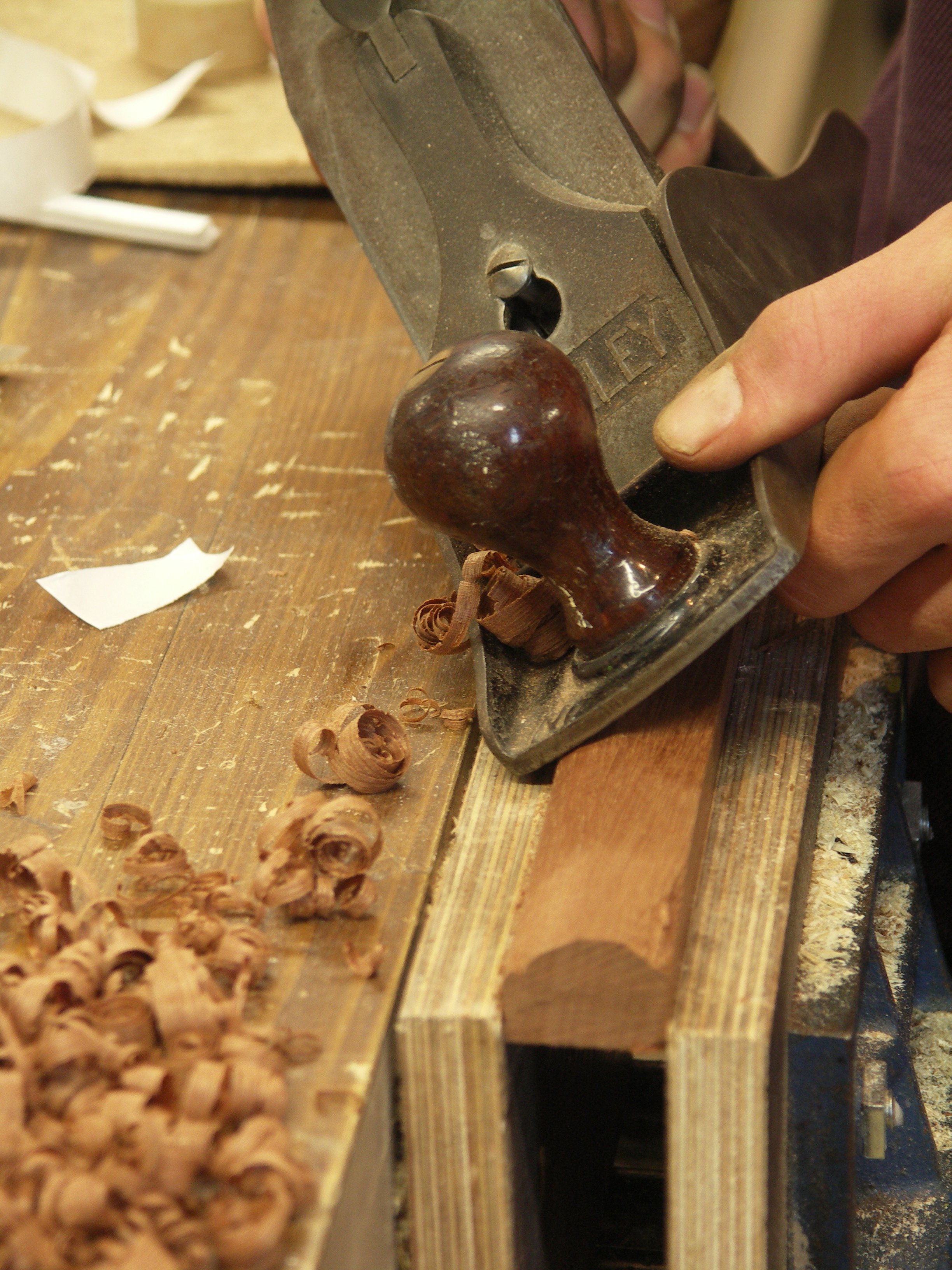
Using a smoothing plane, he refines the profile to the exact shape detailed at either end. This is not an exact science but it works perfectly and it's simple, cheap and gets results. No need for the conventional (and expensive) slip stones at all.
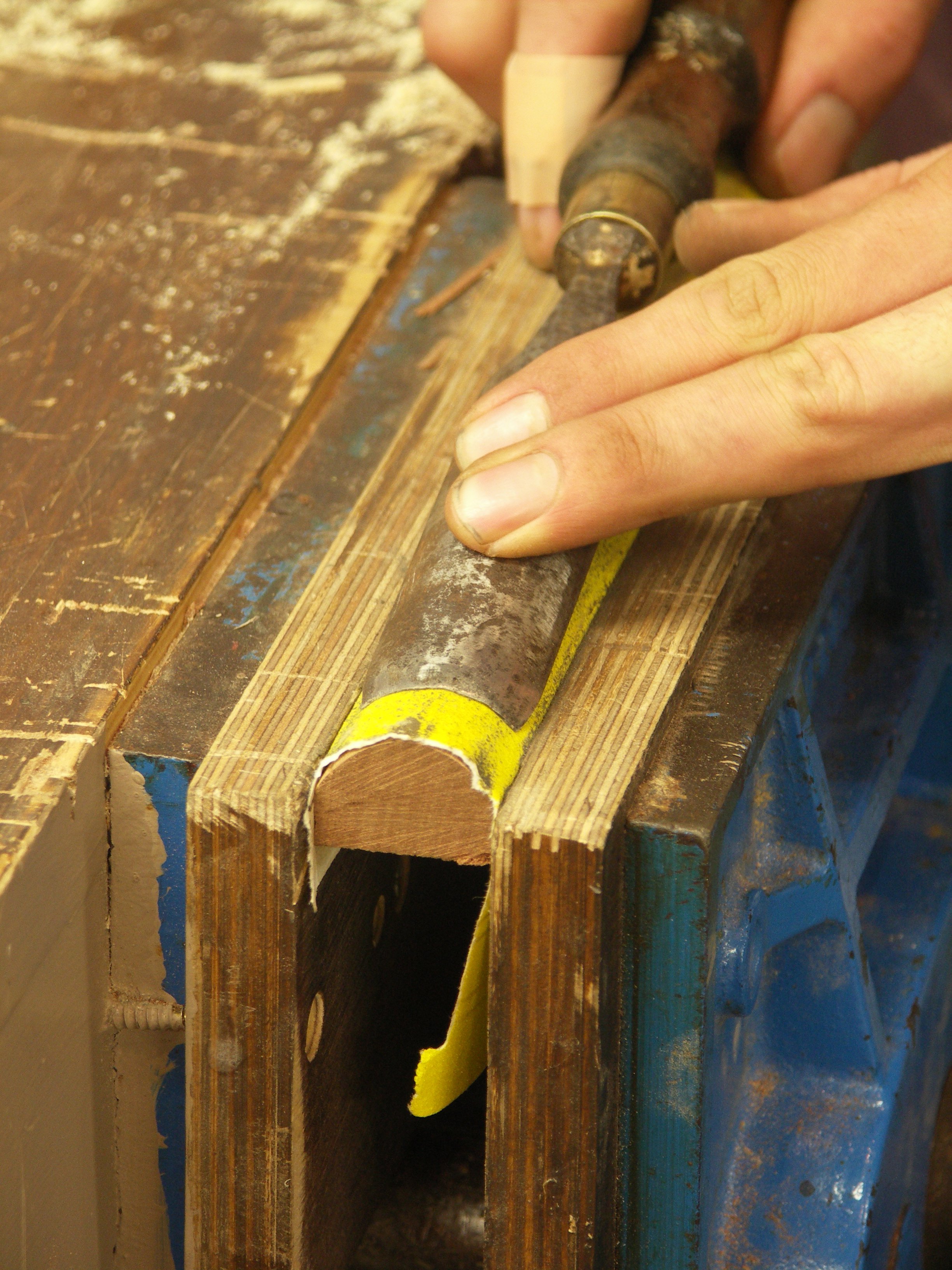
John then wraps coarse sandpaper onto the profile as shown and then draws the inside of the gouge onto the rounded profile to develop a clean-steel profile in preparation for honing and polishing the canal. He starts with the coarse paper first and then progresses to 150-grit paper.
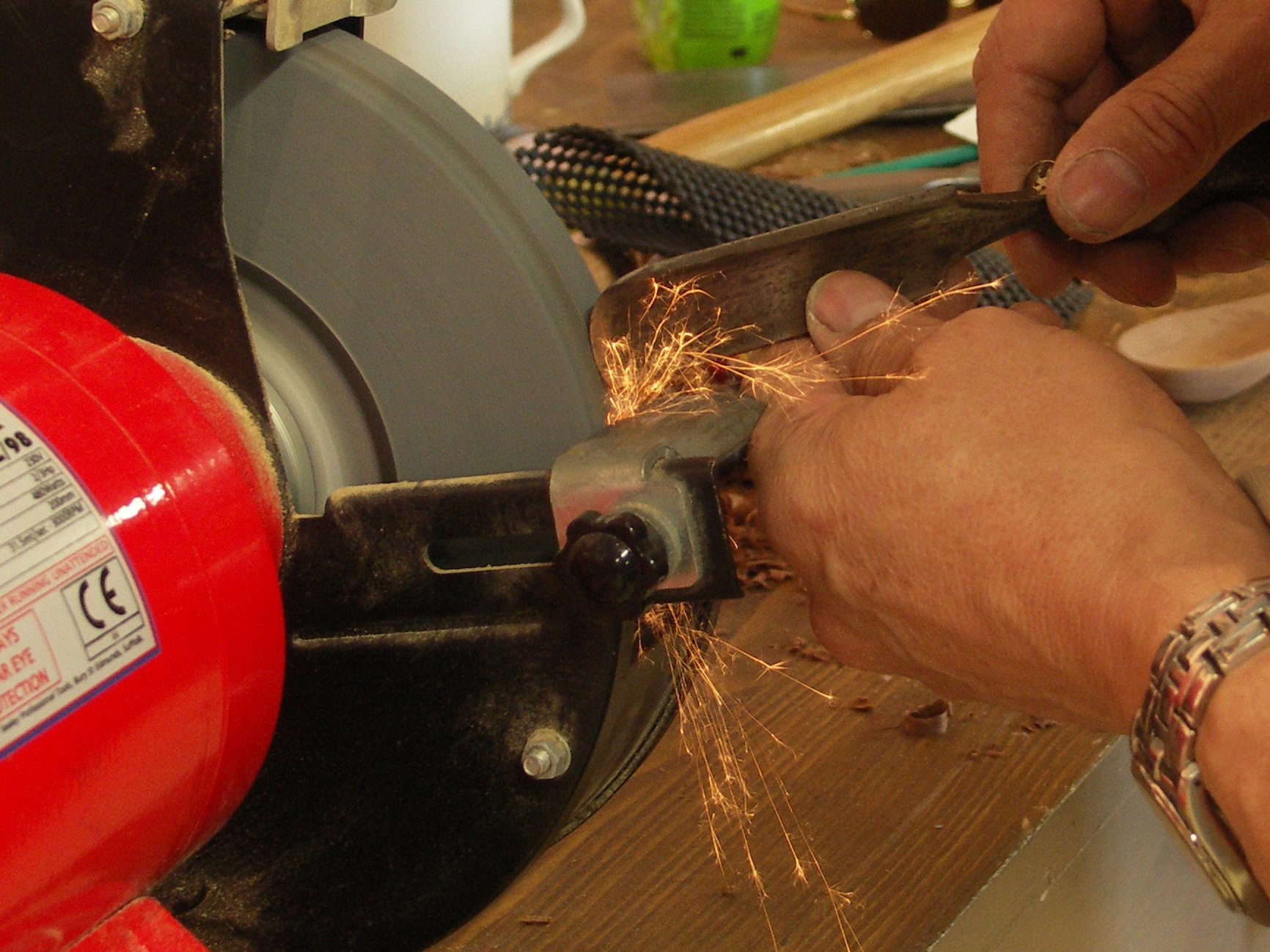
I used the grindstone to redefine the convex bevel John needs for a bowl gouge, just to remove the bulk of the damaged steel at the edge. Follow safety patterns for grinding with power tools.
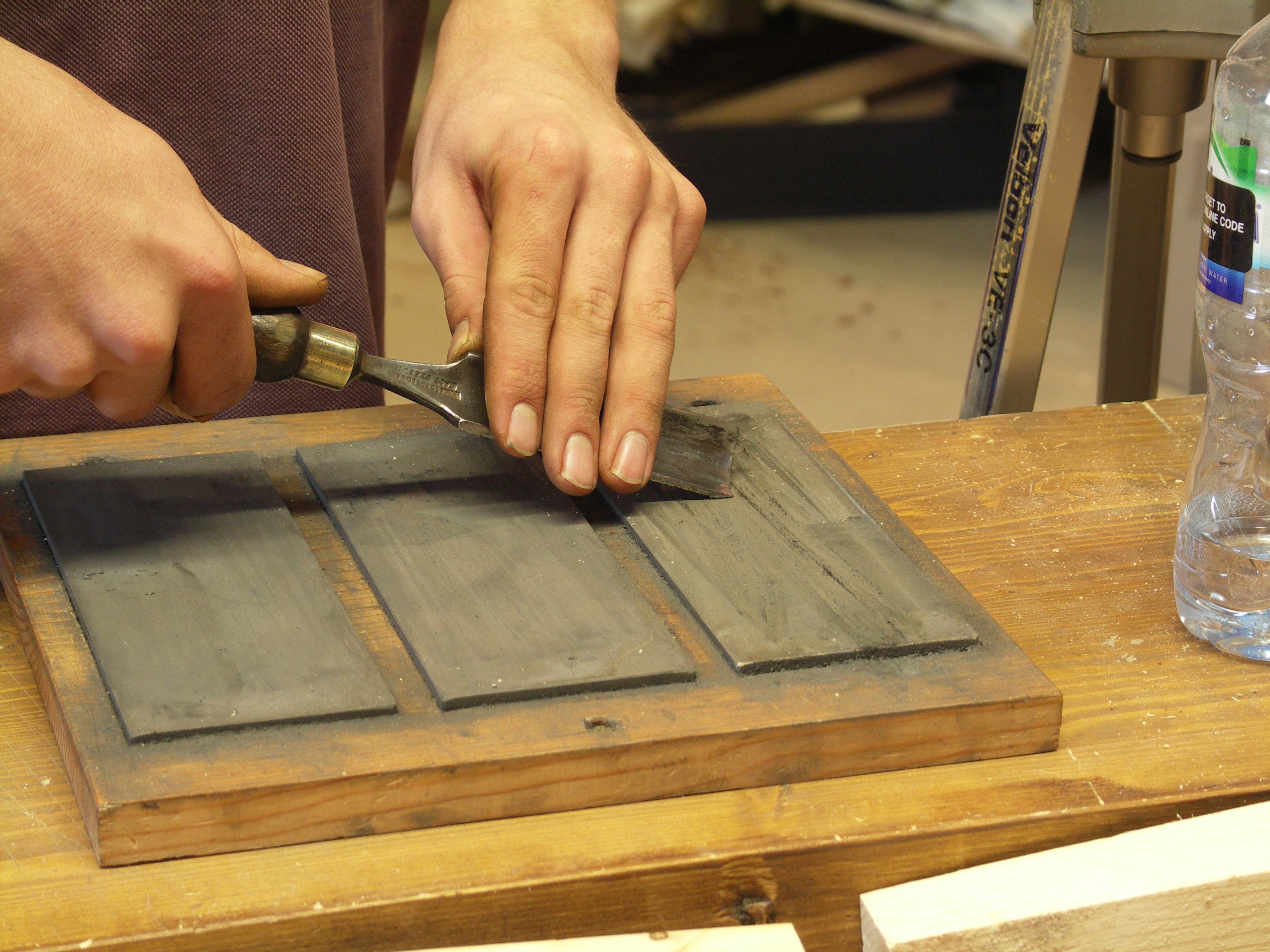
John refines the gouge inside and out and focusses on further developing and refining the cutting edge. First he uses the diamond sharpening plates and rolls the outside bevel on the stone backwards and forwards then further refine the convex bevel.
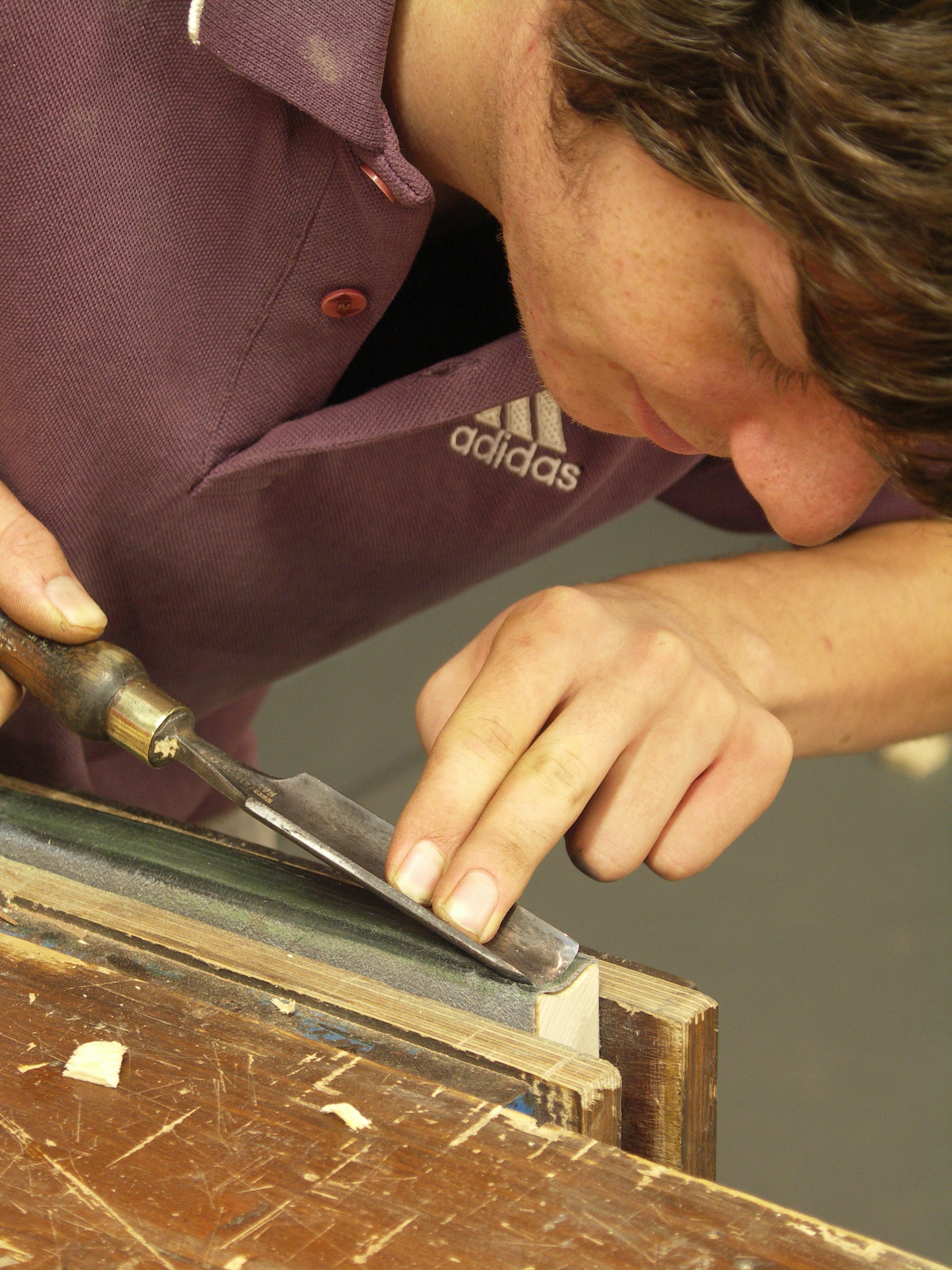
For this next step he uses a method I developed to create a strop system that hones and polishes the edge area. He has two pieces of wood that he shapes as shown. The convex one he achieves as shown in the photographs, the concave channel he develops and refines with the gouge he's sharpening. Starting at one end, he works the channel backwards towards the opposite end. Notice the scrap wood hes making the strop from is the same width as the gouge.
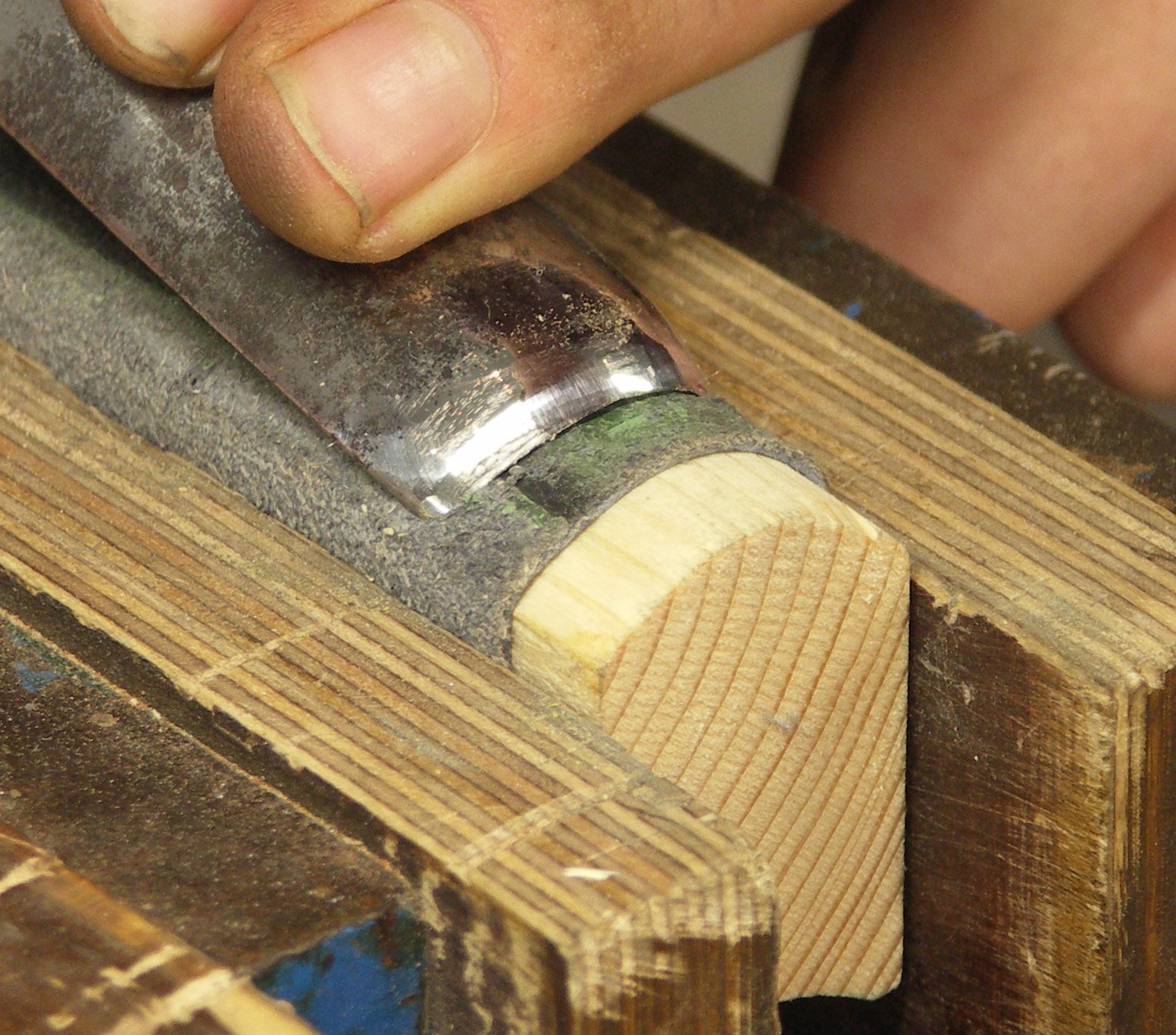
Clamping the block wrapped with leather in the vise creates a good strop. He charges a detached piece of leather with buffing compound and polishes both the inside and outside of the cutting edge by pulling the gouge along the strop leather until a surgically sharp edge is developed.
I have taught hands-on workshops focussing on conservation courses and restoration woodworking for years. Restoring hand tools is an important skill for any woodworker. My woodworking course include the essential elements of saw sharpening instruction and working with hand tools, which is why I chose the name The Hand Tool School all those years ago. If you want to master skills in sharpening your saws and planes, consider our courses. They really work and you can glean from my 46 years of woodworking knowledge just like my personal apprentice John is now.
More inspiration to you!

Comments ()