
How to apply shellac as practical wood finish
Brushing on Shellac: A Glass-like Finish
I use shellac for all of my projects; either as single sanding coat before painting or varnishing, or as a full finish. Many sanding sealers are nothing more than thinned shellac. It is fast, easy to apply and it gives good protection regardless of what manufacturers of other finishes may tell you. If you want a plastic feel to your woodworking, use polyurethane or catalyzed lacquer. If you want depth, smoothness and vivid grain enhancement, Shellac gives all three.
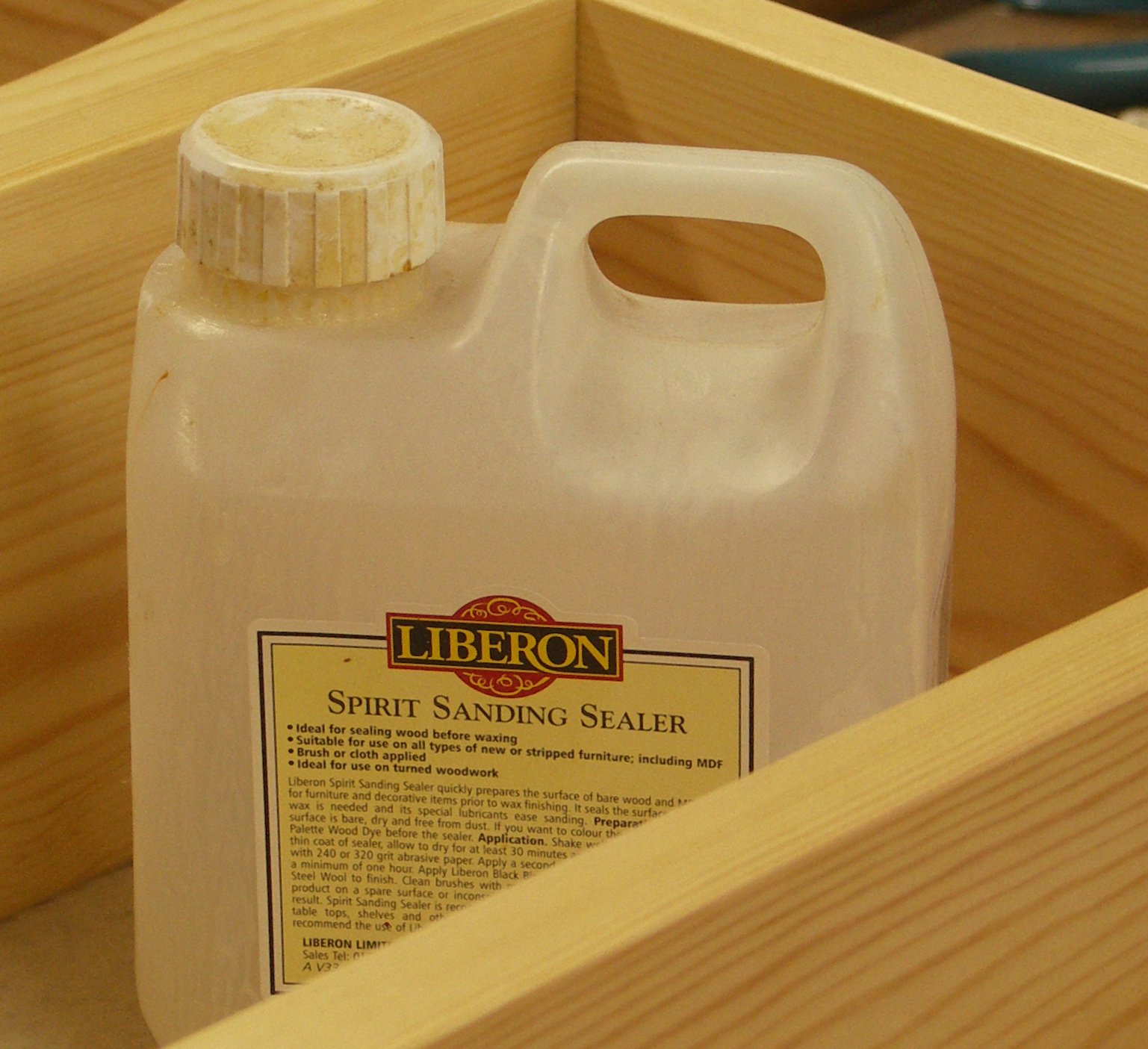
In the everyday of life I use a brand called Liberon Spirit Sanding Sealer to finish many of my projects. I also use it as a sealer coat, sanding coat and main bodybuilding finish. Buying a prepared finish saves time and gives me the convenience I need. Companies like Liberon give fancy names to their product but at the end of the day what they are giving you is just shellac. Any old shellac. Shellac is readily available from B&Q and The Home Depot in the USA. You can make your own shellac finish by simply buying Shellac flakes and and alcohol and mixing your own cut. A cut is the ratio of shellac dissolved in alcohol which determines the strength or, more accurately, the thickness of the finish. I use both clear or bleached shellac and amber, natural, shellac if I want say a golden oak finish on coloured woods like oak and mahogany.
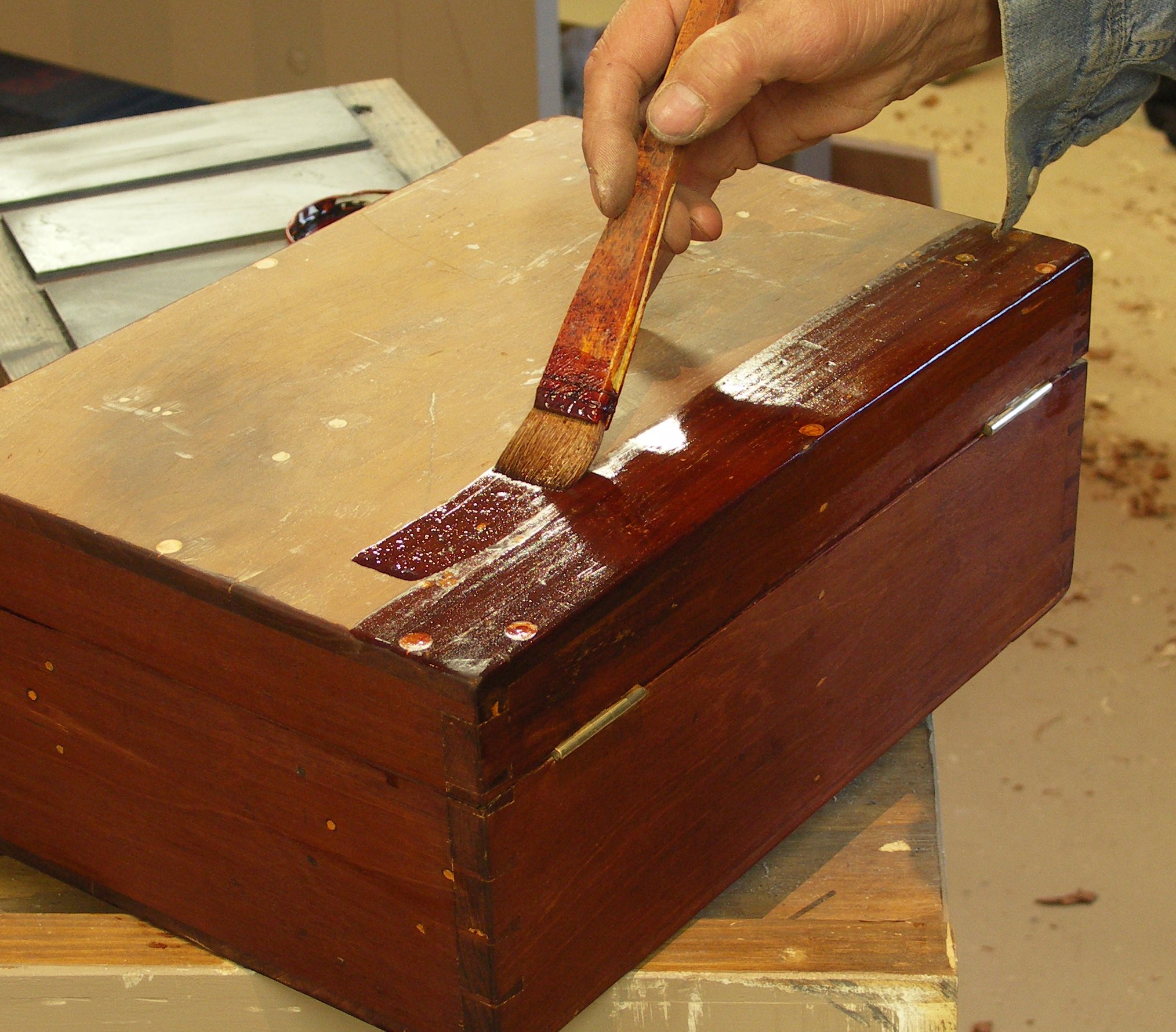
I use a dye in the shellac itself and add leather dye to get the colour I want. These dyes fade a little in full sun, but I enjoy this result. For most of my work I stick to clear shellac.
Three to four coats is generally enough to give the work a fully protective coat. The first coat seals the wood and the second gives it enough body to sand, level and recoat without cutting through these base coats.
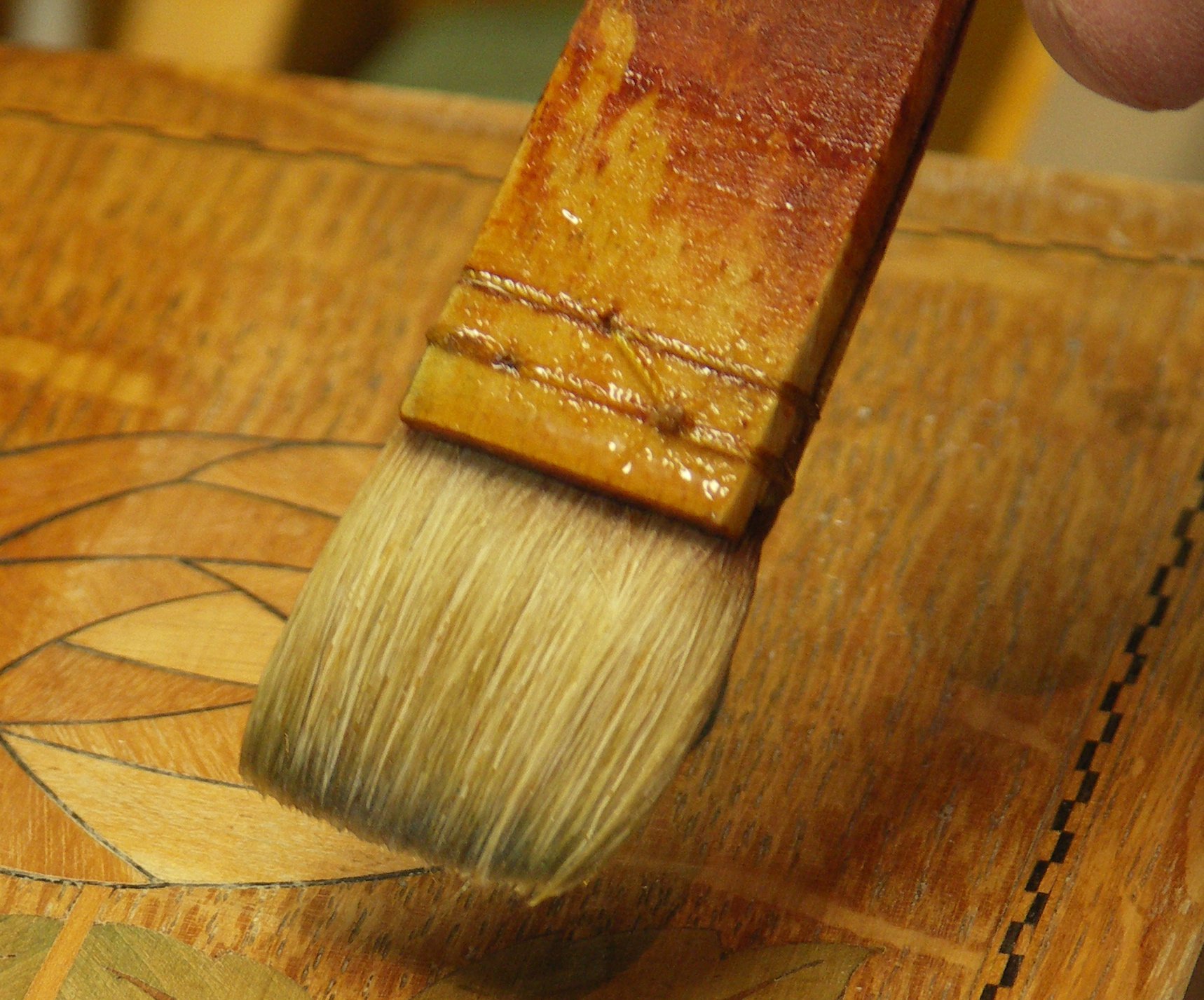
The first coat can be applied with a rag or a brush, depending on the surface area you want to coat. I use what is called a hake paint brush for all small work and it also works for many larger projects too. Sometimes I will use the hake and rag, using the hake for tight areas and corners and the rag for the larger open areas. The hake is a brush used by watercolorists to apply a wash coat to larger areas of their paintings. I use a 1" brush for most of my work.
I sand the second coat dead flat which with sanding sealer shellac takes only seconds to achieve a perfect finish. These next coats are critical to good results. One thing to remember is that for shellac, using a brush gives much larger volumes than say using the technique of French Polishing to apply shellac. When you apply shellac, each subsequent coat dissolves the previously laid coat or coats. However there is a fraction of time to work the next coats one by one after the previous coats have dried. Waiting for the coat to dry before applying the next is important. so even though it may feel touch dry, make sure you leave it long enough for the alcohol to evaporate and the remaining shellac to cure. Half an hour to one hour is usually enough in any case. Applying the third coat requires speed, and accurate brush work is core to this. Accurate brush work means loading your brush with the right amount, not to little and not too much. Unlike paint or varnish, you cannot place the finish on the surface and then work it out from that point. You must place the finish alongside a wet edge, draw out the finish along the edge of the wet edge and then lengthen the strokes with no more than one or two pulls. Otherwise, working the coats as with paint and varnish, would pull the now softened layers below which results in drag, bit like a frozen tidal wave, in the finish.
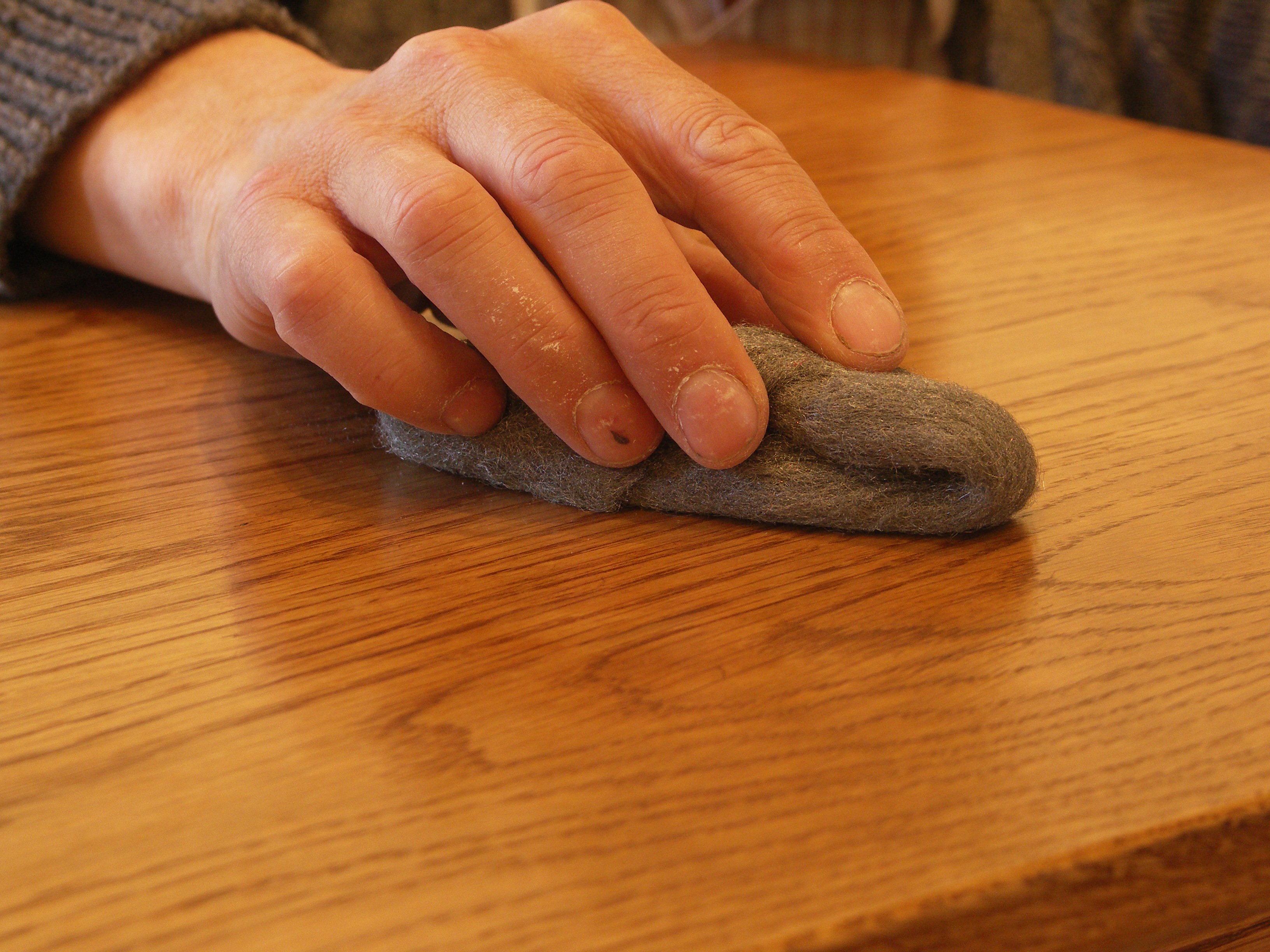
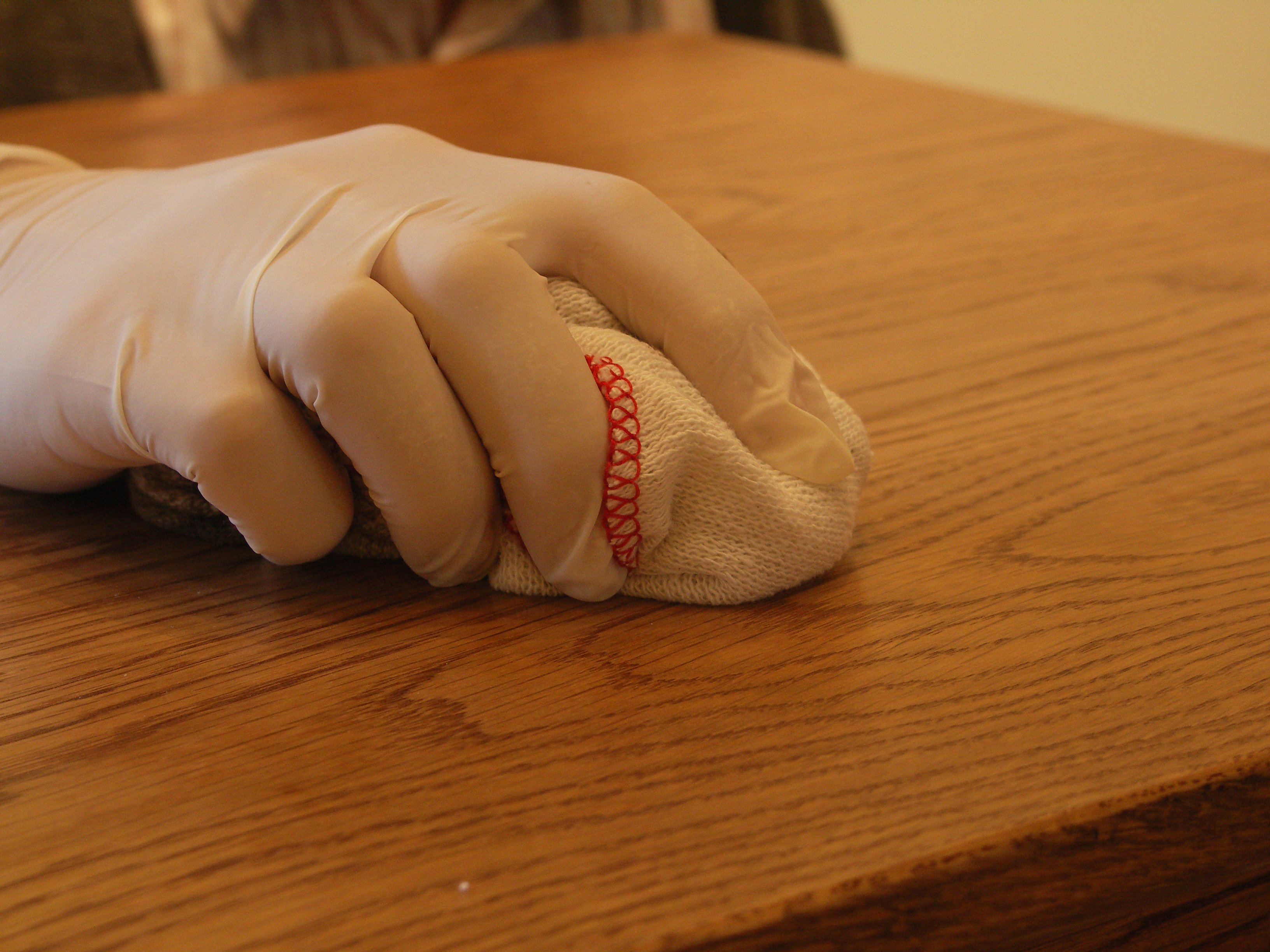
Buffing the surface with 0000 or superfine steel wool enables you to see if the surface is 'filled'. Look for any flat spots whereby the light fails to reflect evenly across the whole surface. If it does have flat spots add a further coat. You will not usually need more than four coats. The last phase is to steel wool the last cat with 0000 steel wool.
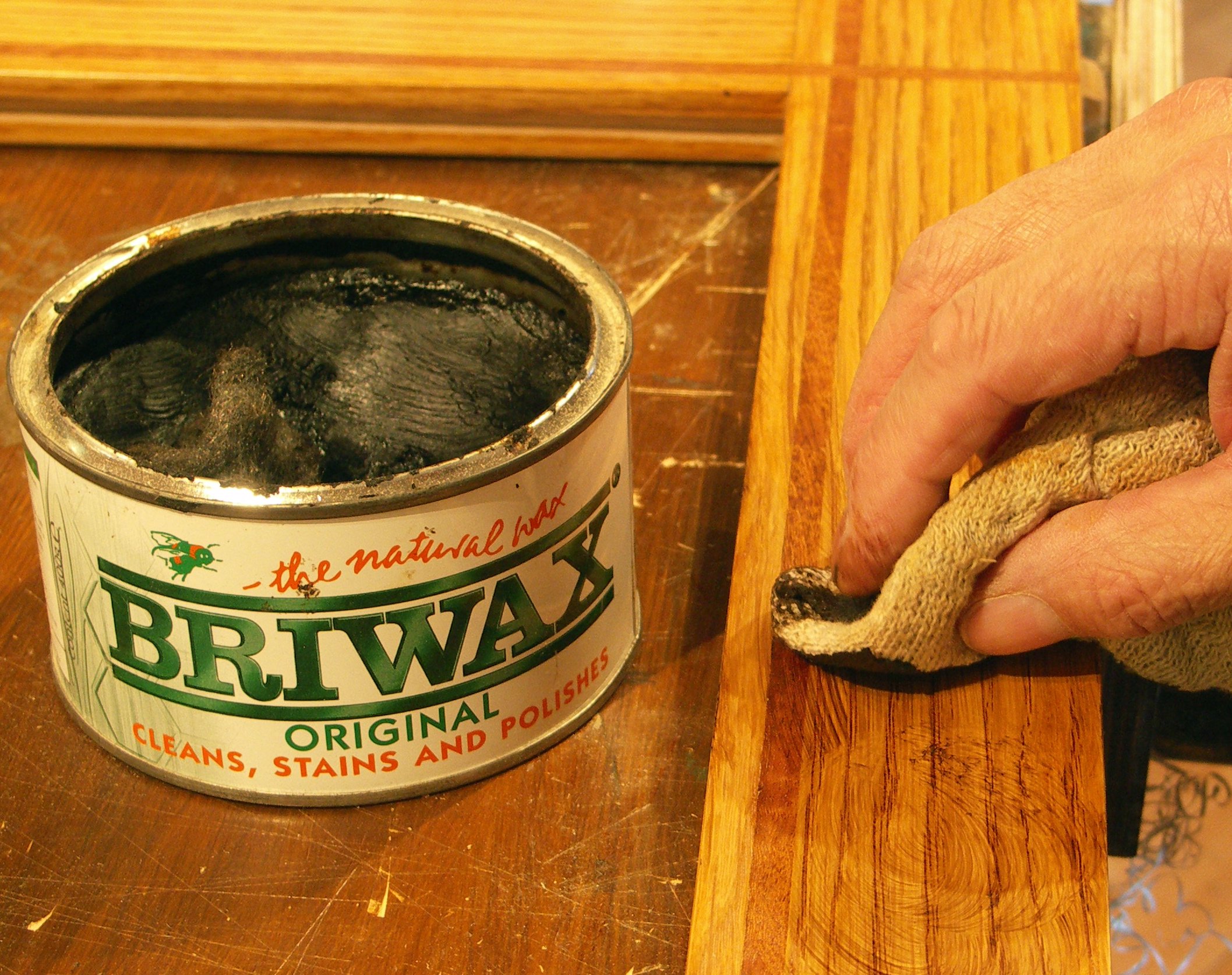
This will even out the surface leaving it supersmooth. Depending on the wood type, i apply a further finish of paste wax. I use National Trust Furniture Polish for a clear wax finish or Briwax for a coloured wax finish. On open grained woods like oak, the darker waxes fill in the pores and give added color or visual texture to the final appearance that I like.
Comments ()